Have you ever wondered how secure your bike lock really is? Knowing how to calculate the number of combinations for your bike lock can give you a clear picture of its safety.
Understanding this simple math can help you choose the right lock and protect your bike better. You’ll discover easy steps to calculate the total number of possible combinations for your bike lock. By the end, you’ll feel confident about how secure your lock truly is—and what to look for when buying a new one.
Keep reading to unlock this useful knowledge!
Basics Of Bike Lock Combinations
Understanding the basics of bike lock combinations helps you choose and use your lock better. It also shows how secure your lock is. Combinations depend on the lock type and how many numbers it uses. Knowing this helps you calculate the total possible combinations. This section explains key points about bike lock combinations.
Types Of Bike Locks
There are mainly two types of bike locks with combinations: dial locks and digital locks. Dial locks use rotating wheels with numbers. You turn the wheels to the right number to open. Digital locks use buttons or a keypad. You enter a number code to unlock. Each type has a different way to set and use combinations.
Common Number Ranges
Most bike locks use numbers from 0 to 39 or 0 to 9. Dial locks often have 40 numbers per wheel. Digital locks usually use digits from 0 to 9. The number range affects how many combinations are possible. More numbers mean more possible combinations. This makes the lock harder to guess or break.
Combination Mechanics
Combination locks work by aligning numbers in a certain order. Each wheel or digit must match the right number. For dial locks, you spin wheels to the correct number. For digital locks, you type the correct code. The total number of combinations equals the number range raised to the number of wheels or digits. This formula helps calculate all possible combinations quickly.
Formula For Calculating Combinations
Understanding the formula for calculating combinations helps to find the total possible codes. Combinations count the ways to choose items without caring about the order. This is important for bike locks, where the order might not always matter. The formula uses factorial numbers, which multiply a series of descending whole numbers.
Knowing this formula helps to estimate how secure a bike lock code can be. It also clarifies the difference between combinations and permutations, which is key to applying the right method. Let’s explore these concepts further and see how the formula works for bike locks.
Permutations Vs Combinations
Permutations count the ways to arrange items where order matters. For example, the code 123 is different from 321 in permutations. Combinations count the ways to select items where order does not matter. So, 123 and 321 are the same combination.
For bike locks, if the order of digits matters, use permutations. If the order does not matter, use combinations. Knowing this difference helps choose the correct formula for calculating possible codes.
Applying The Formula To Bike Locks
The combination formula is nCr = n! / (r! (n-r)!). Here, n is total options, and r is the length of the code. The exclamation mark means factorial, which multiplies numbers down to 1.
For example, a lock with 10 digits and a 3-digit code uses 10C3. This equals 10! / (3! 7!) = 120 possible combinations. This shows how many unique codes are possible if the order does not matter.
Understanding this helps to know how many codes a bike lock can have. It also helps to choose the right lock for better security.
Step-by-step Calculation Process
Calculating the number of combinations for a bike lock is simple. Follow a clear step-by-step process. This method helps you understand how secure your lock is. It also shows how many possible codes exist. This guide breaks down each part of the calculation. You can use it for any bike lock.
Identify Number Of Wheels
Start by counting the wheels on your lock. Each wheel holds a number or letter. More wheels mean more possible combinations. Most bike locks have three or four wheels. Some have five or even more. Write down the number of wheels for your lock.
Determine Number Range Per Wheel
Check the range of numbers on each wheel. Usually, wheels show digits from 0 to 9. That means each wheel has 10 options. Some locks use letters or fewer numbers. Make sure you know the exact range for your lock. This step is key for accurate calculation.
Calculate Total Possible Combinations
Multiply the number of options per wheel by itself. Do this as many times as the number of wheels. For example, if there are 4 wheels with 10 numbers each, calculate 10 × 10 × 10 × 10. The total is 10,000 combinations. This number shows how many codes exist. A higher number means stronger security.
Credit: www.reddit.com
Examples With Different Locks
Calculating the number of combinations for bike locks helps understand their security level. Different locks have various wheels, each with numbers. The total combinations depend on wheels and options per wheel. Below are examples for common bike locks.
3-wheel Locks
A 3-wheel lock usually has 10 numbers on each wheel. To find combinations, multiply 10 by itself 3 times. This means 10 × 10 × 10 = 1,000 combinations. This number shows how many codes you can make.
4-wheel Locks
For a 4-wheel lock with 10 numbers per wheel, multiply 10 four times. The calculation is 10 × 10 × 10 × 10 = 10,000 combinations. This lock type offers more security than the 3-wheel lock.
5-wheel Locks
A 5-wheel lock also often has 10 numbers on each wheel. Multiply 10 five times: 10 × 10 × 10 × 10 × 10 = 100,000 combinations. This lock provides a higher level of safety for your bike.
Factors Affecting Combination Count
Understanding the factors that affect the number of combinations for a bike lock helps in choosing the right lock. These factors change how many possible codes you can create. This affects the lock’s security and how easy or hard it is to guess the code.
Repeated Numbers Allowed
Some bike locks allow repeated numbers in their combinations. This means digits can appear more than once, like 112 or 555. When repeats are allowed, the total number of combinations grows quickly. For example, a lock with 3 dials and 10 digits each has 10 × 10 × 10, or 1,000 combinations.
If repeats are not allowed, each number can only be used once in the code. This lowers the total combinations. The same lock would have fewer codes because each dial must be different.
Lock Design Variations
Different bike locks have different designs. Some have more dials or wheels, while others use letters or symbols. The number of dials or wheels affects how many combinations exist. More dials mean more possible codes.
Locks with letters or symbols offer different combination counts. For example, a lock with 4 wheels and 26 letters each has many more options than a 3-digit number lock. The design also impacts the type of combinations possible and how easy it is to guess them.

Credit: lock-picking.wonderhowto.com
Tips To Choose Secure Combinations
Choosing a secure combination is key to protecting your bike. A strong code stops thieves from guessing it easily. Simple steps help create safer combinations.
These tips make your bike lock more secure and give peace of mind.
Avoiding Common Patterns
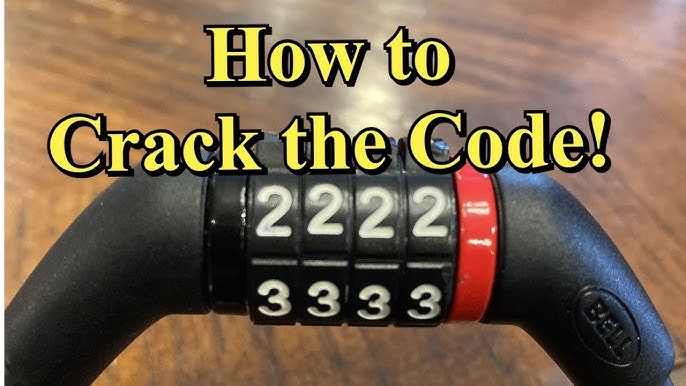
Avoid patterns like 1234 or 0000. These are easy to guess and common. Stay away from repeating numbers such as 1111 or 2222.
Try random sequences with no obvious order. Mix numbers that do not relate to you. Do not use important dates like birthdays or anniversaries.
Regularly Changing Combinations
Change your combination often to stay safe. Thieves may learn your code over time. Update it every few months or after losing the lock.
Write down the new code and keep it safe. Regular changes reduce the chance of theft and keep your bike secure.
Credit: www.youtube.com
Frequently Asked Questions
How Do You Calculate Bike Lock Combinations?
Calculate bike lock combinations by raising the number of possible digits to the power of the number of digits. For example, a 4-digit lock with 10 digits each has 10⁴ combinations, totaling 10,000 possible codes.
What Factors Affect The Number Of Combinations?
The number of digits and the range of each digit affect combinations. More digits or a larger digit range increase total combinations exponentially.
Why Is Combination Calculation Important For Bike Locks?
Knowing combinations helps assess lock security and pick resistance. It guides users to choose locks with more possible codes for better protection.
Can Bike Lock Combinations Be Reset Or Changed?
Some bike locks allow resetting combinations. Users can customize codes for security, but not all locks have this feature.
Conclusion
Calculating the number of combinations for a bike lock is simple with the right method. Start by knowing the number of wheels and choices per wheel. Multiply these numbers together to find the total combinations. This helps you understand how secure your lock is.
Remember, more combinations mean better security. Keep this calculation in mind when choosing or setting your bike lock. It makes your bike safer and gives peace of mind. Try it yourself to see how many possible codes your lock has.