Are you looking to get the most out of your incline dumbbell press? The angle you choose can make a huge difference in targeting the right muscles and boosting your strength.
Finding the best degrees for incline dumbbell press is key to maximizing your workout results and avoiding injury. You’ll discover exactly which angles work best for your chest, shoulders, and triceps, so you can take your training to the next level.
Ready to lift smarter and see faster gains? Keep reading to unlock the perfect incline for your dumbbell press.
Incline Dumbbell Press Basics
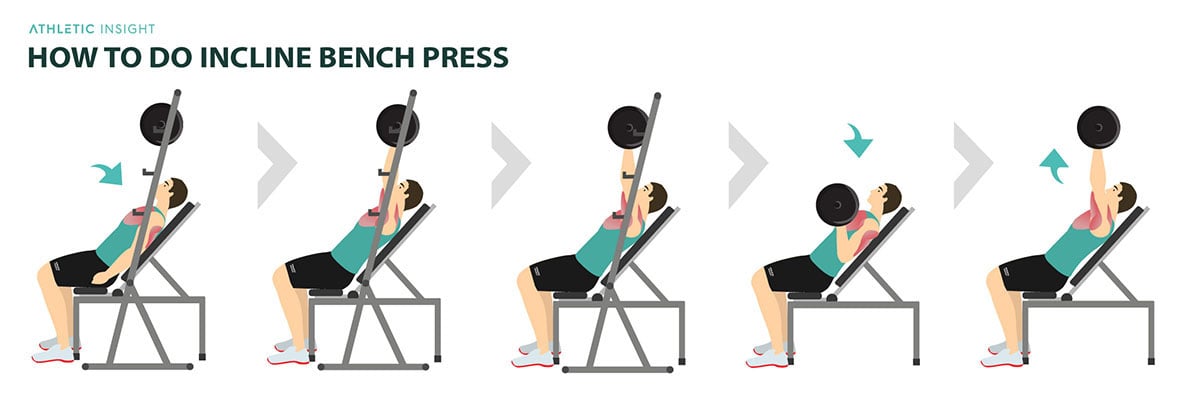
The incline dumbbell press is a popular exercise for building upper chest strength. It uses an inclined bench, which changes the angle of the press. This shift targets different muscles than a flat bench press. It also allows a greater range of motion.
Performing the incline dumbbell press correctly helps avoid injury. It improves muscle balance and coordination. This exercise is useful for both beginners and advanced lifters.
Muscles Targeted
The main muscle worked is the upper part of the chest, called the clavicular head of the pectoralis major. The front shoulders, or anterior deltoids, also work hard. The triceps help extend the arms during the press. Small stabilizer muscles around the shoulder assist with control and balance.
Benefits Over Flat Press
The incline press focuses more on the upper chest than the flat press. It helps create a fuller and more defined upper chest. It also reduces stress on the shoulder joints. This makes it a safer option for people with shoulder issues.
Dumbbells allow each arm to work independently. This improves muscle balance and coordination. The incline angle challenges the muscles differently, leading to better overall chest development.
Credit: polimexparcel.com
Choosing The Right Angle
Choosing the right angle for the incline dumbbell press is key to training your chest effectively. The angle changes which part of the chest muscles get the most work. It also affects your shoulder and arm position. Picking the best angle helps you target the upper chest better and avoid injury.
Common Incline Angles
The most common angles for incline dumbbell press are 15, 30, and 45 degrees. A 15-degree angle is almost flat. It focuses more on the middle chest. The 30-degree angle hits the upper chest more. The 45-degree angle targets the upper chest even more but can strain the shoulders.
Some lifters try angles higher than 45 degrees. These work more on the shoulders than the chest. Most experts recommend staying between 15 and 45 degrees for best chest activation and safety.
Effects On Muscle Activation
The angle changes how muscles work during the press. Lower angles (15 degrees) activate the middle chest more. Higher angles (30 to 45 degrees) activate the upper chest muscles better. The front shoulders also work more at higher angles.
Too steep an angle can shift the load away from the chest to the shoulders. This reduces chest muscle growth and may cause pain. Finding the right angle balances chest activation and shoulder comfort. It helps you build a well-shaped chest safely.
Optimal Degree Settings
Choosing the right incline degree is key for effective dumbbell press workouts. Each angle targets different parts of the chest and shoulders. Adjusting the bench angle changes muscle activation and can help you reach your fitness goals faster. Small changes in incline make a big difference in which muscles work hardest.
Low Incline (15-30 Degrees)
Low incline focuses on the upper chest while still engaging the middle chest. It reduces shoulder strain and allows heavier lifting. This angle suits beginners and those recovering from shoulder issues. It creates a smooth transition from flat bench pressing.
Moderate Incline (30-45 Degrees)
Moderate incline targets the upper chest more intensely. It also activates the front shoulders and triceps. This setting helps build a fuller chest shape. It balances power and muscle activation for steady strength gains.
High Incline (45-60 Degrees)
High incline shifts focus to the shoulders and upper chest. It reduces chest involvement compared to lower angles. This angle challenges shoulder stability and strength. It is ideal for shaping the upper chest and improving shoulder endurance.
Technique Tips For Each Angle
Choosing the right angle for the incline dumbbell press changes how your muscles work. Each angle targets your chest differently. Small changes in technique help you get the most from each degree. Focus on grip, arm position, range of motion, and breathing. These tips improve your form and reduce injury risk.
Grip And Arm Position
Hold the dumbbells firmly but not too tight. Your grip affects shoulder stress and control. At lower angles, keep elbows slightly closer to your body. This reduces shoulder strain. At higher angles, flare your elbows out a bit to hit upper chest more. Keep wrists straight and aligned with forearms. Avoid letting your wrists bend backward during the press.
Range Of Motion
Lower the dumbbells slowly until your upper arms are parallel to the floor. Do not go too deep to avoid shoulder pain. Push the weights up until your arms are almost straight but not locked. This keeps constant tension on your muscles. Adjust the depth based on the bench angle. Steeper angles may need a shorter motion to stay safe.
Breathing Patterns
Inhale deeply as you lower the dumbbells down. This fills your lungs and stabilizes your core. Exhale forcefully as you push the weights up. This helps you generate power. Keep your breathing steady and controlled. Avoid holding your breath during the press. Good breathing improves strength and focus for every set.
Avoiding Common Mistakes
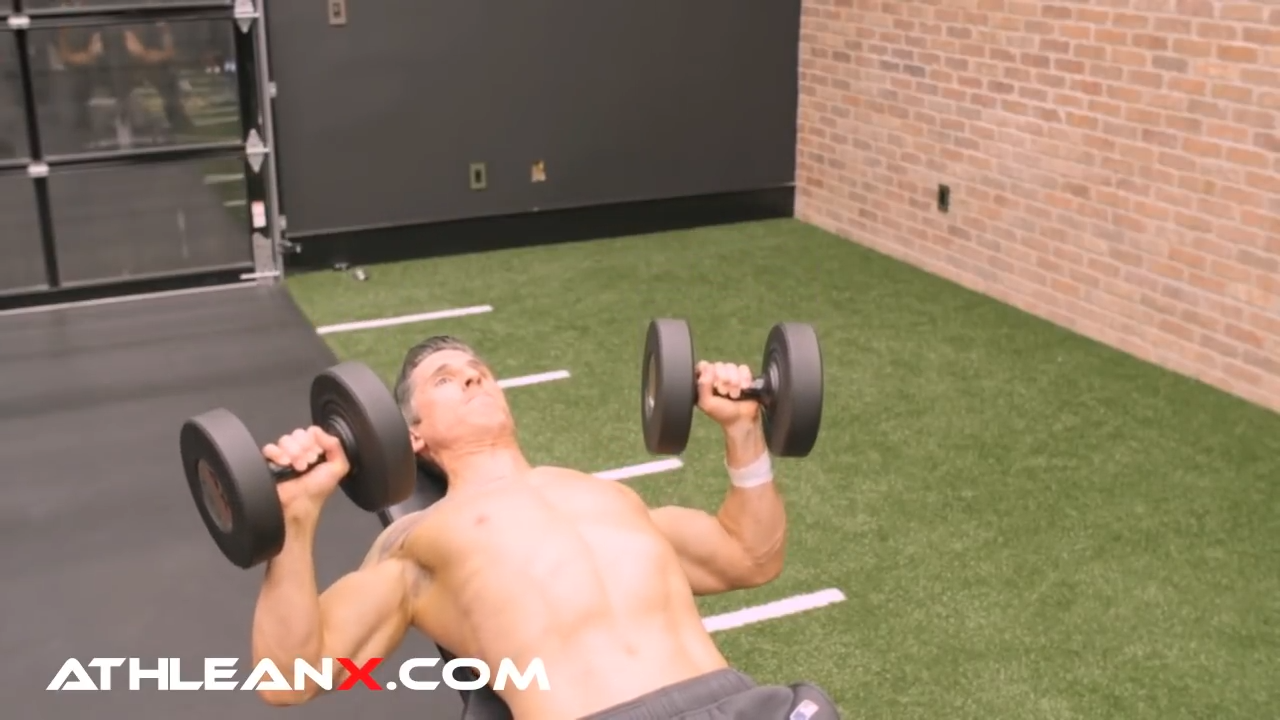
Performing the incline dumbbell press correctly protects your shoulders and chest. Avoiding common mistakes helps build strength safely. Small errors can cause pain and slow progress. Focus on proper form for better results.
Too Steep Incline
Setting the bench too high shifts work to your shoulders. This reduces chest activation and increases injury risk. Aim for a 30 to 45-degree angle. This angle targets the upper chest well and feels natural.
Elbow Positioning Errors
Keep elbows at about a 45-degree angle from your body. Flaring elbows out wide stresses shoulder joints. Tucking them too close limits chest muscle use. Find a balanced elbow position for comfort and strength.
Overarching The Back
Avoid lifting your lower back off the bench. Arching too much strains your spine and reduces control. Keep your back flat or slightly arched. This helps you press weights safely and steadily.
Credit: learn.athleanx.com
Combining Angles For Muscle Growth
Combining different angles in the incline dumbbell press helps target various parts of the chest. Changing the bench angle shifts the focus between the upper chest and shoulders. This method encourages balanced muscle growth. It also prevents workout boredom and plateaus. A varied angle routine keeps muscles adapting and improving.
Varied Press Routines
Using multiple bench angles in your routine boosts muscle activation. Try 30, 45, and 60 degrees on different days. This variation hits the chest from different angles. It also improves muscle shape and size. Changing grips, like neutral or pronated, adds more variety. Switching angles and grips regularly avoids muscle adaptation. It keeps your progress steady and strong.
Periodization Strategies
Periodization means planning your workouts in cycles. Focus on different angles and weights over weeks. Start with lighter weights and higher reps at lower angles. Then increase weight and incline for strength. This cycling helps muscles recover and grow. It also reduces injury risk. Periodization keeps training effective and muscle gains consistent.
Equipment And Setup Tips
Choosing the right equipment and setup is key for the incline dumbbell press. Proper tools help you perform the exercise safely and effectively. A few simple tips can improve your workout and protect your shoulders.
Adjustable Benches
An adjustable bench lets you set the right incline angle. Usually, 30 to 45 degrees works best for this exercise. Too steep or flat can reduce the benefits or cause strain. Choose a bench that feels stable and strong. Make sure it locks firmly in place to avoid wobbling.
Dumbbell Selection
Select dumbbells that match your strength level. Start with lighter weights to focus on form. Gradually increase weight to build muscle without risking injury. Use dumbbells with a comfortable grip to maintain control. Round or hexagonal shapes both work well for this exercise.

Credit: www.youtube.com
Frequently Asked Questions
What Is The Best Degree Angle For Incline Dumbbell Press?
The optimal incline angle is between 30 to 45 degrees. This targets the upper chest effectively. Angles above 45 degrees shift focus to shoulders, reducing chest activation.
How Does Incline Angle Affect Muscle Activation?
A higher incline angle emphasizes the shoulders more. A lower incline focuses on the upper chest muscles. Adjusting angles changes muscle emphasis and workout effectiveness.
Why Avoid Too Steep Incline Angles?
Steep angles over 45 degrees reduce chest engagement. They place stress on the shoulders instead. This can limit chest muscle growth and increase injury risk.
Can Varying Incline Degrees Improve Results?
Yes, changing angles targets chest muscles differently. It prevents workout plateaus and promotes balanced muscle development. Variation enhances overall strength and definition.
Conclusion
Choosing the right incline dumbbell press angle affects your chest workout. Different angles target muscles in unique ways. A slight incline focuses more on the upper chest. A steeper incline shifts effort to the shoulders. Experiment with angles to find what feels best.
Keep your form tight to avoid injury. Small changes can bring better results over time. Stay consistent and patient with your training. Your upper chest strength will improve steadily. Enjoy the process and keep pushing forward.