Are you wondering if dumbbell lunges are really worth your time? You might have heard they’re great for building strength and toning your legs, but is that true?
If you want to know how effective dumbbell lunges can be for your fitness goals, you’re in the right place. This article will break down the benefits, proper form, and how to get the most out of this exercise. Keep reading to find out if dumbbell lunges should be a part of your workout routine.
Benefits Of Dumbbell Lunges
Dumbbell lunges offer many benefits for fitness and health. They work several muscles at once. This exercise helps improve strength, balance, and muscle shape. Adding dumbbells makes the workout more challenging and effective.
Here are some key benefits of dumbbell lunges that show why they are a great choice for your routine.
Builds Lower Body Strength
Dumbbell lunges target your legs and hips strongly. They work muscles like the quads, hamstrings, and glutes. Holding dumbbells adds resistance, making muscles work harder. This helps increase muscle power and endurance. Stronger legs support daily activities and reduce injury risk.
Enhances Balance And Stability
Lunges require control and coordination. Moving one leg forward challenges your balance. Dumbbells add weight, forcing your body to stabilize more. This improves your core and leg stability. Better balance helps with sports and everyday movements.
Boosts Muscle Tone And Definition
Using dumbbells in lunges tones your leg and hip muscles. The added weight shapes muscles by increasing strength. Regular lunges help reduce fat and build lean muscle. This creates a more defined and fit appearance.
How Dumbbell Lunges Work
Dumbbell lunges are a simple yet effective exercise for strengthening your legs and improving balance. They involve stepping forward and lowering your body while holding weights. This movement targets several muscles and helps build stability.
Understanding how dumbbell lunges work can help you perform them better. Knowing the muscles involved, the movement mechanics, and the role of dumbbells can improve your workout results.
Targeted Muscles
Dumbbell lunges mainly work the muscles in your legs and hips. The quadriceps on the front of your thighs get strong during the movement. Your glutes, or butt muscles, also work hard to push your body up. Hamstrings at the back of your thighs help control the movement. Calves and core muscles help keep your balance.
Movement Mechanics
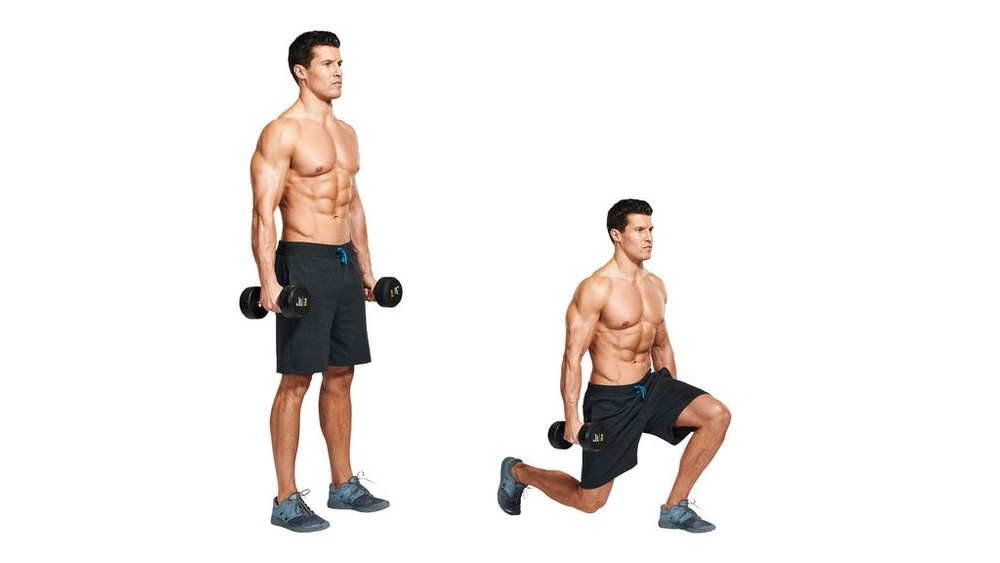
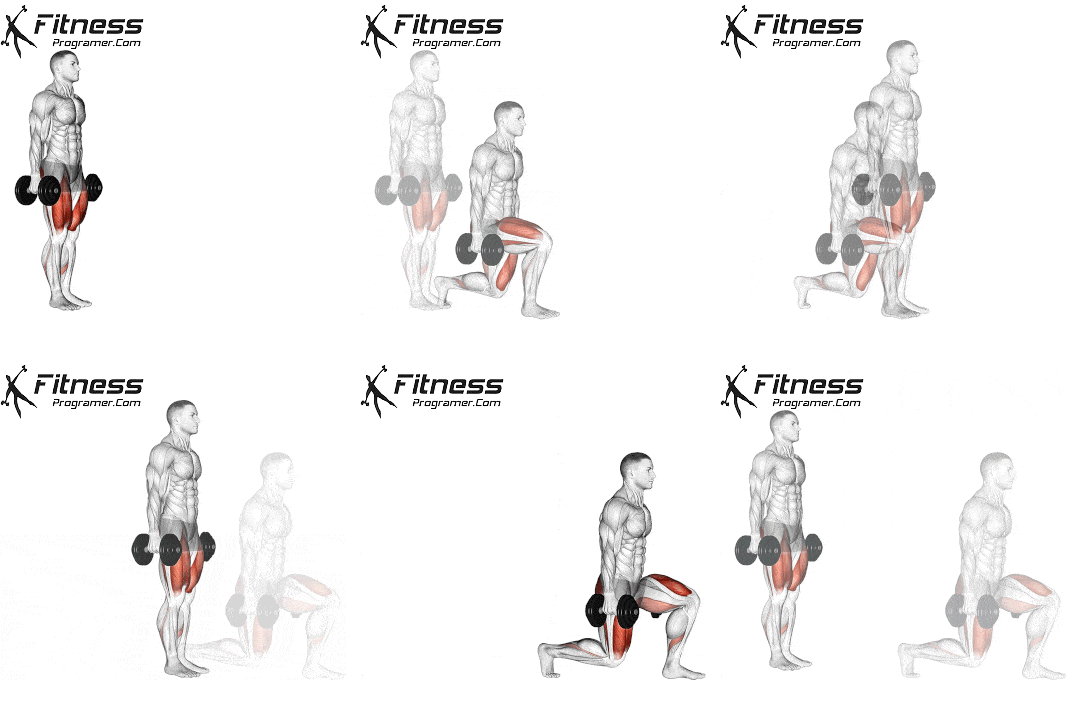
Start by standing tall with dumbbells in each hand. Step forward with one leg and bend both knees. Lower your back knee toward the floor but do not let it touch. Your front knee should stay above your ankle. Push through the front heel to return to standing. Repeat with the other leg. This controlled motion builds strength and stability.
Role Of Dumbbells
Dumbbells add weight to the exercise, making muscles work harder. Holding dumbbells challenges your grip and core too. The extra resistance helps increase muscle size and strength. Dumbbells also improve balance by shifting your center of gravity. You can adjust the weight to match your fitness level.
Types Of Dumbbell Lunges
Dumbbell lunges have many types. Each type works your legs and balance in different ways. Using dumbbells adds weight, making muscles stronger. Learning different lunges keeps workouts fresh and effective.
Try these four common dumbbell lunge types. They target muscles differently and improve your fitness.
Forward Lunges
Step one foot forward and bend both knees. Keep your back straight and dumbbells at your sides. Push back to the start position. This lunge works your quads and glutes well.
Reverse Lunges
Step one foot backward and lower your body. Keep your torso upright and dumbbells steady. Push forward to stand up again. Reverse lunges are easier on the knees but still build strength.
Walking Lunges
Take a step forward and lunge, then bring the back foot forward. Continue stepping and lunging across the room. This move tests your balance and endurance while building leg muscles.
Side Lunges
Step one foot out to the side and bend that knee. Keep the other leg straight and dumbbells by your sides. Push off the bent leg to return. Side lunges work your inner and outer thighs.

Credit: www.shutterstock.com
Proper Form And Technique
Proper form and technique are key to making dumbbell lunges work well. They help you avoid injury and get the most from each movement. Using the right posture also improves balance and strength. Below, learn how to start, perform, and what to watch out for.
Starting Position
Stand tall with feet hip-width apart. Hold a dumbbell in each hand at your sides. Keep your shoulders back and chest up. Engage your core to stay steady. Look straight ahead. This position sets a strong base for the lunge.
Step And Lunge Execution
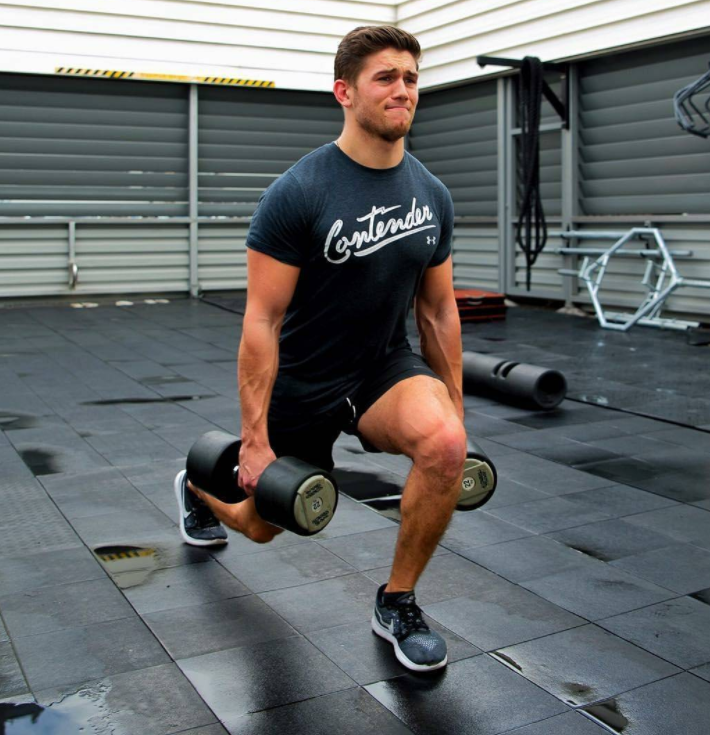
Step forward with one foot about two feet in front. Lower your hips until both knees bend at 90 degrees. The back knee should hover just above the floor. Keep the front knee aligned over the ankle. Push through the front heel to return to standing. Repeat on the other leg.
Common Mistakes To Avoid
Do not let the front knee go past your toes. Avoid leaning forward or rounding your back. Do not let the back knee touch the floor. Keep your steps even and controlled. Holding dumbbells too loosely can cause imbalance. Focus on smooth, steady movements.
Incorporating Dumbbell Lunges Into Workouts
Dumbbell lunges are a strong choice for building leg strength and balance. Adding them to your workout can improve muscle tone and stability. They target key muscles like quads, hamstrings, and glutes. Using dumbbells adds resistance and increases workout intensity. This section explains how to include dumbbell lunges effectively in your routines.
Workout Frequency
Perform dumbbell lunges two to three times per week. This frequency helps muscles recover and grow. Avoid daily lunges to prevent overuse injuries. Space workouts with rest days or focus on other muscle groups in between.
Combining With Other Exercises
Pair lunges with squats and step-ups for a full leg workout. Include upper body moves like push-ups or rows on the same day. This approach balances strength and improves overall fitness. It also prevents workout boredom and plateaus.
Progression Tips
Start with light dumbbells or just body weight. Increase weight gradually as your strength improves. Add more reps or sets to challenge muscles further. Try different lunge styles, such as walking or reverse lunges. These variations keep workouts fresh and effective.
Credit: barbend.com
Safety Tips And Precautions
Safety is very important when doing dumbbell lunges. These exercises can help build strength, but they can also cause injury if done wrong. Following safety tips lowers the risk of pain or damage.
Taking care with form and preparation protects your body. Listen to your body’s signals. Stop if you feel sharp pain. Use these tips to stay safe and get the most from your workout.
Warm-up Essentials
Start with light exercises to warm your muscles. Try walking or gentle leg swings for five minutes. This increases blood flow and reduces stiffness. Warm muscles handle lunges better and avoid injury.
Include dynamic stretches that move your legs and hips. Stretching helps improve your range of motion. It prepares your joints and muscles for the workout ahead.
Avoiding Knee Strain
Keep your knees stable and aligned during lunges. Do not let your knee go past your toes. This reduces pressure on the knee joint.
Step forward carefully and lower your body slowly. Control your movement to avoid jerks. Strong core muscles also help support your knees.
Stop if you feel pain in your knees. Pain signals that something is wrong. Rest and consult a professional if needed.
Choosing The Right Dumbbell Weight
Select a weight that feels challenging but manageable. Start light to learn proper form. Increase weight gradually as you get stronger.
Using too heavy dumbbells can cause poor form and injury. Focus on control, not on lifting heavy. Proper weight helps build strength safely and effectively.
Measuring Effectiveness
Measuring the effectiveness of dumbbell lunges helps you know if the exercise works. It shows how much you improve over time. Tracking progress keeps you motivated and focused on your goals.
Use clear signs to check your strength and muscle changes. This way, you can see real results from your effort.
Tracking Strength Gains
Track how much weight you lift in dumbbell lunges. Try adding more weight or doing more reps each week. This shows your muscles are getting stronger. Keep a workout journal to note your progress. It helps to stay consistent and push your limits safely.
Assessing Muscle Tone
Look for changes in your legs and glutes. Muscle tone means your muscles look firm and defined. Take photos every few weeks to compare your shape. Feel your muscles after workouts for tightness and strength. These signs show your muscles respond well to lunges.
Signs Of Progress
Notice how easy lunges become over time. Less fatigue and better balance mean you improve. Check your posture and form during exercises. Good form shows your body adapts and grows stronger. Better endurance and less soreness also signal progress.
Credit: fitnessprogramer.com
Frequently Asked Questions
Are Dumbbell Lunges Good For Leg Strength?
Yes, dumbbell lunges effectively build leg strength. They target quads, hamstrings, and glutes, enhancing muscle tone and power.
How Do Dumbbell Lunges Improve Balance?
Dumbbell lunges challenge stability by working core and leg muscles. This improves overall balance and coordination during movement.
Can Dumbbell Lunges Help With Weight Loss?
Yes, dumbbell lunges burn calories and boost metabolism. They promote fat loss while increasing muscle mass for a leaner physique.
Are Dumbbell Lunges Safe For Beginners?
With proper form, dumbbell lunges are safe for beginners. Start with light weights and focus on controlled, steady movements.
Conclusion
Dumbbell lunges build strength in legs and hips effectively. They improve balance and help burn calories too. Using dumbbells adds resistance, making muscles work harder. This exercise fits well in many workout routines. It suits beginners and experienced exercisers alike.
Keep your form correct to avoid injuries. Regular practice brings better results over time. Try dumbbell lunges to boost your fitness level. Simple, effective, and worth including in your plan.