Have you ever wondered if you can do a Turkish Get Up with a dumbbell? This exercise is famous for building strength, stability, and coordination all at once.
But using a dumbbell instead of a kettlebell might feel tricky or even unsafe if you’re not sure how to do it right. In this post, you’ll discover exactly how to perform the Turkish Get Up with a dumbbell safely and effectively.
By the end, you’ll know how to add this powerful move to your workout and get the most out of every rep. Ready to take your training to the next level? Keep reading!
Benefits Of Turkish Get Up
The Turkish Get Up is a unique exercise with many benefits. It improves strength, balance, and flexibility. Using a dumbbell in this move adds resistance, making it more effective. This exercise targets many muscles and helps with everyday movements.
Here are some key benefits of doing Turkish Get Ups with a dumbbell.
Improved Stability And Mobility
This exercise works on shoulder stability and joint control. Holding the dumbbell above requires steady muscles. The movement also increases hip and thoracic spine mobility. Better mobility reduces injury risk during other activities.
Full-body Strength Development
The Turkish Get Up uses muscles in the legs, core, and arms. It builds strength throughout the whole body. The dumbbell adds extra load, making muscles work harder. This strength carries over to sports and daily tasks.
Enhanced Coordination And Balance
The exercise demands control over each movement step. It trains the brain and body to work together smoothly. Balancing with the dumbbell challenges the nervous system. This improves overall coordination and body awareness.
Choosing The Right Dumbbell
Choosing the right dumbbell for the Turkish Get Up is key for safety and effectiveness. The dumbbell must feel comfortable and steady in your hand. It should allow smooth movement through each step of the exercise. The right dumbbell helps maintain balance and control. It also reduces the risk of injury during the complex motion.
Weight Recommendations
Start with a light dumbbell to learn the technique. Men can try weights between 10 to 20 pounds. Women may begin with 5 to 10 pounds. Increase the weight only when you feel stable and strong. Avoid heavy dumbbells that cause strain or loss of control. Proper weight allows smooth and controlled movements.
Grip And Handle Types
Choose a dumbbell with a comfortable grip. Handles that are too thick or thin can affect your hold. Textured or knurled handles improve grip and prevent slipping. Round or hexagonal heads work well for stability. The handle should fit your hand size without causing pain. A secure grip helps you focus on the exercise.
Material And Durability
Dumbbells come in various materials like cast iron, rubber, and neoprene. Cast iron is durable but can be hard on floors. Rubber-coated dumbbells protect floors and reduce noise. Neoprene dumbbells are lightweight and often used for beginners. Pick a dumbbell that suits your workout space. Durable dumbbells last longer and provide consistent performance.
Step-by-step Dumbbell Turkish Get Up
The Dumbbell Turkish Get Up is a full-body exercise that builds strength and balance. It requires control and focus. This step-by-step guide breaks down the movement into easy parts. Follow each step carefully to perform the exercise safely and effectively.
Starting Position
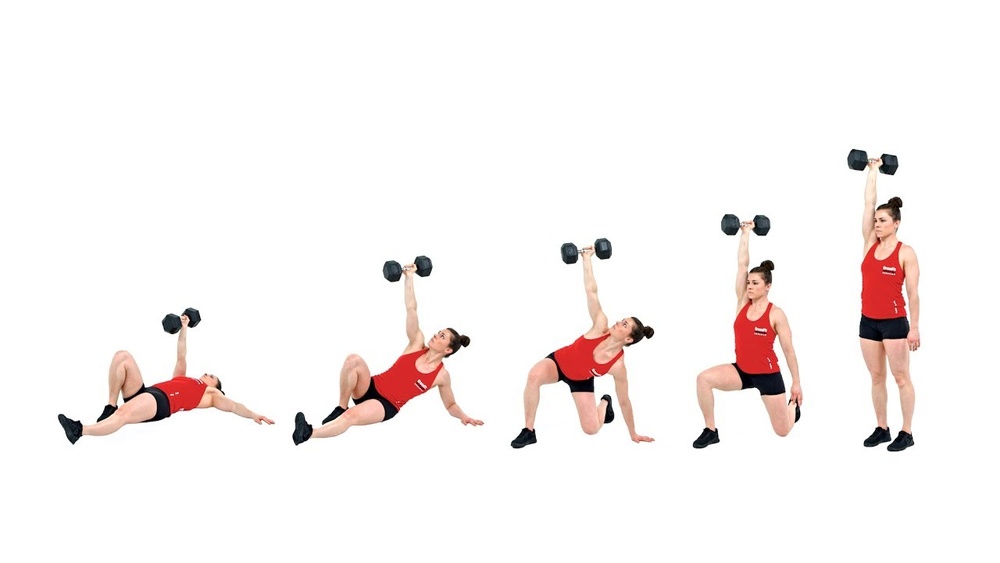
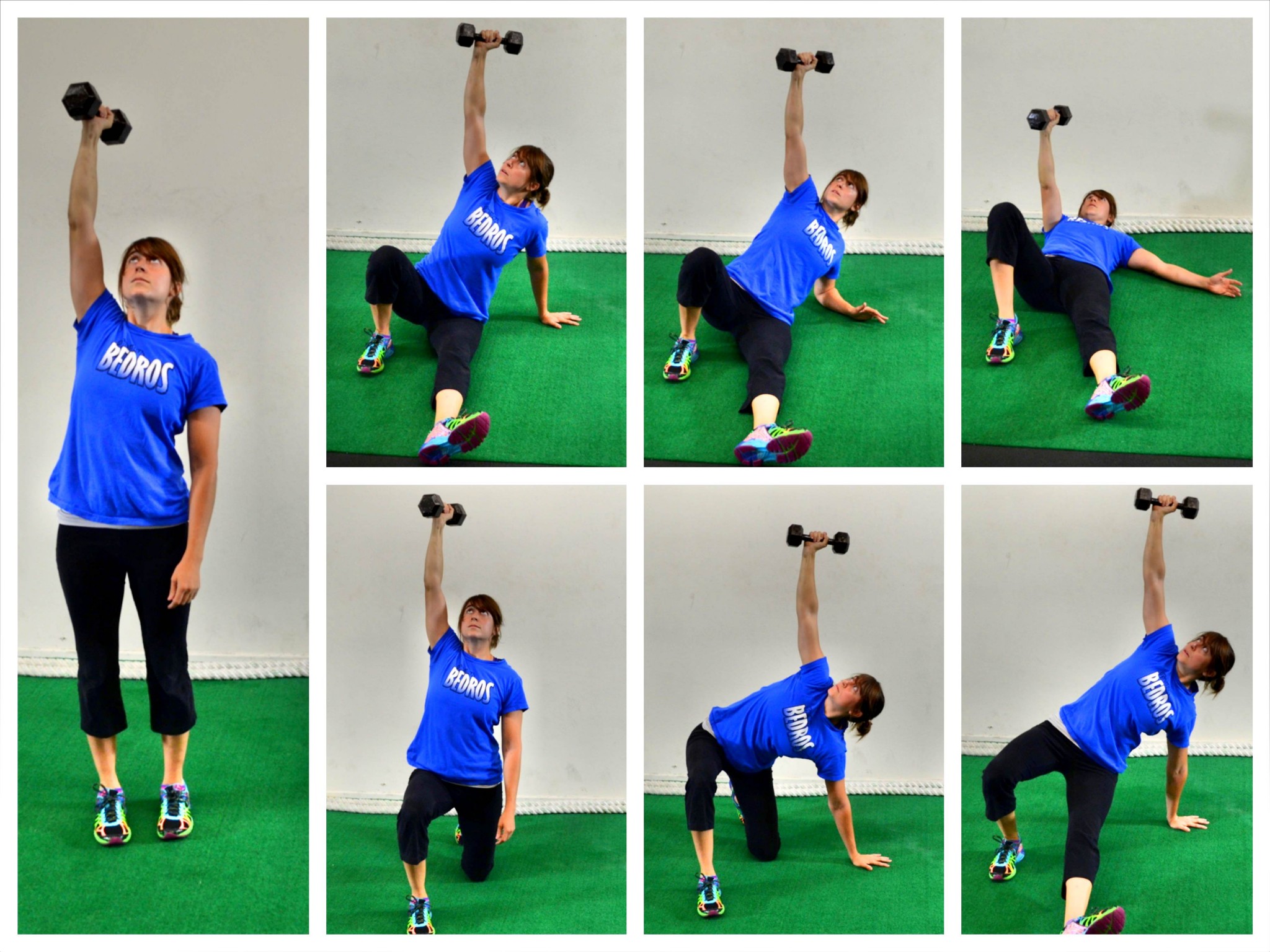
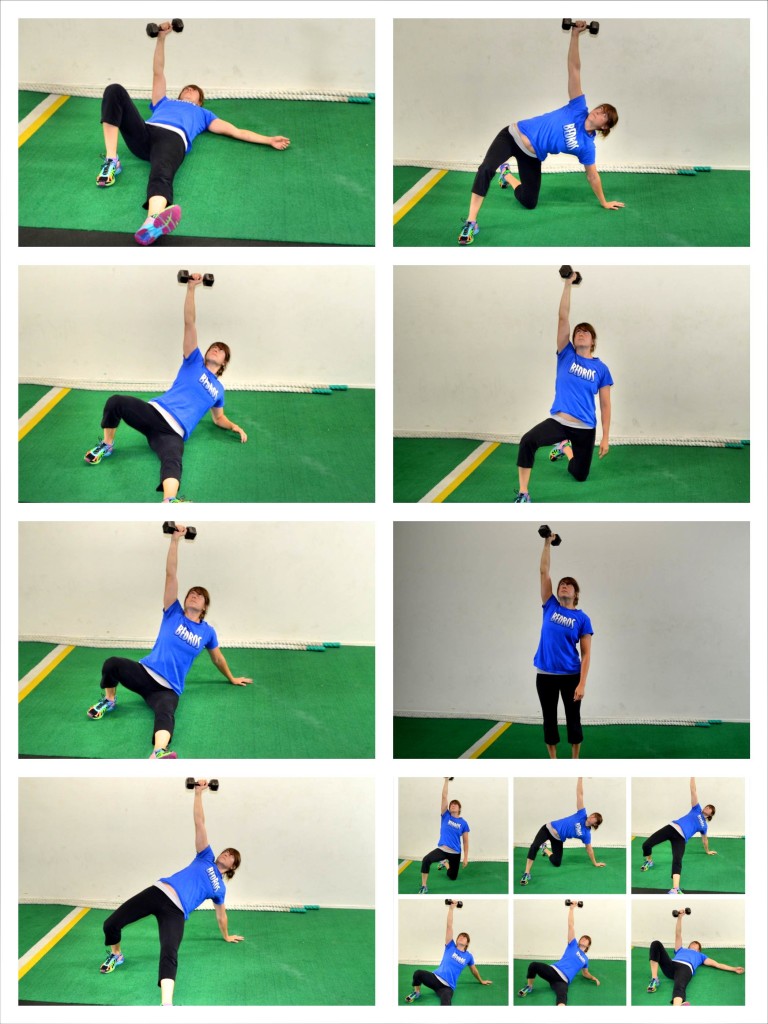
Lie on your back with one dumbbell in your right hand. Extend your right arm straight up, holding the dumbbell. Keep your right leg flat on the ground. Bend your left knee and place your left foot flat on the floor. Your left arm should rest at a 45-degree angle from your body.
Initial Lift And Roll To Elbow
Press the dumbbell up firmly. Use your left arm and left foot to push your body slightly off the ground. Roll onto your left side by bending your left elbow. Support your upper body with your left forearm. Keep your eyes on the dumbbell above.
Transition To Sitting And Kneeling
Push up from your left forearm to your left hand. Raise your torso to a sitting position. Lift your hips off the ground. Shift your weight and bring your left leg under your body. Kneel on your left knee while keeping your right leg extended forward.
Standing Up With Dumbbell
Engage your core and push through your left foot. Rise from the kneeling position to stand tall. Keep the dumbbell locked overhead with your arm fully extended. Maintain a straight wrist and steady gaze on the dumbbell. Balance yourself before moving to the next step.
Reversing The Movement
Lower your body back to the kneeling position. Slowly place your left leg forward and sit down. Transition from sitting to lying down by lowering your torso. Roll onto your left side using your forearm. Finally, lower your arm and dumbbell back to the ground. Repeat on the other side for balance.
Credit: redefiningstrength.com
Common Mistakes To Avoid
Doing the Turkish Get Up with a dumbbell is a great workout. It builds strength and stability. Yet, many make mistakes that reduce its benefits or cause injury. Avoiding common errors helps keep the movement safe and effective. Focus on form and control for the best results.
Poor Wrist Alignment
Keeping your wrist straight is very important. A bent wrist can cause pain and lose control of the dumbbell. Hold the dumbbell firmly with your wrist aligned over your forearm. This position helps support the weight and keeps your arm stable throughout the movement.
Rushing The Movement
Slow down. The Turkish Get Up is not a race. Moving too fast can cause loss of balance and poor form. Take each step carefully. Control your body and the dumbbell. This approach builds strength and reduces injury risk.
Incorrect Breathing Patterns
Breathing properly supports your core and focus. Holding your breath or shallow breathing makes the exercise harder. Inhale deeply before you start moving. Exhale slowly as you rise. This rhythm helps maintain stability and power during the Turkish Get Up.
Modifications For Beginners
Starting the Turkish Get Up with a dumbbell can feel tough for beginners. Modifying the exercise helps build strength and confidence. These changes let you learn the move safely and correctly. Step by step, you get better and avoid injury.
Using Lighter Weights
Choose a dumbbell lighter than usual. This reduces strain on your muscles and joints. Focus on control and smooth movement. Lighter weights help you practice proper form. Gradually increase weight as you gain strength.
Practice Without Weight
Try the Turkish Get Up with no dumbbell first. This lets you learn each step clearly. Your body gets used to the movement pattern. You build balance and coordination without added weight. Practice slowly and focus on technique.
Assisted Variations
Use a wall or a partner for support. Holding a wall helps keep your balance. A partner can guide your movement gently. These aids make the exercise easier and safer. Assisted versions build confidence and reduce falls.
Incorporating Turkish Get Up In Workouts
The Turkish Get Up is a full-body exercise that improves strength and stability. Using a dumbbell adds resistance and challenges your muscles more. This move fits well into many workout plans. It helps build coordination and balance. Adding it to your routine can boost your overall fitness.
This section shows how to include the Turkish Get Up in different workout days. Each part focuses on a specific goal to get the most from this exercise.
Warm-up Routine
Start with light movements to prepare your body. Use a very light dumbbell or no weight at all. Move slowly through the Turkish Get Up steps. This warms up muscles and joints. It also helps your brain learn the pattern.
Include gentle stretches for your shoulders, hips, and core. These areas work hard during the exercise. A good warm-up lowers the risk of injury. It also improves your performance in the workout.
Strength Training Sessions
Use the Turkish Get Up to build muscle and power. Choose a dumbbell weight that is challenging but safe. Perform slow, controlled reps to engage all muscles. Focus on good form to maximize benefits.
Incorporate the Turkish Get Up at the start or middle of your session. It activates many muscle groups before other lifts. Include it with presses, squats, and pulls for balanced strength.
Recovery And Mobility Days
The Turkish Get Up also aids recovery and mobility. Use a light dumbbell or no weight. Move slowly and with control to improve joint mobility.
This exercise helps release muscle tightness. It promotes blood flow and healing. Adding Turkish Get Ups on rest days keeps you active without strain. This supports faster recovery and better movement.
Safety Tips And Precautions
Doing the Turkish Get Up with a dumbbell can build strength and stability. Safety is very important to avoid injury. Follow these tips to keep your workout safe and effective.
Proper Warm-up
Start with light exercises to prepare your muscles and joints. Warm your shoulders, hips, and core well. This helps prevent strains and improves movement. Spend at least 5 to 10 minutes warming up before lifting.
Avoiding Overtraining
Do not do too many sets or reps at once. Give your body time to rest and recover. Overtraining can cause pain and reduce progress. Spread your workouts over several days each week.
Listening To Your Body
Pay close attention to any pain or discomfort. Stop if something feels wrong or hurts. Adjust the weight or technique as needed. Your body knows when to take a break or slow down.

Credit: www.youtube.com
Credit: redefiningstrength.com
Frequently Asked Questions
Can You Perform Turkish Get Up With A Dumbbell?
Yes, you can do Turkish Get Up using a dumbbell. It helps improve strength, stability, and coordination.
Is A Dumbbell Safe For Turkish Get Up Beginners?
Dumbbells are safe for beginners when used with proper form and light weight. Start slow and progress gradually.
What Are The Benefits Of Turkish Get Up With Dumbbells?
Using dumbbells enhances core strength, shoulder stability, and overall body control. It also improves functional fitness and balance.
How To Choose The Right Dumbbell Weight For Turkish Get Up?
Select a dumbbell weight you can control comfortably through all movements. Start light to maintain form and avoid injury.
Conclusion
Doing the Turkish Get Up with a dumbbell is safe and effective. It helps build strength, balance, and coordination. Start with a light weight to learn the movements well. Focus on slow, controlled steps to avoid injury. Practice often to improve your skill and confidence.
This exercise fits well in many workout routines. It challenges your whole body and boosts stability. Try adding it to your fitness plan today. Small progress leads to big results over time. Keep consistent and enjoy the benefits of this unique move.