
Are you looking for a simple yet effective exercise to build a stronger back and improve your overall fitness? Single arm dumbbell rows might be exactly what you need.
This move targets key muscles, boosts your posture, and fits easily into any workout routine. But are single arm dumbbell rows really as good as people say? Keep reading to discover how this exercise can help you reach your fitness goals faster and safer.
Your back will thank you!
Benefits Of Single Arm Dumbbell Rows
Single arm dumbbell rows offer many benefits for strength and fitness. They help build muscles, improve balance, and support better posture. This exercise works several important muscle groups and also engages your core. It is simple to do and fits well into most workout routines.
Using one arm at a time lets you focus on each side separately. This can fix strength differences between your arms. It also helps protect your back and improve your overall stability. Single arm dumbbell rows are effective for people of all fitness levels.
Muscle Groups Targeted
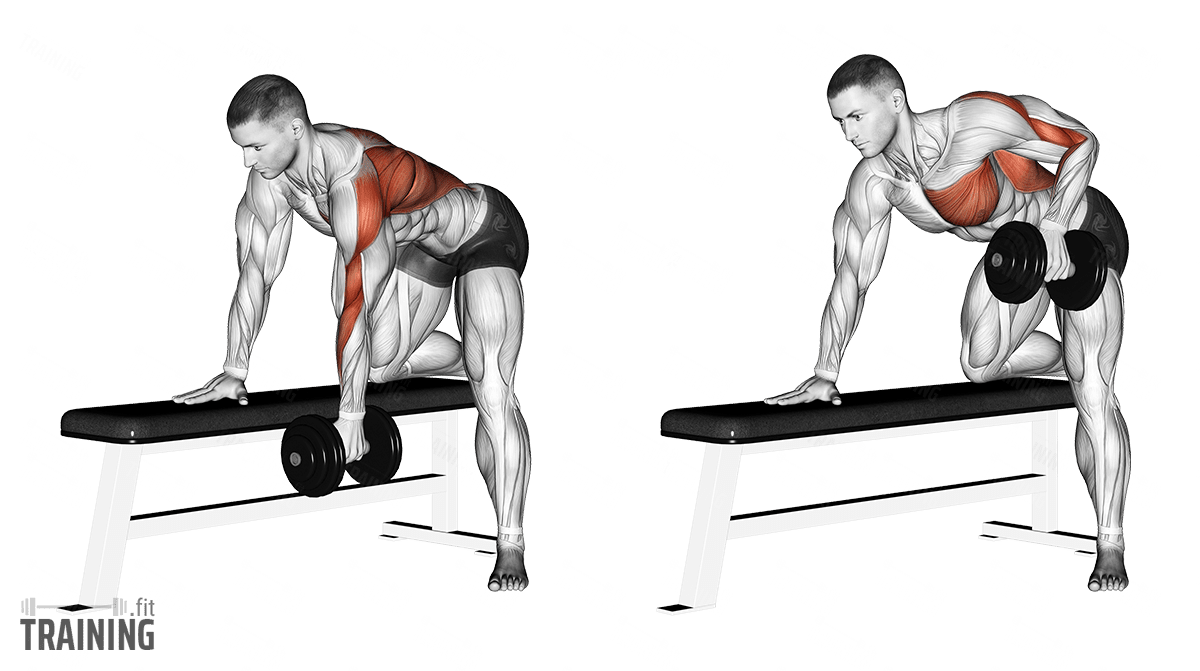
This exercise mainly works the upper back muscles. It targets the latissimus dorsi, rhomboids, and trapezius. Your biceps also get a good workout. The movement helps strengthen your shoulders and arms. It improves muscle tone and supports better upper body strength.
Improved Muscle Balance
Working one arm at a time helps fix muscle imbalances. Each side must lift the weight independently. This prevents the stronger arm from taking over. Balanced muscles reduce the risk of injury. They also improve how your body moves during daily activities.
Enhanced Core Stability
Single arm dumbbell rows require you to keep your body steady. Your core muscles work hard to maintain balance. This strengthens your abs and lower back. A strong core improves posture and supports other exercises. It also helps reduce back pain and boosts overall stability.
Proper Form And Technique
Proper form and technique matter a lot in single arm dumbbell rows. They help target the right muscles and prevent injuries. Using good form makes your workout more effective and safe.
Focus on control and steady movement. Avoid rushing or using too much weight. This section explains how to start, how to move, and common mistakes to avoid.
Starting Position
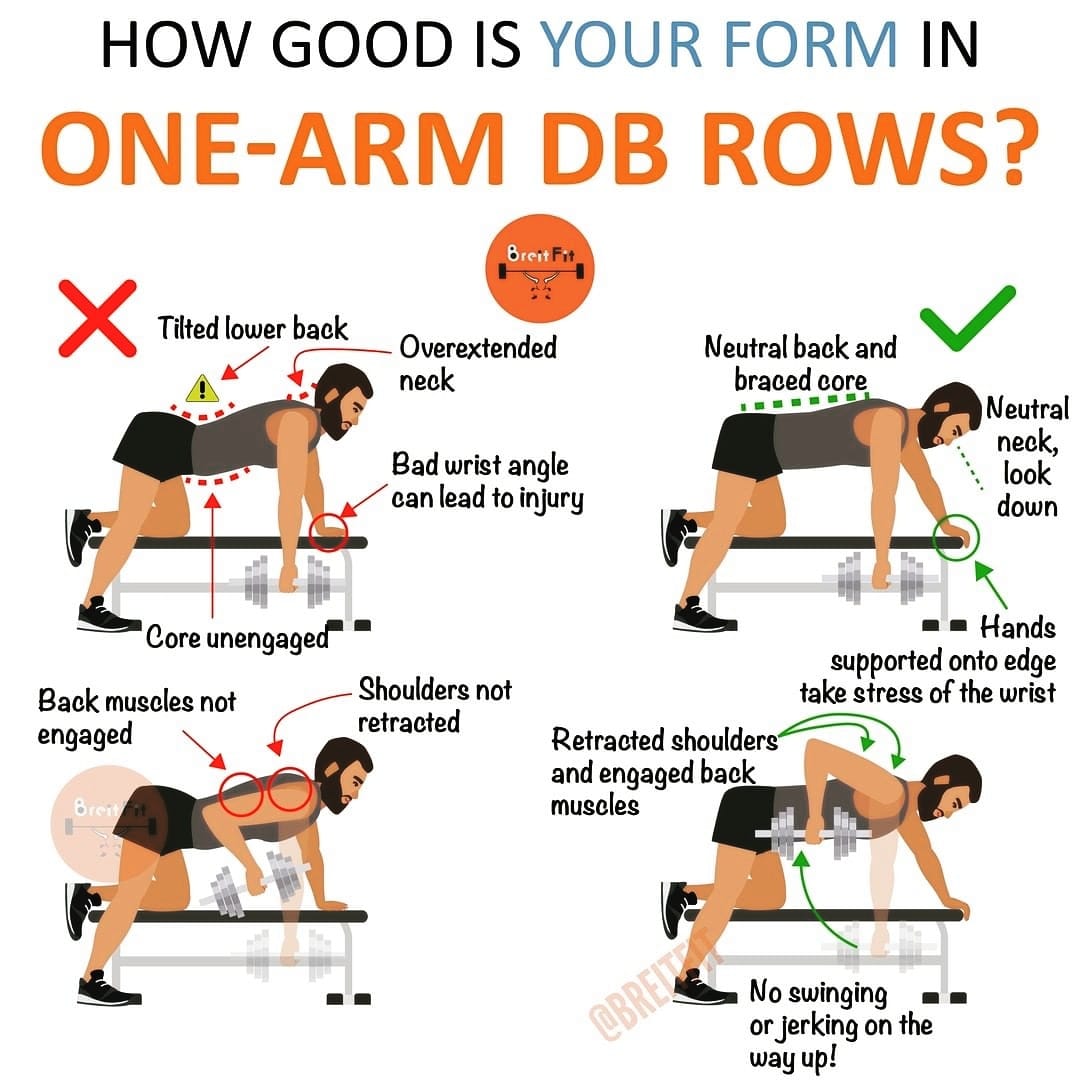
Place one knee and the same side hand on a bench. Keep your back straight and parallel to the floor. Hold the dumbbell in the other hand with your arm extended down. Your head should stay in line with your spine. Brace your core to stay stable.
Movement Execution
Pull the dumbbell up toward your waist. Lead with your elbow, keeping it close to your body. Squeeze your shoulder blade at the top of the movement. Lower the dumbbell slowly back to the start. Keep your body still and avoid twisting.
Common Mistakes To Avoid
Do not round your back or hunch your shoulders. Avoid swinging the dumbbell or using momentum. Do not flare your elbow out wide. Avoid lifting your head or looking up too much. Make sure to keep a controlled, smooth motion.
Variations To Try
Single arm dumbbell rows are great for building strength and muscle in your back. Trying different variations keeps your workouts fresh and targets muscles in new ways. These variations also help improve balance and stability.
Incline Bench Row
Lie face down on an incline bench set at about 45 degrees. Hold a dumbbell in each hand with your arms hanging straight down. Pull the dumbbells up to your sides, squeezing your shoulder blades together. This variation reduces lower back strain and focuses on your upper back muscles.
Kneeling Row
Place one knee and the same-side hand on a bench for support. Hold a dumbbell in the other hand with your arm extended. Pull the dumbbell up toward your hip, keeping your elbow close to your body. This position helps isolate the back muscles and improves core stability.
Renegade Row
Start in a high plank position with a dumbbell in each hand on the floor. Row one dumbbell up while balancing on the other hand and feet. Lower it back down and repeat on the other side. This move works your back, arms, and core all at once.

Credit: www.muscleandfitness.com
Incorporating Rows Into Workouts
Incorporating single arm dumbbell rows into workouts offers many benefits. This exercise targets the back muscles and improves posture. It fits well in different types of training plans. Whether for strength, rehab, or mixing with other moves, rows add value.
Rows help build muscle balance between both sides of the body. They also improve coordination and control. Using one arm at a time allows focus on form and muscle engagement.
Strength Training Routines
Single arm dumbbell rows strengthen the upper back and arms. They support other lifts like deadlifts and pull-ups. Including them in your routine builds muscle and power. Aim for 3 sets of 8-12 reps per side. Use proper form to avoid injury and get results.
Rehabilitation And Mobility
This exercise suits rehab programs for shoulder or back issues. It improves joint mobility and muscle activation. Rows help restore strength without heavy strain. Perform slow, controlled movements to increase range of motion. Consult a therapist to adjust intensity safely.
Combining With Other Exercises
Pair rows with chest presses or push-ups for balanced workouts. This combination targets both front and back muscles. Add core exercises like planks to improve stability. Combining moves creates efficient full-body sessions. Rotate exercises to keep your training fresh and effective.
Equipment And Setup Tips
Before starting single arm dumbbell rows, proper equipment and setup matter a lot. Good preparation helps you do the exercise right. It also keeps you safe and improves your results.
Choosing the right dumbbell, setting up your space, and following safety tips make the workout smooth and effective. These steps help you focus on your form and strength.
Choosing The Right Dumbbell
Select a dumbbell that matches your strength level. Start with a light weight to learn the movement. Gradually increase the weight as you get stronger.
Use a dumbbell with a comfortable grip. It should not slip during the exercise. Adjustable dumbbells work well for different weights.
Setting Up Your Space
Find a clear area with enough room to move freely. Use a bench or sturdy surface to support your body. Make sure the surface is stable and will not slide.
Keep your workout space free from clutter. This prevents accidents and helps you focus. Good lighting also improves visibility and safety.
Safety Considerations
Warm up your muscles before starting the exercise. This reduces the risk of injury. Maintain a straight back to protect your spine.
Control the dumbbell with slow, steady movements. Avoid jerking or swinging it. Stop if you feel pain or discomfort. Breathe steadily throughout the exercise.
Credit: training.fit
Credit: massages-ayurveda-paris.com
Frequently Asked Questions
Are Single Arm Dumbbell Rows Effective For Back Muscles?
Yes, single arm dumbbell rows target the lats, rhomboids, and traps effectively. They enhance muscle balance and improve back strength.
How Do Single Arm Dumbbell Rows Improve Posture?
This exercise strengthens upper back muscles, which support spinal alignment. Improved muscle balance helps reduce slouching and promotes better posture.
Can Single Arm Dumbbell Rows Help With Muscle Imbalances?
Absolutely. Working one arm at a time corrects strength differences between sides. This reduces injury risk and improves overall muscle symmetry.
Are Single Arm Dumbbell Rows Good For Beginners?
Yes, they are beginner-friendly. They allow controlled movement and easy weight adjustments, making them ideal for learning proper rowing technique.
Conclusion
Single arm dumbbell rows build back strength and improve posture. They target muscles on each side independently, helping balance muscle growth. This exercise also engages your core for better stability. You can do it at home or in the gym with little equipment.
Adding these rows to your workout routine supports overall fitness. Try to keep your form correct to avoid injury. Consistency matters most for seeing good results. Give single arm dumbbell rows a try for a stronger back.


