Are you struggling to find the best angle for your incline dumbbell chest press? Getting this right can make a huge difference in how your chest muscles grow and how effective your workout feels.
If you want to maximize your strength and see real results, understanding the perfect incline angle is key. Keep reading, and you’ll discover the exact angle that targets your upper chest the best, helps prevent injury, and boosts your overall performance.
Let’s unlock your full potential with the right incline!

Credit: costavia.com.ar
Benefits Of Incline Dumbbell Chest Press
The incline dumbbell chest press offers many benefits for your upper body. It helps build strength and shape your chest muscles. This exercise uses dumbbells, which allow a greater range of motion. This helps improve muscle tone and control.
Using an incline bench changes the focus of the workout. It targets different muscles than a flat bench press. This makes it a valuable addition to any chest workout routine.
Targeting Upper Chest Muscles
The incline dumbbell press focuses on the upper chest area. This part often gets less attention in regular workouts. Training the upper chest creates a fuller, balanced look. It helps develop the muscles near your collarbone. Strong upper chest muscles improve overall chest shape and strength.
Improving Shoulder Stability
This exercise strengthens the shoulder muscles. Dumbbells require more control than a barbell. This control helps improve shoulder stability and coordination. Stable shoulders reduce the risk of injury during other exercises. They also help in daily activities that need arm strength.
Enhancing Muscle Symmetry
Dumbbells allow each arm to work independently. This helps fix muscle imbalances between sides. Balanced muscles improve posture and reduce injury risk. Symmetry also makes your chest look more even and defined. It encourages better muscle activation on both sides.
Choosing The Right Angle
Choosing the right angle for the incline dumbbell chest press matters. It helps target different parts of the chest. The angle affects how your muscles work and how safe your shoulders feel. Picking the best angle can make your workout more effective and comfortable.
Common Incline Angles Explained
The most popular angles are 15, 30, and 45 degrees. At 15 degrees, the incline is low. This angle works the upper chest gently. A 30-degree angle hits the upper chest more strongly. It is the most common choice for many lifters. The 45-degree angle targets the shoulders more. It feels harder and less focused on the chest.
Effects On Muscle Activation
Lower angles activate more of the chest muscles. Higher angles shift effort to the shoulders and upper chest. At 15 to 30 degrees, your upper chest gets good activation. At 45 degrees, the front shoulders do more work. Changing the angle changes which muscles do most of the work. This helps balance your workout and avoid plateaus.
Avoiding Shoulder Strain
High angles increase shoulder stress. This can cause pain or injury over time. Using a moderate angle, like 30 degrees, reduces strain. Focus on form to keep shoulders safe. Keep your back and shoulders stable during the press. Stop if you feel sharp pain. Protecting your shoulders keeps you training longer and stronger.
Optimal Angle For Muscle Gain
Finding the right angle for the incline dumbbell chest press matters a lot for muscle gain. The angle affects which part of your chest gets worked the most. Using the best angle helps target the upper chest effectively. It also reduces the risk of shoulder strain. Small changes in angle can change your results significantly.
Research-based Recommendations
Studies suggest an incline between 30 and 45 degrees works best for most people. This range activates the upper chest muscles without putting too much stress on the shoulders. Angles above 45 degrees start to shift the focus to the shoulders instead of the chest. Staying within this range helps build muscle safely and efficiently.
Personalizing The Angle
Everyone’s body is different. What works for one might not work for another. Try different angles within the 30 to 45-degree range. Notice which angle feels strongest and most comfortable. Pay attention to muscle engagement and any joint discomfort. Adjust the bench to fit your body and goals.
Adjusting For Different Fitness Levels
Beginners should start at a lower incline, around 30 degrees. This angle offers more control and less strain. Intermediate lifters can try angles closer to 45 degrees to increase upper chest activation. Advanced lifters may vary the angle to target different chest areas. Change angles slowly to avoid injury and encourage steady muscle growth.
Proper Form And Technique
Proper form and technique are essential for the incline dumbbell chest press. They help target the upper chest muscles effectively. Using the right method also prevents injuries. Focus on each step to get the best results.
Grip And Wrist Position
Hold the dumbbells with a firm grip but not too tight. Your wrists should stay straight and aligned with your forearms. Avoid bending your wrists backward or forward. This keeps the pressure on your chest and not your joints.
Controlling The Movement
Move the dumbbells slowly and with control. Lower them to chest level without dropping fast. Push the weights up smoothly. This control helps build muscle and reduces the chance of strain.
Breathing And Tempo Tips
Inhale as you lower the dumbbells toward your chest. Exhale while pushing them back up. Maintain a steady tempo—two seconds down, one second up. This breathing pattern supports strength and focus.
Integrating Incline Press In Workouts
The incline dumbbell chest press is a great exercise for upper chest development. Integrating it into your workout can bring variety and better muscle balance. Planning how to include it helps improve your strength and shape.
Focus on the right angle and proper form to get the best results. Combine it with other chest exercises for a complete workout. Track your progress to see steady improvement over time.
Combining With Other Chest Exercises
Pair the incline press with flat bench presses to target all chest areas. Add push-ups or chest flys for more muscle activation. Use different angles and grips to avoid plateaus. This variety helps build strength evenly and reduces injury risk.
Frequency And Volume Guidelines
Train your chest two to three times per week for good growth. Use three to four sets of eight to twelve reps per session. Allow at least 48 hours of rest between chest workouts. Adjust weights so you feel challenged but maintain good form.
Tracking Progress Effectively
Keep a workout journal to log weights, sets, and reps. Note how you feel and any improvements in strength. Take photos every few weeks to see visual changes. Regular tracking helps keep motivation high and guides your training decisions.
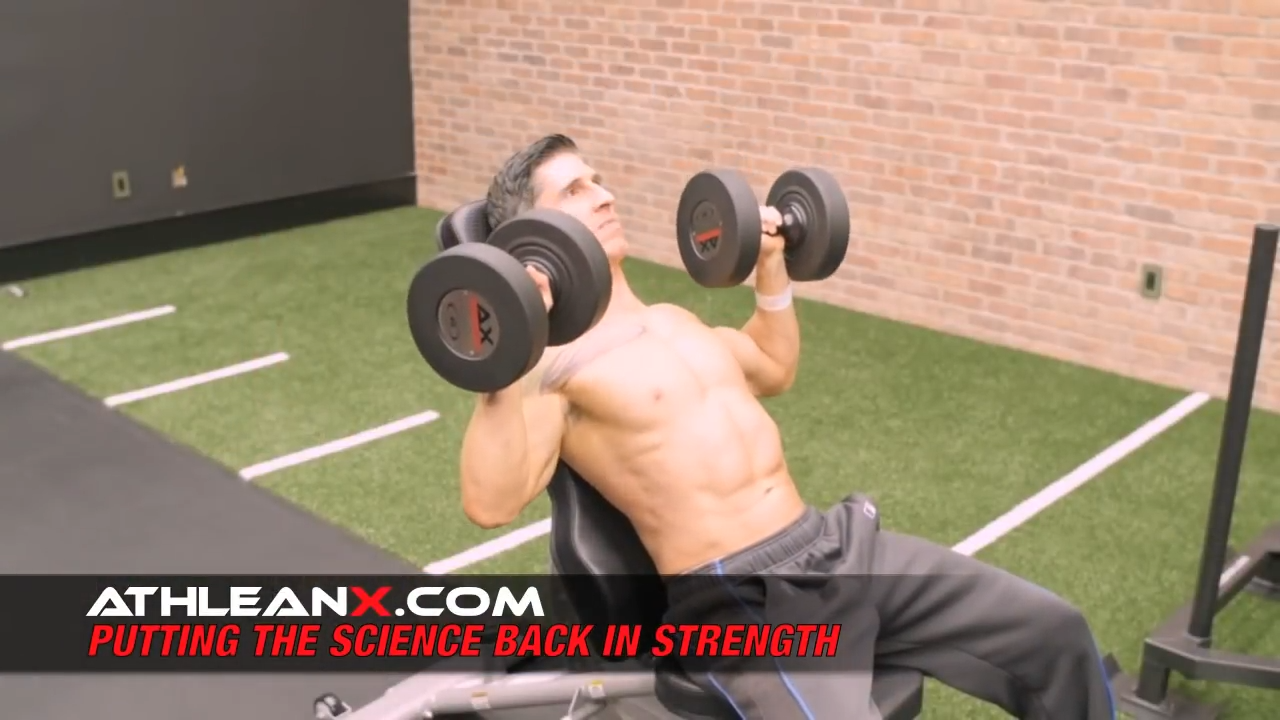
Credit: learn.athleanx.com
Common Mistakes To Avoid
Avoiding common mistakes helps you get the most from the incline dumbbell chest press. Poor form or wrong choices reduce results and can cause injury. Focus on correct angles, weights, and shoulder care. These tips guide you to better workouts.
Using Too Steep Or Flat Angles
Choosing the wrong bench angle limits chest activation. A steep angle targets shoulders more than chest. A flat angle reduces upper chest work. Aim for 30 to 45 degrees for best muscle focus. This angle balances chest and shoulder engagement.
Overloading With Excessive Weight
Lifting too heavy causes poor form and injury risk. Heavy weights reduce control and range of motion. Use manageable weights to keep smooth and steady movement. Gradually increase weight as strength improves. Safety always comes before lifting heavier.
Neglecting Shoulder Health
Ignoring shoulder warm-up invites pain and injury. Weak or tight shoulder muscles limit performance. Include warm-up and stretching before pressing. Strengthen rotator cuff muscles to support shoulder joints. Healthy shoulders improve lifting and reduce discomfort.

Credit: acquetech.com
Frequently Asked Questions
What Is The Best Angle For Incline Dumbbell Chest Press?
The best angle is typically 30 to 45 degrees. This range targets the upper chest effectively. Angles above 45 degrees shift focus to shoulders. Adjust based on comfort and muscle activation.
Why Choose Incline Dumbbell Press Over Flat Bench Press?
Incline dumbbell press emphasizes the upper chest more. It improves shoulder stability and range of motion. Dumbbells allow for balanced muscle development. This variation reduces stress on the shoulders compared to barbells.
How Does Angle Affect Muscle Activation In Incline Press?
A lower incline angle targets the upper chest fibers more. Higher angles engage the shoulders and upper traps. Adjusting the angle shifts muscle emphasis. This helps in balanced chest development and injury prevention.
Can I Use Different Angles For Variety In Workouts?
Yes, varying angles prevents muscle adaptation and plateaus. It promotes balanced chest growth by targeting different fibers. Changing angles keeps workouts engaging and effective. Incorporate 30, 45, and 60-degree angles for best results.
Conclusion
Choosing the right incline angle helps target your upper chest well. A 30 to 45-degree angle works best for most people. Too steep an angle shifts focus to your shoulders. Keep the movement controlled and steady for better results. Adjust the angle slightly to find what feels right.
Remember, good form beats heavy weights every time. Try different angles to see what grows your chest best. Consistency and patience bring the strongest gains. Stay focused and enjoy your workout progress.


