Are you ready to take your chest workouts to the next level? The best angle incline dumbbell press could be the key to unlocking stronger, more defined muscles.
But finding the perfect angle isn’t just about comfort—it’s about maximizing your results and avoiding injury. You’ll discover exactly how to position yourself for the most effective incline press, so every rep counts. Keep reading, because your ideal chest gains start with the right angle.
Benefits Of Incline Dumbbell Press
The incline dumbbell press offers many benefits for chest workouts. It helps develop strength and shape in ways flat presses cannot. Using dumbbells allows a wider range of motion and better control. This exercise targets specific muscle areas for balanced growth.
Many fitness enthusiasts add this move to enhance their upper body. The incline position changes muscle activation, focusing on parts often overlooked. It also helps improve arm and shoulder strength by involving stabilizer muscles. This makes it a great choice for overall upper body development.
Targeting Upper Chest
The incline dumbbell press focuses on the upper chest muscles. These muscles do not get worked much with flat presses. Training this area creates a fuller, rounder chest look. It also improves the chest’s overall strength and shape. This helps balance the chest muscles and avoids flatness.
Improved Muscle Symmetry
Dumbbells require each side to work independently. This helps fix muscle imbalances between the left and right side. Balanced muscles reduce injury risk and improve posture. Symmetrical muscles also enhance the body’s appearance. The incline dumbbell press promotes even muscle development on both sides.
Enhanced Shoulder Activation
The incline angle activates shoulder muscles more than flat presses. This strengthens the front deltoids along with the chest. Stronger shoulders improve pressing power and stability. This makes other lifts safer and more effective. The exercise also helps prevent shoulder injuries.
Choosing The Right Angle
Choosing the right angle for the incline dumbbell press changes the workout’s effect. It changes which muscles get worked the most. The right angle helps build a stronger chest and shoulders safely. It also keeps your form correct and reduces risk of injury. Let’s explore how to pick the best angle for your needs.
Common Incline Angles
The most common angles are 15, 30, and 45 degrees. A 15-degree angle targets the upper chest gently. A 30-degree angle hits the upper chest and front shoulders more. A 45-degree angle works the shoulders strongly but less chest. Each angle changes which muscles feel the work the most.
Impact On Muscle Engagement
Lower angles focus more on the upper chest muscles. Higher angles shift effort toward the shoulders. Angles above 45 degrees feel more like a shoulder press. Staying between 15 and 30 degrees balances chest and shoulder work. The right angle helps target the muscle you want to grow.
Personalizing For Body Type
Body shape changes how angles feel and work. People with longer arms may prefer lower angles. Shorter arms might work better at 30 degrees. Try small angle changes to find what feels best. Listen to your body to avoid strain and pain. Personal comfort leads to better workouts and results.
Proper Form And Technique
Using the correct form and technique in the incline dumbbell press is very important. It helps target the upper chest muscles properly. It also prevents injuries and improves workout results.
Focus on control and smooth movement. Avoid jerky motions or lifting too heavy. This section guides you through the proper steps for best results.
Starting Position
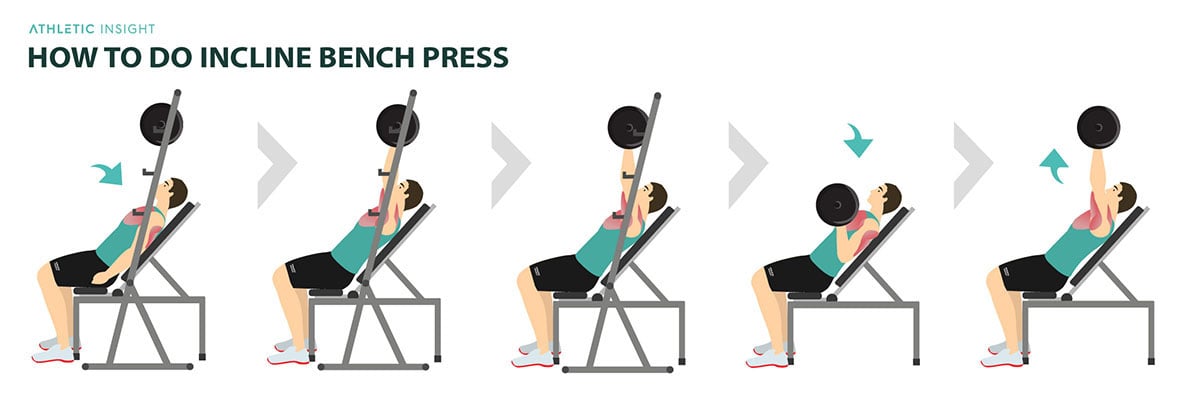
Set the bench at a 30 to 45-degree angle. Sit with your back flat against the bench. Hold a dumbbell in each hand by your sides. Lift the dumbbells up to shoulder level. Keep your feet flat on the floor. Brace your core and keep your chest up.
Movement Path
Press the dumbbells upward and slightly together. Stop when your arms are almost straight but not locked. Slowly lower the dumbbells back down to starting position. Keep the movement controlled and steady. Avoid letting your elbows drop too low.
Breathing Tips
Inhale deeply before you press the weights. Exhale as you push the dumbbells up. Inhale again while lowering the dumbbells down. Maintain a steady breathing rhythm. This helps keep your muscles supplied with oxygen.
Optimal Dumbbell Weight Selection
Choosing the right dumbbell weight is key for the incline dumbbell press. It affects your strength gains and safety. The goal is to select a weight that challenges muscles but allows full control. Too light, and the exercise loses effectiveness. Too heavy, and form breaks down, risking injury. Finding this balance helps build muscle steadily and safely.
Balancing Challenge And Control
Select a weight that feels tough but manageable. You should complete your sets with good form. If your arms shake or the back arches, the weight is too heavy. If the last reps feel easy, increase the weight slightly. Control ensures the muscle works fully without strain. This balance prevents injury and boosts progress.
Progressive Overload Strategies
Gradually increase weight to keep building strength. Add small increments when you can finish all reps easily. Tracking progress helps you know when to move up. Progressive overload forces muscles to adapt and grow. Avoid big jumps in weight. Slow, steady increases yield the best results.
Avoiding Common Mistakes
Don’t pick weights just by guessing. Test different weights to find your starting point. Avoid using momentum to lift the dumbbells. Keep movements slow and controlled. Don’t sacrifice form for heavier weights. Rest between sets to maintain strength. Proper weight selection prevents injuries and improves gains.
Incorporating Incline Press Into Workouts
Incorporating the incline dumbbell press into your workout helps build upper chest strength. It targets muscles differently than flat or decline presses. This exercise adds variety and balance to your chest routine.
Frequency And Volume
Perform the incline dumbbell press two to three times a week. Aim for three to four sets each session. Keep repetitions between eight and twelve for muscle growth. Adjust weight to maintain good form throughout.
Pairing With Other Chest Exercises
Combine incline presses with flat bench presses for full chest development. Add push-ups or cable flys to increase muscle activation. This mix improves strength and muscle shape. Change order or exercises each week to avoid plateaus.
Recovery And Rest
Rest at least 48 hours before working the chest again. Muscles need time to repair and grow stronger. Sleep well and eat protein-rich foods to support recovery. Avoid training the same muscle group on consecutive days.
Credit: polimexparcel.com
Common Errors And How To Fix Them
Performing the incline dumbbell press with the right form is key to avoid injury and get results. Many people make common mistakes that reduce the exercise’s effectiveness. Fixing these errors improves your workout and keeps you safe.
Elbow Positioning
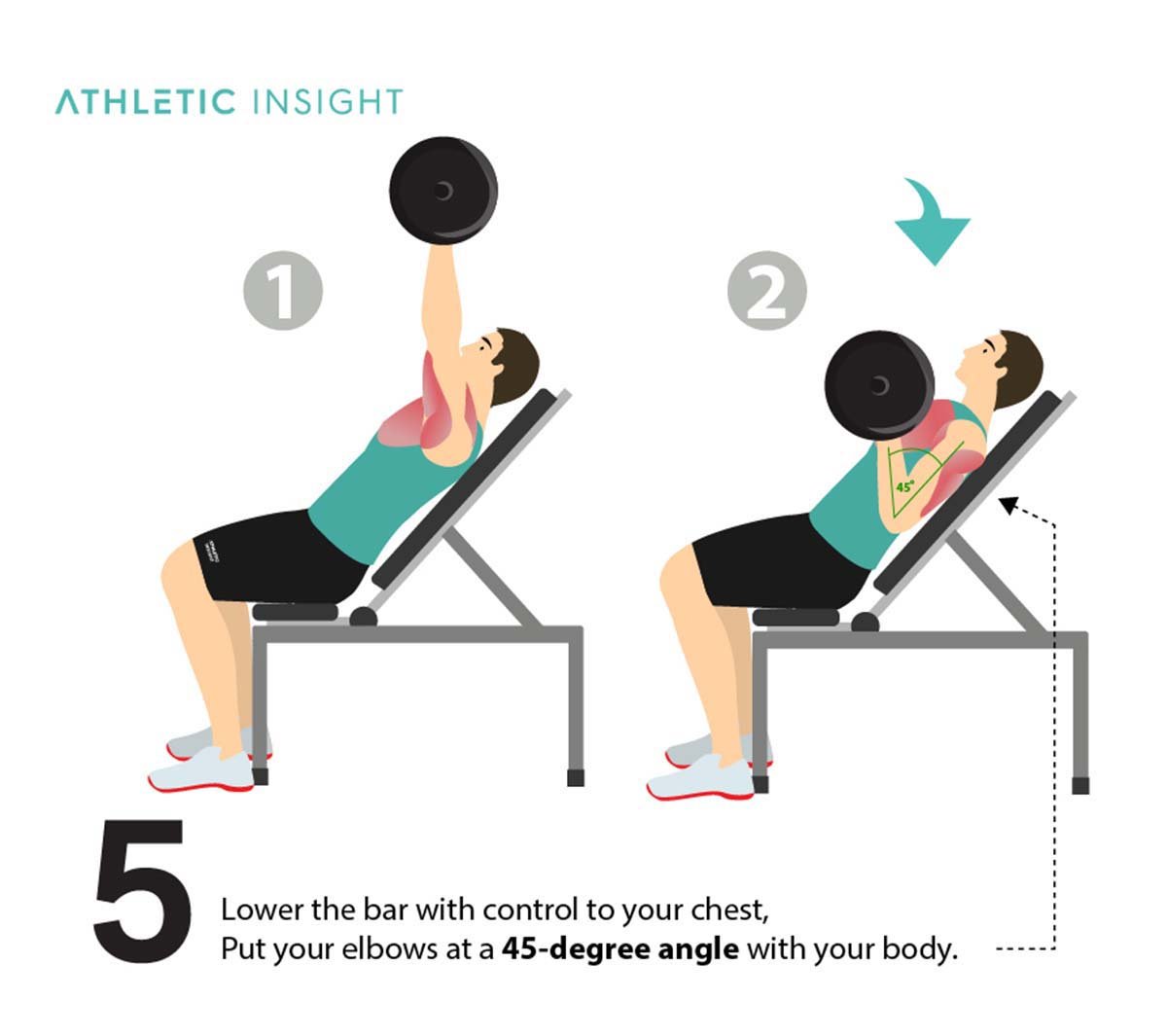
Keep your elbows at about a 45-degree angle from your body. Flaring them out too wide puts stress on your shoulders. Tucking them too close limits chest activation. Find a middle ground to protect joints and target muscles well.
Arching The Back
A slight arch in the back is normal, but avoid excessive arching. Press your lower back gently against the bench. Too much arch strains your spine and reduces chest work. Tighten your core to keep a stable and safe position.
Uneven Movement
Both arms should move evenly during the press. Uneven movement wastes effort and causes muscle imbalances. Lower the weights slowly and push up with control on both sides. Focus on smooth, balanced motion to get the best results.
Advanced Variations To Boost Growth
Advanced variations of the incline dumbbell press can help you build muscle faster. These techniques focus on different parts of the movement. They increase time under tension and challenge your muscles in new ways. Using these methods regularly can lead to better strength and size gains.
Tempo Changes
Tempo changes mean controlling the speed of your reps. Slow down the lowering phase to increase muscle tension. Hold the dumbbells at the bottom for a second or two. Then press up quickly. This method boosts muscle growth by increasing time under tension. It also improves muscle control and stability.
Pause Reps
Pause reps involve stopping at the hardest point of the lift. Hold the dumbbells still for one or two seconds before pressing up. This removes momentum and forces your muscles to work harder. Pause reps increase strength and help fix weak spots in your lift. Try adding pauses during the middle of the press for best results.
Single-arm Press
The single-arm press targets each side of your chest individually. This helps fix muscle imbalances and improves core stability. Use one dumbbell at a time, pressing slowly and with control. The single-arm press also challenges your balance and coordination. It’s a great way to add variety and focus on muscle growth.
Credit: www.sietesetenta.com.ar
Safety Tips And Injury Prevention
Performing the Best Angle Incline Dumbbell Press safely is key to avoid injuries. Proper care keeps your muscles strong and joints healthy. Follow these tips to protect your body during workouts.
Warm-up Exercises
Start with light cardio to increase blood flow. Do arm circles and shoulder rolls to loosen muscles. Use lighter dumbbells to practice the motion. Warming up prepares your muscles for heavier lifts.
Spotter Importance
A spotter helps you lift safely and avoid accidents. They assist if the weight feels too heavy. Having someone nearby boosts your confidence. Never lift heavy dumbbells alone, especially on an incline bench.
Joint Care
Keep your wrists and elbows steady during the press. Avoid locking your elbows at the top of the lift. Use controlled movements to protect your joints. Stretch your shoulders and arms after your workout. Joint care reduces pain and improves long-term strength.

Credit: acquetech.com
Frequently Asked Questions
What Is The Best Angle For Incline Dumbbell Press?
The best angle for incline dumbbell press is between 30 to 45 degrees. This range targets the upper chest effectively without straining the shoulders.
How Does Incline Dumbbell Press Benefit Chest Muscles?
Incline dumbbell press emphasizes the upper chest and front shoulders. It helps build muscle mass and improves chest definition and strength.
Can Incline Dumbbell Press Reduce Shoulder Pain?
Yes, using the correct incline angle reduces shoulder strain. Proper form and moderate weight prevent injury and enhance workout safety.
How Often Should I Do Incline Dumbbell Press?
Perform incline dumbbell press 2-3 times weekly. Allow at least 48 hours of rest for muscle recovery and growth.
Conclusion
The best angle incline dumbbell press helps build strong chest muscles. It targets upper chest areas effectively. Using the right angle reduces shoulder strain. Start with light weights to avoid injury. Consistency is key for good results. Combine this exercise with a balanced workout plan.
Keep your form correct for best gains. Try different angles to find what suits you. Stay patient and track your progress. Your chest strength and shape will improve over time.