If you want a stronger, more defined back, dumbbells are your best friends. You don’t need fancy gym machines or crowded spaces to build muscle and improve your posture.
With just a pair of dumbbells, you can target every part of your back effectively. Imagine feeling confident in your clothes, standing taller, and avoiding back pain—all from workouts you can do at home or anywhere. Keep reading, and you’ll discover the best back dumbbell workout that fits your routine and delivers real results.
Benefits Of Dumbbell Back Workouts
Dumbbell back workouts offer many benefits for strength and fitness. They help build a strong, balanced back and improve posture. Using dumbbells targets muscles on each side separately. This leads to better muscle control and symmetry.
These workouts also allow a greater range of motion. Dumbbells move freely, letting your body move naturally. This helps stretch and contract muscles fully for better growth. Exercises with dumbbells often feel more comfortable and less restrictive.
Another advantage is convenience. Dumbbells are easy to use at home or gym. They take up little space and suit many exercises. This versatility keeps workouts fresh and effective for all fitness levels.
Improved Muscle Balance
Dumbbells work each side of the back independently. This prevents one side from becoming stronger. Balanced muscles reduce the risk of injury. They also improve posture and overall strength. This balance helps with everyday activities and sports.
Enhanced Range Of Motion
Dumbbells allow more natural movement than machines. Your arms can move freely in many directions. This helps muscles stretch and contract fully. Better movement means stronger and more flexible muscles. It also reduces joint stiffness and tightness.
Convenience And Versatility
Dumbbells are easy to find and store. You can use them at home or at the gym. They suit many exercises for different back muscles. You can change weights as you get stronger. This makes dumbbells a flexible option for all users.

Credit: www.youtube.com
Key Back Muscles To Target
Strong back muscles improve posture and reduce injury risk. Targeting key muscles helps build a balanced, powerful back. Dumbbell workouts can focus on these muscles effectively. Understanding each muscle’s role guides your training plan.
Latissimus Dorsi
The latissimus dorsi is the largest back muscle. It covers the middle and lower back. This muscle helps pull your arms down and back. Exercises like dumbbell rows target the lats well. Strengthening lats improves upper body strength and width.
Rhomboids
Rhomboids lie between your shoulder blades. They pull the shoulder blades together. Strong rhomboids improve posture and reduce shoulder pain. Dumbbell reverse flys work the rhomboids effectively. Focus on controlled movements for best results.
Trapezius
The trapezius spans the upper back and neck. It controls shoulder blade movement and supports the neck. Dumbbell shrugs build the upper traps. Mid and lower traps activate during rows and pulls. Balanced trap training helps shoulder stability.
Erector Spinae
The erector spinae runs along the spine. It supports the spine and helps with posture. This muscle group aids in lifting and bending movements. Dumbbell deadlifts and back extensions strengthen erector spinae. Strong spinal muscles reduce back pain risks.
Essential Dumbbell Exercises
Dumbbell exercises are key for a strong back. They help build muscles and improve posture. These moves also reduce the risk of injury. You can do them at home or in the gym. Dumbbells are easy to use and work many muscles at once.
Here are four essential dumbbell exercises to add to your back workout. Each targets different parts of your back for balanced strength.
Single-arm Dumbbell Row
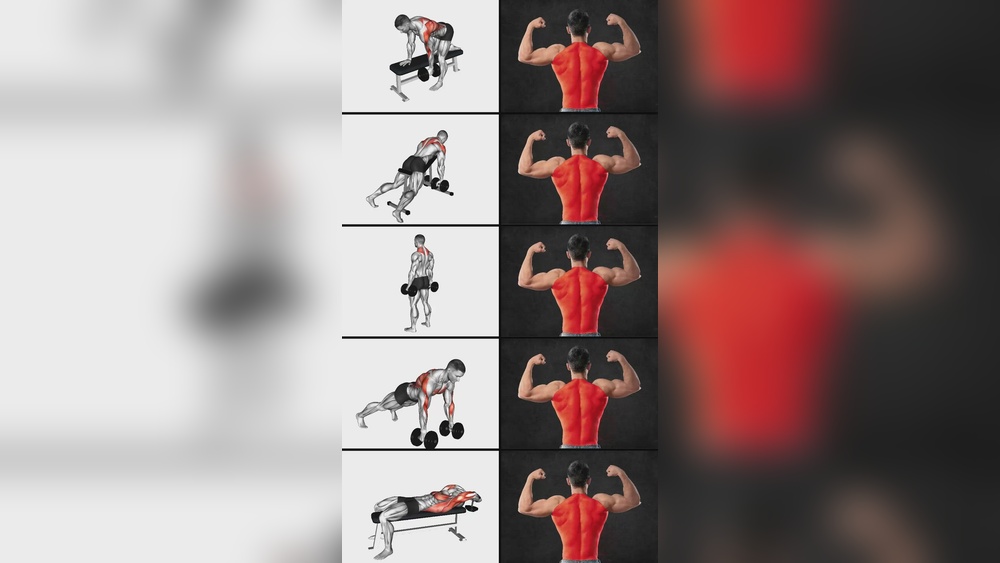
This exercise works your upper and middle back muscles. Place one knee and hand on a bench. Hold a dumbbell in the other hand. Pull the dumbbell up to your waist. Keep your back straight and core tight. Lower the dumbbell slowly and repeat.
Renegade Row
The renegade row strengthens your back and core. Start in a push-up position with a dumbbell in each hand. Row one dumbbell up while balancing on the other hand. Keep your body straight without twisting. Lower the dumbbell and switch sides. This move also improves stability.
Dumbbell Deadlift
This exercise targets your lower back and hamstrings. Stand with feet shoulder-width apart. Hold dumbbells in front of your thighs. Bend at your hips and lower the dumbbells down your legs. Keep your back flat and knees slightly bent. Stand back up by pushing your hips forward.
Reverse Fly
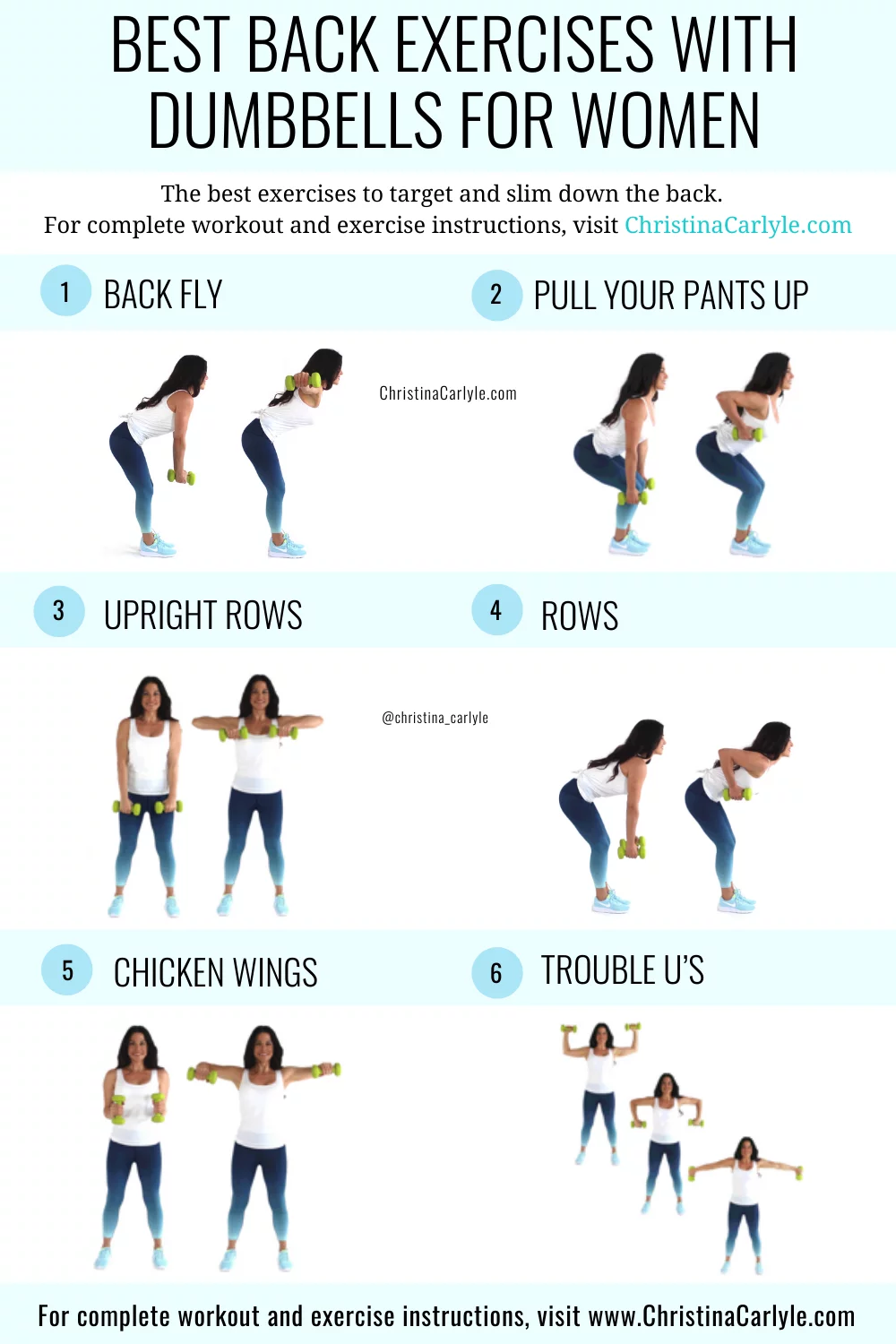
The reverse fly works your upper back and shoulders. Hold a dumbbell in each hand. Bend forward at your hips with a flat back. Raise both dumbbells out to the sides. Keep a slight bend in your elbows. Slowly lower the weights and repeat the movement.

Credit: www.flumidieselbosch.com.br
Workout Plans For Different Goals
Different workout goals need different plans. A back dumbbell workout can help build strength, grow muscles, or improve endurance. Choose the right routine to match your goal. This way, you get the best results from your effort.
Each plan changes the number of sets, reps, and rest time. This affects how your muscles respond and grow. Below are three common workout plans. Pick the one that fits your goal.
Strength Building Routine
Focus on lifting heavier dumbbells with fewer reps. Aim for 4 to 6 reps per set. Do 3 to 5 sets with rest breaks of 2 to 3 minutes. This helps your muscles get stronger. Use exercises like dumbbell rows and deadlifts.
Muscle Hypertrophy Focus
Train with moderate weight and more reps. Target 8 to 12 reps per set. Complete 3 to 4 sets with 60 to 90 seconds rest. This routine helps muscles grow bigger. Try dumbbell pullovers and reverse flyes for good results.
Endurance Training
Use lighter weights and do many reps. Do 15 to 20 reps per set. Perform 3 to 4 sets with short rest periods of 30 to 45 seconds. This plan builds muscle stamina. Exercises like dumbbell shrugs and bent-over rows work well.
Proper Form And Technique
Proper form and technique are essential for an effective back dumbbell workout. They help you target the right muscles and avoid injuries. Focus on how you move and hold your body during each exercise. This improves your strength and helps you get better results faster.
Maintaining Neutral Spine
Keep your spine straight and neutral throughout the exercise. Avoid rounding or arching your back. A neutral spine protects your lower back from strain. Engage your core muscles to support your spine. This position helps you lift weights safely and with better control.
Controlled Movement
Move the dumbbells slowly and with control. Avoid using momentum or swinging the weights. Controlled movement keeps tension on your back muscles. It also lowers the risk of injury. Focus on both lifting and lowering phases of the exercise. This balance improves muscle strength and endurance.
Breathing Tips
Breathe deeply and steadily during your workout. Exhale as you lift the dumbbells. Inhale as you lower them back down. Proper breathing improves oxygen flow to your muscles. It also helps you maintain focus and stamina. Avoid holding your breath while lifting weights.
Credit: vixencomposites.com
Common Mistakes To Avoid
When performing back dumbbell workouts, avoiding common mistakes can help you train safely and effectively. These errors may slow progress or cause injury. Focus on proper form and technique for better results.
Using Too Much Weight
Choosing weights that are too heavy leads to poor form. It can strain muscles and joints. Start with lighter weights and increase gradually. Control your movements to target the back muscles properly.
Neglecting Warm-up
Skipping warm-up exercises increases injury risk. A good warm-up loosens muscles and improves blood flow. Spend 5 to 10 minutes on light cardio or dynamic stretches before lifting dumbbells.
Poor Posture
Bad posture reduces workout benefits and causes pain. Keep your back straight and shoulders down. Avoid rounding your spine or letting your head drop. Good posture protects your back and improves muscle engagement.
Equipment And Setup Tips
Setting up the right equipment and space helps improve your back dumbbell workout. It makes exercises easier and safer. Simple steps can create a better workout experience. Focus on the right dumbbells, a good space, and safety rules before you start.
Choosing The Right Dumbbells
Select dumbbells that match your strength and goals. Start with lighter weights to avoid injury. Gradually increase weight as you get stronger. Adjustable dumbbells save space and offer variety. Make sure the grip feels comfortable and secure in your hands. Avoid weights that are too heavy or too light.
Workout Space Arrangement
Pick a clear area with enough room to move freely. Remove any objects that may cause tripping. A flat, stable floor is best for balance and support. Place a mat under you to protect the floor and reduce noise. Good lighting helps you maintain proper form. Keep water nearby to stay hydrated during exercises.
Safety Precautions
Warm up before lifting dumbbells to prepare your muscles. Check dumbbells for damage or loose parts before use. Use smooth, controlled movements to avoid strain. Don’t rush through exercises; focus on proper form. Keep your back straight to protect your spine. Stop immediately if you feel pain or discomfort.
Progress Tracking And Adjustments
Tracking your progress and making adjustments are key to improving your back dumbbell workouts. It helps you see how far you have come and what to change next. This keeps your training effective and safe. Regular checks help prevent plateaus and injuries. Let’s look at simple ways to track and adjust your workouts.
Recording Workouts
Write down your exercises, weights, sets, and reps every session. Use a notebook or an app. This shows your improvements over time. It also helps plan future workouts. Seeing your progress motivates you to keep going. Note any changes in how you feel during exercises. This helps spot what works best for you.
Increasing Intensity
Gradually raise the weight or reps to challenge your muscles. Small increases avoid injury and build strength safely. Add more sets or reduce rest time for extra effort. Change dumbbell exercises to target different back muscles. This stops your body from getting used to one routine. Keep your workouts fresh and effective.
Listening To Your Body
Pay attention to pain or discomfort during exercises. Sharp pain means stop immediately. Mild soreness is normal after a good workout. Rest if you feel too tired or weak. Your body needs time to recover and grow stronger. Adjust your workout intensity based on how you feel. Balance effort and rest for steady progress.
Frequently Asked Questions
What Are The Best Dumbbell Exercises For Back Muscles?
The best dumbbell exercises for back include rows, deadlifts, and pullovers. These target the lats, traps, and rhomboids effectively. They improve strength, posture, and muscle definition. Incorporate varied angles and grips for balanced muscle development and injury prevention.
How Often Should I Do Back Dumbbell Workouts?
For optimal results, train your back with dumbbells 2-3 times weekly. Allow 48 hours for muscle recovery between sessions. Consistency combined with progressive overload ensures strength gains and muscle growth. Adjust frequency based on your fitness level and goals.
Can Dumbbell Workouts Build A Stronger Back At Home?
Yes, dumbbell workouts can build a stronger back at home. They provide resistance to activate key back muscles effectively. Exercises like single-arm rows and deadlifts require minimal space and equipment. Consistent training promotes strength, posture, and muscle tone without gym access.
What Is The Proper Form For Dumbbell Rows?
Keep your back flat and core engaged during dumbbell rows. Pull the weight towards your hip while squeezing shoulder blades together. Avoid rounding your shoulders or using momentum. Proper form maximizes muscle activation and reduces injury risk.
Conclusion
Building a strong back with dumbbells helps improve posture and strength. These exercises fit well into any workout routine. You only need simple equipment and a little time. Stay consistent and increase weights slowly for best results. Feel your muscles grow and your body get stronger.
Remember to rest and eat well to support your progress. Keep pushing forward, and enjoy the benefits of a healthier back. Simple steps lead to big changes. Start today and feel the difference soon.