
Have you ever wondered if you can get the same workout results using dumbbells instead of barbells? Maybe you don’t have access to a barbell, or you’re looking for a way to switch up your routine.
The good news is, you’re not alone in asking this question. Choosing between dumbbells and barbells can impact your strength gains, muscle balance, and even your workout safety. You’ll discover the key differences, benefits, and when it makes sense to pick one over the other.
By the end, you’ll know exactly how to make the best choice for your fitness goals. Ready to find out? Let’s dive in!

Credit: www.youtube.com
Dumbbells Vs Barbells
Dumbbells and barbells are two popular tools for strength training. Each has unique features that affect workout style and results. Choosing between them depends on your goals and preferences.
This section compares dumbbells and barbells to help you decide which suits you best.
Key Differences
Dumbbells are handheld weights used one in each hand. Barbells are long bars with weight plates on both ends. Dumbbells offer more freedom of movement. Barbells allow lifting heavier weights safely.
Dumbbells need more balance and coordination. Barbells provide stability and control. Both target muscles differently due to grip and movement style.
Pros And Cons
Dumbbells improve muscle balance and coordination. They allow a wider range of motion. Dumbbells are good for beginners and home workouts. But, they usually have lower maximum weights.
Barbells help build strength faster with heavier loads. They are great for compound lifts like squats and deadlifts. Barbells require a rack and more space. Poor form with barbells can increase injury risk.
Exercise Variations
Exercise variations play a big role in any workout plan. Different tools offer unique benefits. Dumbbells and barbells both help build strength. Choosing between them depends on your goals and space.
Using dumbbells instead of barbells allows for more movement freedom. This can improve muscle balance and coordination. Here are common exercises for each and ways to switch barbell moves to dumbbells.
Common Dumbbell Exercises
Dumbbells are perfect for many exercises. Dumbbell curls target your biceps with controlled motion. Dumbbell presses work your chest and shoulders. Dumbbell rows help strengthen your back. Lunges with dumbbells improve leg strength and balance. Dumbbells let each side work independently, reducing muscle imbalances.
Common Barbell Exercises
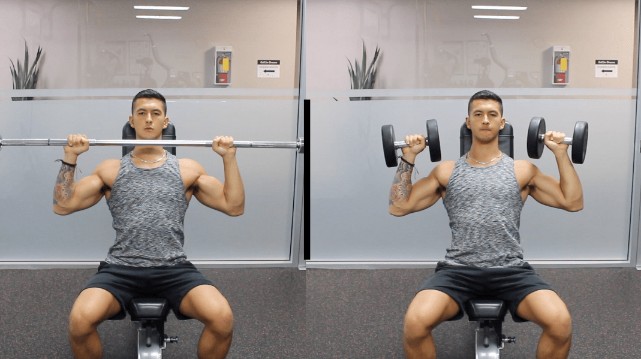
Barbells are great for lifting heavier weights. The barbell squat builds strong legs and glutes. Barbell bench press focuses on chest and triceps. Deadlifts with a barbell target your entire posterior chain. Overhead presses with a barbell build shoulder power. Barbells allow lifting heavier loads safely with proper form.
Adapting Barbell Workouts To Dumbbells
Many barbell exercises have dumbbell versions. Swap barbell squats for dumbbell goblet squats. Replace bench presses with dumbbell presses. Use dumbbell deadlifts instead of barbell deadlifts. Overhead presses work well with dumbbells too. Dumbbells increase range of motion and challenge stabilizer muscles more.
Adjust weight and reps to match your strength. Focus on form to avoid injury. Using dumbbells can add variety and improve overall fitness.
Muscle Activation And Benefits
Dumbbells and barbells both help build muscle. Each tool activates muscles in unique ways. Understanding muscle activation and benefits helps choose the right equipment. This section explains the differences in muscle work and gains.
Range Of Motion
Dumbbells allow a greater range of motion than barbells. You can move your arms more freely with dumbbells. This helps stretch muscles more during exercises. Stretching muscles fully can improve muscle growth. Barbells restrict movement because both hands hold the bar fixed.
Stabilizer Muscle Engagement
Dumbbells require more balance and control. Your smaller stabilizer muscles work harder to keep the weights steady. These muscles support joints and improve overall strength. Barbells need less stabilizer muscle effort. They keep the bar balanced for you during lifts.
Strength Gains
Barbells allow lifting heavier weights safely. This helps build maximum strength fast. Dumbbells improve strength too, but usually with lighter weights. They help fix muscle imbalances by training each side separately. Both tools support strength growth but in different ways.
Safety And Injury Risks
Using dumbbells instead of barbells changes how your body moves. This change affects safety and injury risks. Both tools have benefits and dangers. Knowing these can help you train smart and avoid harm.
Common Mistakes With Dumbbells
Many people use dumbbells with poor form. Dropping weights or losing control is common. Lifting too heavy without support causes muscle strain. Not warming up increases the chance of injury. Ignoring wrist and shoulder alignment leads to joint pain.
Barbell Safety Tips
Barbells need careful handling to avoid accidents. Always use collars to keep plates secure. Use a spotter during heavy lifts for safety. Keep your back straight to prevent spine injuries. Avoid sudden movements to reduce muscle tears.
When To Choose One Over The Other
Dumbbells offer more freedom and can fix muscle imbalances. They are safer for beginners due to lighter weights. Barbells allow heavier lifting but require more control. Choose dumbbells for joint comfort and flexibility. Pick barbells to build strength with heavy loads.
Equipment And Space
Choosing between dumbbells and barbells depends a lot on equipment and space. Both tools help build strength but differ in cost, size, and ease of moving them. These differences affect your workout setup and budget.
Cost Comparison
Dumbbells usually cost less than barbells and weight plates. Buying a full barbell set can be expensive. Dumbbells come in fixed or adjustable types. Adjustable dumbbells save money by replacing many pairs. This makes dumbbells a budget-friendly choice for home gyms.
Space Requirements
Dumbbells need less space than barbells. You can store them on small racks or shelves. Barbells require a larger area for lifting safely. You also need room for plates and a bench. For small spaces, dumbbells fit better and keep the area tidy.
Portability
Dumbbells are easier to move around. Their compact size fits in car trunks or closets. Barbells are long and heavy, making transport hard. Dumbbells let you change workout spots quickly. This flexibility suits users with limited space or who travel.
Training Goals And Preferences
Choosing between dumbbells and barbells depends on your training goals and preferences. Each tool offers unique benefits for different fitness aims. Understanding these can help you pick the right option for your workouts.
Building Muscle Size
Dumbbells allow a greater range of motion for muscles. This helps target muscles more deeply. Barbells let you lift heavier weights. Heavier weights can boost muscle growth faster. Using both can balance muscle size development.
Improving Strength
Barbells are best for lifting very heavy weights. They provide stability for maximum strength gains. Dumbbells help build strength but require more control. They activate stabilizing muscles during exercises. Strength training with barbells often leads to quicker progress.
Enhancing Muscle Symmetry
Dumbbells promote balanced muscle development. Each side works independently, reducing strength imbalances. Barbells may allow one side to dominate. Dumbbells improve coordination and muscle control. They help fix muscle imbalances effectively.
Sample Dumbbell Workouts
Dumbbells offer great flexibility for workouts. You can target many muscle groups with just a pair. Below are sample dumbbell workouts to try. Each routine focuses on different parts of the body. These workouts fit various fitness levels and goals. Use them to build strength, endurance, and muscle.
Full-body Routine
- Dumbbell Squats – 3 sets of 12 reps
- Dumbbell Bench Press – 3 sets of 10 reps
- Dumbbell Rows – 3 sets of 12 reps each side
- Dumbbell Shoulder Press – 3 sets of 10 reps
- Dumbbell Deadlifts – 3 sets of 12 reps
This routine trains all major muscle groups. Perform it 2-3 times weekly for balanced strength.
Upper Body Focus
- Dumbbell Bicep Curls – 3 sets of 15 reps
- Dumbbell Tricep Kickbacks – 3 sets of 15 reps
- Dumbbell Chest Flyes – 3 sets of 12 reps
- Dumbbell Lateral Raises – 3 sets of 12 reps
- Dumbbell Rows – 3 sets of 12 reps each side
Concentrate on arms, shoulders, and chest. This routine improves upper body tone and strength.
Lower Body Focus
- Dumbbell Lunges – 3 sets of 12 reps per leg
- Dumbbell Step-Ups – 3 sets of 12 reps per leg
- Dumbbell Deadlifts – 3 sets of 15 reps
- Dumbbell Calf Raises – 3 sets of 20 reps
- Dumbbell Goblet Squats – 3 sets of 12 reps
Target legs and glutes with these moves. Helps build power and stability in lower body.

Credit: www.youtube.com
Credit: builtwithscience.com
Frequently Asked Questions
Can Dumbbells Fully Replace Barbells In Workouts?
Dumbbells can replace barbells in most exercises. They improve muscle balance and range of motion. However, barbells allow heavier lifting and better stability for some lifts.
Are Dumbbells Safer Than Barbells For Beginners?
Yes, dumbbells are generally safer for beginners. They allow better control and reduce injury risk. Dumbbells also promote balanced muscle development and improve coordination.
Do Dumbbells Build Muscle As Effectively As Barbells?
Dumbbells effectively build muscle but challenge stabilizer muscles more. Barbells allow heavier loads, aiding maximum strength gains. Combining both can optimize muscle growth and strength.
Which Is Better For Home Gyms, Dumbbells Or Barbells?
Dumbbells are better for home gyms due to space and versatility. They’re easier to store and use alone. Barbells require more space and often a spotter.
Conclusion
Dumbbells and barbells both build strength well. Dumbbells let you move more freely and fix muscle imbalances. Barbells help lift heavier weights with more control. Choosing depends on your goals and space. You can get a good workout with either.
Try both to see what fits best. Keep your routine varied and stay consistent. Your body will thank you for it. Simple tools, strong results.

