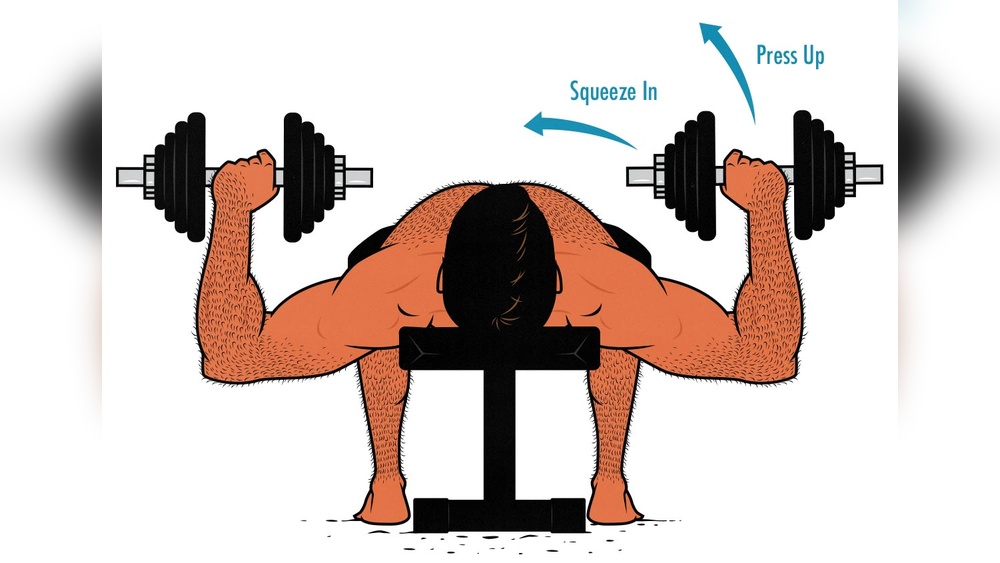
Are you wondering if the dumbbell press can help you build stronger triceps? You might already know this exercise is great for your chest and shoulders, but what about those hard-to-target triceps muscles?
Understanding how the dumbbell press works can change the way you train and help you get better results faster. Keep reading to discover how this simple move impacts your triceps and whether it should be part of your workout routine.
Credit: medium.com
Dumbbell Press Basics
The dumbbell press is a popular exercise in many workout routines. It helps build upper body strength using free weights. This move is simple but effective for muscle growth and endurance. Understanding its basics can improve your form and results.
Using dumbbells allows a greater range of motion than machines or barbells. This can lead to better muscle activation and balance. It is essential to know how to perform different types of dumbbell presses. Each type targets muscles in a slightly different way.
Types Of Dumbbell Presses
The flat dumbbell press is done lying on a bench, pressing weights upward. It mainly works the chest muscles. The incline dumbbell press uses a bench set at an angle. This targets the upper chest and shoulders more.
The decline dumbbell press has the bench angled downwards. This focuses on the lower chest area. Each variation changes the muscle emphasis and can prevent workout boredom.
Muscles Targeted
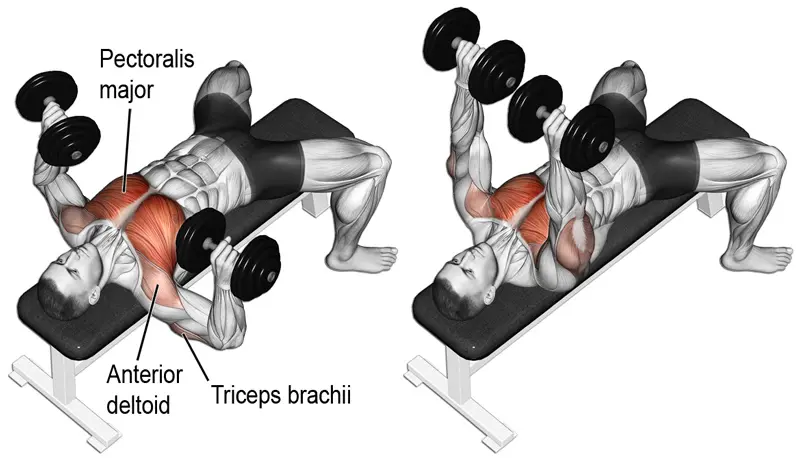
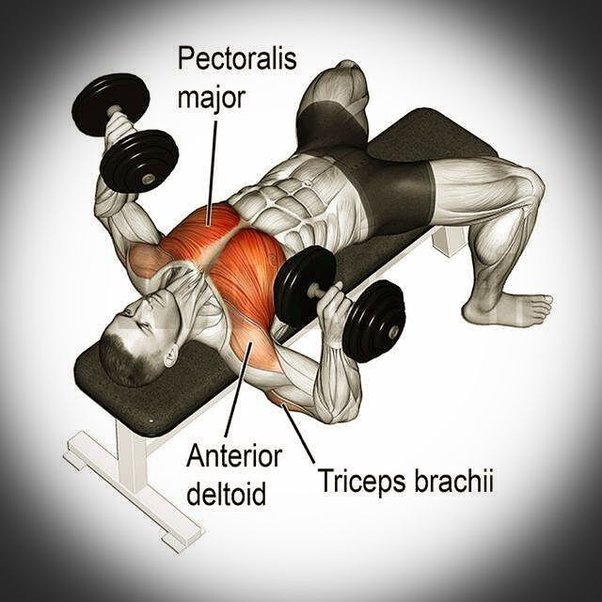
The dumbbell press mainly targets the chest muscles, especially the pectorals. The front shoulder muscles, or deltoids, also work hard during the press. The triceps help extend the elbows as you push the weights up.
While the triceps do assist in the movement, they are not the main muscle worked. They support the chest and shoulder muscles to complete the lift. Proper form ensures all these muscles work together effectively.
Credit: fitnessvolt.com
Triceps Role In Dumbbell Press
The dumbbell press targets several muscles in your upper body. Your triceps play a key part in this exercise. They help extend your arms and push the weights upward. Understanding how the triceps work can improve your form and results.
Strong triceps support heavier lifts and better control. This reduces the risk of injury and boosts overall strength. Let’s explore the triceps anatomy and their role during the dumbbell press.
Triceps Anatomy
The triceps brachii has three parts or heads. These include the long head, lateral head, and medial head. They run along the back of your upper arm. Their main job is to straighten the elbow joint.
The long head also helps move the shoulder joint. Together, these heads work to extend your arm. This is important in pushing movements like the dumbbell press.
How Triceps Engage During Press
During the dumbbell press, the triceps contract to extend the elbows. This action pushes the dumbbells away from your chest. The triceps work hard at the top of the movement. They lock out the elbows to fully press the weights up.
They also stabilize the arms and shoulders as you lift. Strong triceps allow smoother, controlled pressing. This helps you lift more weight safely and effectively.
Effectiveness For Triceps Growth
The dumbbell press is a popular exercise mainly for chest and shoulders. Many wonder if it also helps triceps grow. The triceps play a key role in pressing movements. They assist in straightening the arm during the lift.
This means the dumbbell press does activate the triceps. But how strong is this activation compared to other triceps exercises? Understanding this helps decide if the dumbbell press is enough for triceps growth.
Muscle Activation Studies
Research shows the dumbbell press activates the triceps moderately. Studies using electromyography (EMG) measure muscle activity during exercises. They find that triceps work hard but not as much as during direct triceps moves.
The triceps help extend the elbow in the press, but the chest and shoulders do most of the work. The triceps activation is higher than in some chest-only exercises. But it is lower than in exercises targeting the triceps alone.
Comparing Dumbbell Press To Other Exercises
Compared to dumbbell press, exercises like triceps dips or skull crushers engage triceps more fully. These movements isolate the triceps and require them to do most of the lifting.
The dumbbell press is effective for overall upper body strength. It helps triceps grow but is not the best choice for focused triceps development. To maximize triceps size, include specific triceps exercises in your routine.
Maximizing Triceps Activation
Maximizing triceps activation during the dumbbell press can improve arm strength and muscle tone. The triceps play a key role in extending the elbows. Proper technique helps engage these muscles more effectively. Small adjustments in form and exercise choice make a big difference.
Focusing on triceps activation also reduces strain on the shoulders. This leads to safer and more balanced workouts. Knowing how to position your body and choose variations can boost results quickly.
Proper Form Tips
Keep your elbows close to your body during the press. Avoid flaring them out wide. This position targets the triceps better. Use a full range of motion, pushing the dumbbells up until your arms are straight. Lower the weights slowly to keep tension on the muscles. Maintain a neutral wrist to prevent injury. Engage your core to stabilize your body. Controlled movements increase muscle activation and reduce momentum use.
Variations To Target Triceps
Try the close-grip dumbbell press by holding the dumbbells together. This forces your triceps to work harder. Another option is the floor press, which limits elbow movement and isolates the triceps. Overhead dumbbell presses also engage the triceps, especially the long head. Experiment with different angles, like a slight incline, to find what feels best. These changes help hit all parts of the triceps for balanced growth.
Common Mistakes To Avoid
Many people do dumbbell press to build triceps. But some common mistakes lower its benefits. These errors reduce triceps work and may cause injuries. Avoiding these mistakes helps you gain better results safely.
Form Errors Reducing Triceps Engagement
Pressing with elbows flared wide takes tension off triceps. Keep elbows closer to your body. This targets triceps more during the press. Pressing too high on the chest shifts work to shoulders. Aim to press in line with the mid-chest. Locking elbows fully at the top relaxes triceps. Stop just before full lock to keep muscles active. Moving too fast reduces muscle control and work. Use slow, steady movements to engage triceps better.
Injury Risks And Prevention
Using too heavy dumbbells strains shoulders and elbows. Choose weights you can control with good form. Jerking or bouncing the weights risks muscle tears. Press with smooth, controlled motion. Not warming up before pressing can cause injuries. Always warm up arms and shoulders well. Ignoring pain during the press worsens injuries. Stop and rest if you feel sharp pain. Proper form and weight prevent most injuries.
Credit: www.bodaq.vn
Sample Dumbbell Press Workouts
Sample dumbbell press workouts help target the triceps effectively. These exercises build strength and muscle in the arms. Using dumbbells adds variety and improves muscle balance. Different routines suit beginners and advanced lifters. Below are two sample workouts to try.
Beginner Routine
Start with light dumbbells to focus on form. Perform three sets of 10 to 12 reps. Rest for 60 seconds between sets. Keep your elbows close to your body. Press the dumbbells upward, then lower slowly. This routine activates the triceps and chest muscles.
Advanced Triceps Focus
Use heavier dumbbells to increase resistance. Do four sets of 8 to 10 reps. Pause for 90 seconds between sets. Add a slight incline to target triceps more. Focus on controlled movements and full range of motion. This workout intensifies triceps engagement and builds strength.
Combining Exercises For Triceps Growth
Combining exercises helps build stronger triceps. Dumbbell presses alone do not fully target this muscle. Using different moves challenges the triceps in new ways. This variety promotes better muscle growth and strength.
Complementary Movements
Pair dumbbell presses with exercises like tricep dips or pushdowns. These moves focus more directly on the triceps. They help develop the three heads of the muscle. Mixing pressing with isolation exercises gives balanced growth.
Training Frequency And Recovery
Train triceps two to three times per week for best results. Allow at least 48 hours of rest between sessions. Muscles grow during recovery, not workouts. Avoid overtraining to prevent injuries and fatigue.
Frequently Asked Questions
Does Dumbbell Press Target Triceps Effectively?
Yes, dumbbell press targets triceps along with chest and shoulders. It activates the triceps muscles during pressing movements, helping build strength and size. Proper form maximizes triceps engagement and overall upper body development.
How Do Dumbbell Presses Engage The Triceps?
Dumbbell presses engage triceps by extending the elbows during the lift. This motion activates the triceps brachii muscles, assisting in pressing the weights upward. The triceps work to stabilize and push the dumbbells away from the body.
Can Dumbbell Press Replace Triceps-specific Exercises?
Dumbbell press partially works triceps but cannot replace focused exercises. For optimal triceps growth, include dedicated moves like tricep dips, extensions, or pushdowns. Dumbbell press complements these exercises by providing compound upper body strength.
What Variations Of Dumbbell Press Increase Triceps Activation?
Close-grip dumbbell press increases triceps activation by narrowing hand placement. This shifts more load onto triceps rather than chest. Other variations like incline or decline dumbbell press slightly change muscle emphasis but still involve triceps.
Conclusion
Dumbbell press does engage the triceps during the movement. It helps build strength in your arms along with your chest and shoulders. For stronger triceps, focus on form and controlled motion. Adding variety with other triceps exercises can improve results.
Consistency matters most for muscle growth and endurance. Keep your workouts balanced and steady to see progress. Simple steps lead to better arm strength over time.


