If you want to build a stronger, more defined upper chest, the incline dumbbell press is one of the best exercises you can add to your routine. But are you sure you’re doing it the right way to get the most out of every rep?
Mastering this move can boost your strength, improve muscle balance, and help you avoid common mistakes that slow down progress. Keep reading, and you’ll discover simple tips to perfect your form, maximize your gains, and make every workout count. Your chest transformation starts here.
:max_bytes(150000):strip_icc()/66-4588212-Incline-Dumbbell-Press-GIF-cc6b35c8cecc4b808532c881732bf3f0.gif)
Credit: www.verywellfit.com
Benefits Of Incline Dumbbell Press
The incline dumbbell press offers many benefits for chest training. It focuses on the upper chest muscles more than flat presses. This helps create a fuller, more balanced chest shape.
Using dumbbells also allows for a natural arm movement. This reduces strain and helps build strength evenly on both sides. The exercise also supports shoulder health by improving stability and control.
Targets Upper Chest Effectively
The incline dumbbell press works the upper chest muscles with high focus. It activates the clavicular head of the pectoralis major better than flat presses. This leads to better muscle growth in the upper chest area. It helps create a well-defined chest with a balanced look.
Improves Muscle Symmetry
Dumbbells force each side of the body to work independently. This reduces strength imbalances between the left and right sides. It allows weaker muscles to catch up with stronger ones. Balanced muscle development improves overall strength and appearance.
Enhances Shoulder Stability
The incline dumbbell press requires more control during movement. This activates stabilizer muscles around the shoulder joint. Stronger stabilizers reduce injury risk during other lifts and daily activities. Improved shoulder stability also supports better lifting form.
Proper Form And Technique
Proper form and technique are key for the incline dumbbell press. They help you build muscle safely and avoid injuries. Using the right form ensures you target the upper chest effectively. Small adjustments can make a big difference in your workout results.
Setting The Bench Angle
Adjust the bench to a 30 to 45-degree angle. Too steep puts stress on your shoulders. Too flat shifts focus to the middle chest. Find a comfortable angle that feels natural. This helps activate the upper chest muscles properly.
Correct Grip And Range Of Motion
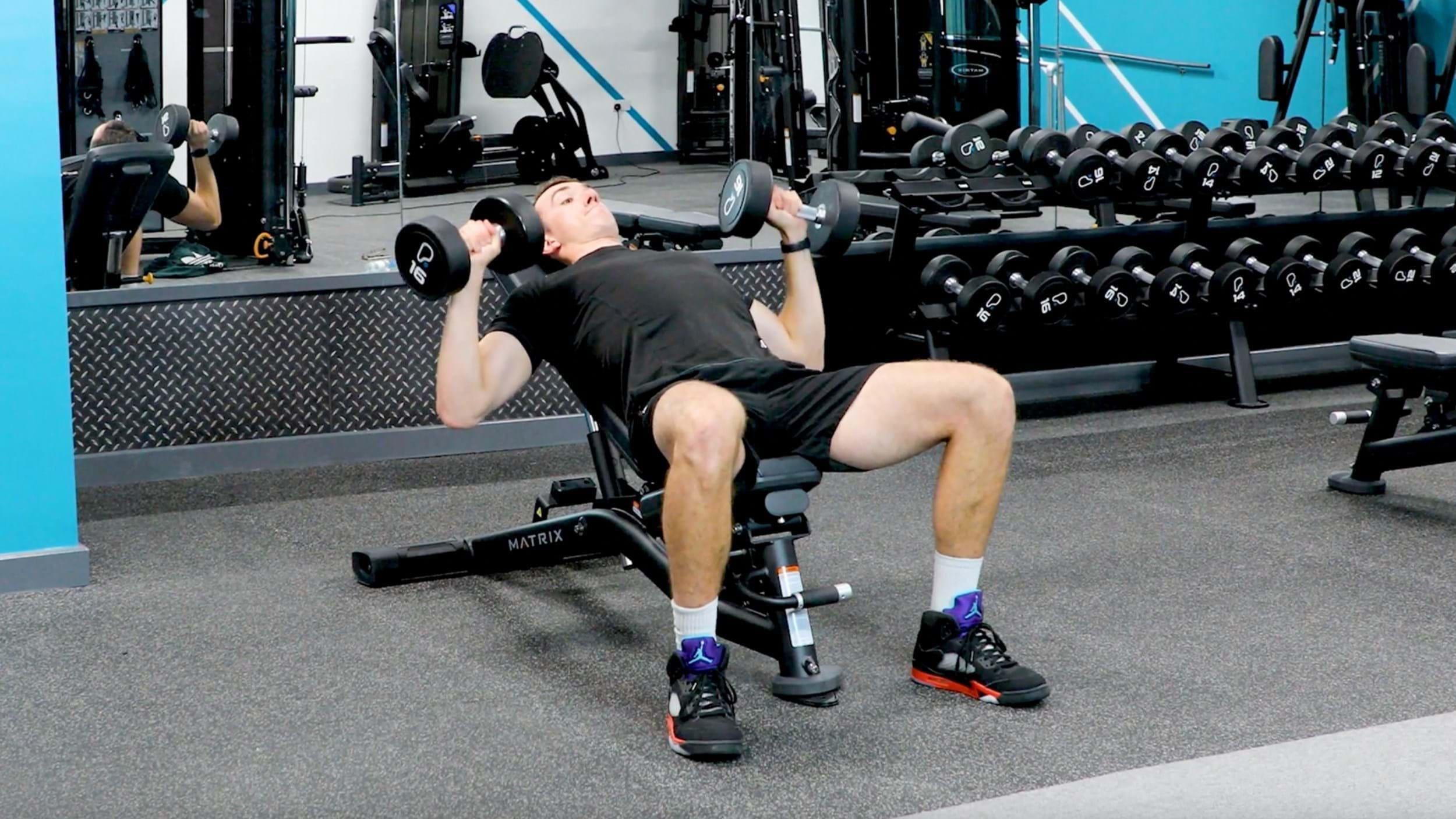
Hold the dumbbells with a firm, neutral grip. Keep your wrists straight and strong. Lower the weights slowly until your elbows are just below shoulder level. Press the dumbbells up without locking your elbows. Maintain control through the full range of motion.
Breathing And Tempo Tips
Inhale as you lower the dumbbells down. Exhale while pushing them up. Use a steady, controlled pace. Avoid rushing or using momentum. A smooth tempo improves muscle engagement and reduces injury risk.
Common Mistakes To Avoid
Doing the incline dumbbell press right helps build strong chest muscles. Many people make simple mistakes that slow progress or cause injury. Avoiding these errors improves workout results and keeps you safe.
Overarching The Back
Arching your back too much puts stress on your spine. It also reduces the work done by your chest muscles. Keep your back flat against the bench and your feet on the floor. This position protects your back and focuses effort on your chest.
Using Excessive Weight
Lifting weights that are too heavy can cause poor form. It raises the risk of injury to your shoulders and wrists. Choose a weight you can control for 8 to 12 reps. Quality movement beats heavy lifting every time.
Neglecting Controlled Movement
Dropping the dumbbells quickly wastes effort and strains muscles. Move the weights slowly and with control. Lower the dumbbells with care, then press them up steadily. This method builds muscle and prevents injuries.
Credit: www.puregym.com
Variations To Intensify The Workout
Adding variations to the incline dumbbell press can make your workout more effective. These changes help target your muscles in new ways. They increase muscle activation and prevent workout boredom. Try these techniques to push your limits and build stronger chest muscles.
Alternating Dumbbell Press
Lift one dumbbell at a time while keeping the other arm steady. This method improves muscle balance and control. It also challenges your core to stay stable. Focus on slow, controlled movements to feel the burn.
Pause Reps For Muscle Activation
Hold the dumbbells at the bottom of the press for 1-2 seconds. This pause removes momentum and forces muscles to work harder. It increases tension and helps build strength. Keep your form tight during the pause.
Incline Dumbbell Fly Combination
Combine the press with a dumbbell fly in one motion. Start with a fly, then press the dumbbells upward. This combo targets the chest from different angles. It improves muscle stretch and contraction for better growth.
Integrating Into Your Chest Routine
Adding the incline dumbbell press to your chest routine helps target the upper chest. It creates balance by working different parts of the chest muscles. This exercise can improve your overall chest shape and strength. Careful planning is key for the best results.
Understanding how to combine this move with others keeps your workouts effective. Managing sets, reps, and rest days helps muscles grow and stay healthy. Let’s explore how to fit the incline dumbbell press into your routine well.
Pairing With Flat And Decline Presses
Use the incline press first to activate the upper chest. Follow with flat presses to work the middle chest area. Finish with decline presses for the lower chest. This order helps cover all chest parts evenly. It also reduces the risk of muscle imbalance.
Optimal Sets And Reps
Perform 3 to 4 sets of incline presses per workout. Keep reps in the range of 8 to 12 for muscle growth. Use a weight that challenges you but allows good form. Rest for 60 to 90 seconds between sets. Adjust based on your energy and goals.
Recovery And Frequency
Give your chest muscles at least 48 hours to recover. Train chest 2 to 3 times a week for steady progress. Avoid working the same muscles on back-to-back days. Use rest days for light activity or stretching. Proper recovery helps prevent injury and supports muscle growth.

Credit: www.youtube.com
Tracking Progress And Results
Tracking progress in the incline dumbbell press helps you see real results. It shows how much you improve in strength and muscle shape. Watching progress keeps you motivated and focused on your goals. Knowing what to measure makes your workouts more effective and smart.
Monitoring Strength Gains
Track the weight you lift each week or month. Note how many reps and sets you complete with good form. Increasing weight or reps means your muscles grow stronger. Write down your progress to compare over time. Small improvements add up fast.
Visual Changes In Muscle Definition
Take photos regularly to see muscle changes in your chest and shoulders. Look for more muscle shape and less fat around the area. Notice changes in muscle size and how your skin looks. Visual proof shows your hard work is paying off. This helps you stay motivated.
Adjusting Workouts Over Time
Change the dumbbell weight or the number of reps to keep improving. Try different angles or add more sets for variety. Rest time between sets affects your strength and endurance gains. Adjust your workouts based on what your tracking shows. This avoids plateaus and keeps progress steady.
Frequently Asked Questions
What Muscles Does The Incline Dumbbell Press Target?
The incline dumbbell press primarily targets the upper chest muscles. It also works the shoulders and triceps. This exercise helps build strength and definition in the upper chest area.
How Do I Perform The Incline Dumbbell Press Correctly?
Start by lying on an inclined bench with dumbbells in hand. Press the weights upward, keeping elbows at a 45-degree angle. Lower the dumbbells slowly and repeat. Maintain controlled movements for safety and effectiveness.
What Are Common Mistakes In Incline Dumbbell Press?
Common mistakes include flaring elbows too wide, using heavy weights, and arching the back excessively. These errors reduce effectiveness and increase injury risk. Focus on controlled form and moderate weights for best results.
How Often Should I Do Incline Dumbbell Presses?
For muscle growth, perform incline dumbbell presses 2-3 times per week. Allow 48 hours of rest between sessions for recovery. Consistency and proper rest optimize strength gains and muscle development.
Conclusion
The incline dumbbell press builds your upper chest and shoulders well. It helps improve strength and muscle shape. Using dumbbells lets each side work alone, fixing imbalances. Keep your form steady and control the weights. Try different angles for best results.
Practice often and increase weight slowly. This exercise fits well in any chest workout plan. Stay consistent and patient to see real progress.


