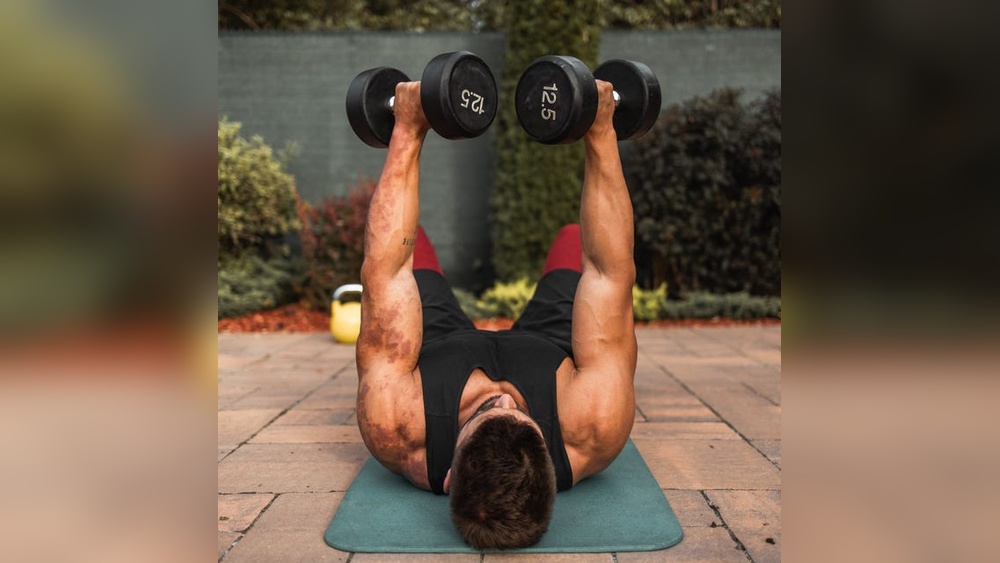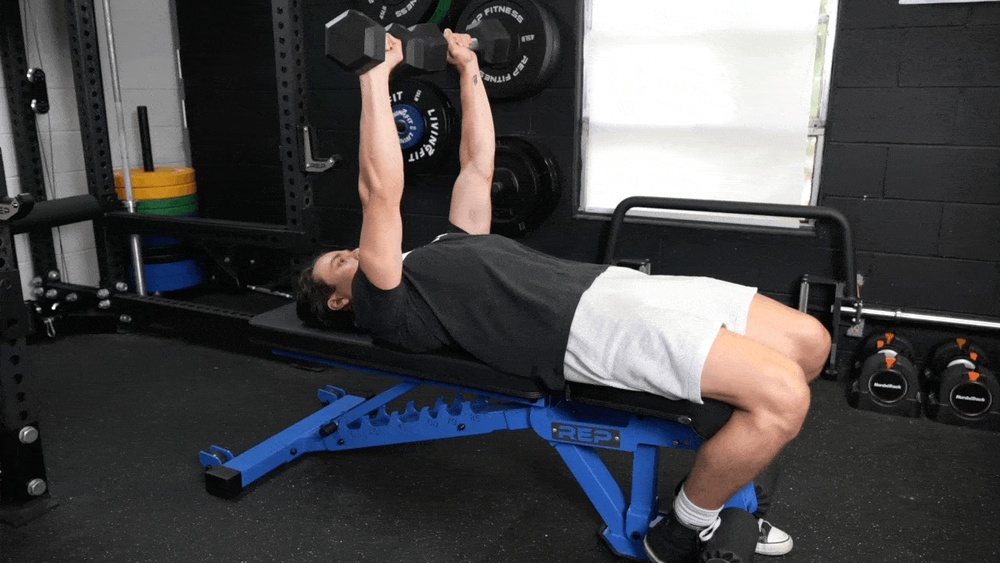
Are you wondering how many reps you should do for your dumbbell chest press to get the best results? Whether you want to build muscle, increase strength, or tone your chest, the number of reps you choose can make a big difference.
Getting this right can help you avoid wasted effort and see faster progress. You’ll discover the ideal rep ranges for your goals and learn how to adjust your workout to match what you want to achieve. Keep reading to unlock the secret to maximizing your dumbbell chest press every time you hit the gym.
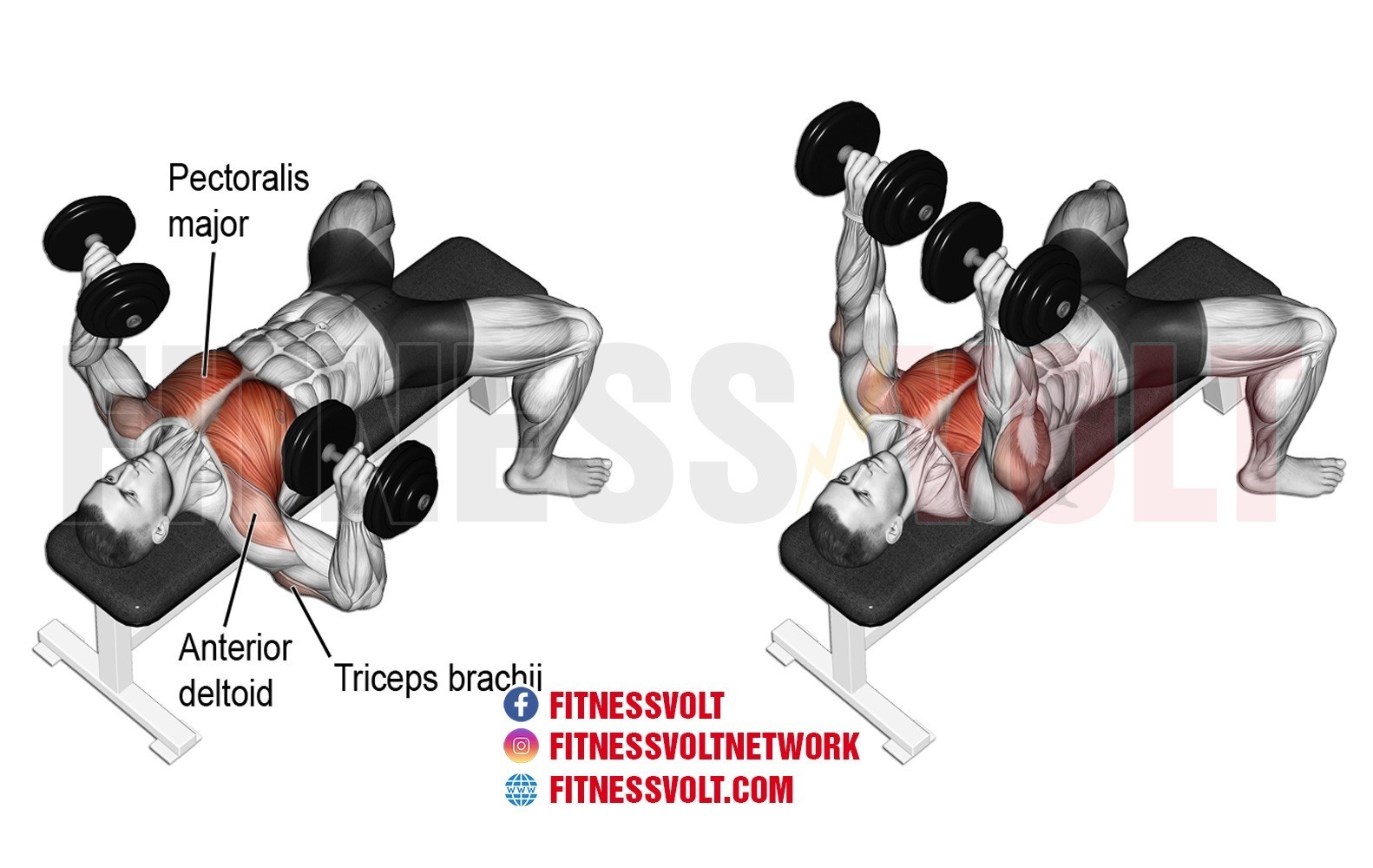
Credit: fitnessvolt.com
Choosing The Right Rep Range
Choosing the right rep range for the dumbbell chest press helps reach your fitness goals. Different rep ranges target different muscle abilities. Picking the correct reps can improve strength, size, or endurance.
Understanding these rep ranges guides your workout plan. It makes your sessions more effective and less frustrating.
Low Reps For Strength Gains
Doing low reps means lifting heavy weights with fewer repetitions. Usually, 1 to 5 reps per set focus on building strength. This range helps muscles handle heavier loads over time. Rest between sets is longer to recover fully. Low reps increase power but may not grow muscle size much.
Moderate Reps For Muscle Size
Moderate reps range from 6 to 12 per set. This range is ideal for muscle growth, also called hypertrophy. The weights are medium-heavy, enough to challenge muscles. It causes small muscle tears that grow bigger during recovery. Rest time is shorter than low reps to keep muscle tension.
High Reps For Endurance
High reps mean 15 or more repetitions per set. This trains muscles to last longer under stress. The weights are lighter to allow many reps. Endurance training improves muscle stamina and blood flow. It helps with activities needing long-lasting strength, not just size or power.
Impact Of Rep Speed And Tempo
Rep speed and tempo affect muscle growth and strength during dumbbell chest press. Slower reps increase tension, while faster reps boost power. Changing tempo can improve workout results.
Controlling The Eccentric Phase
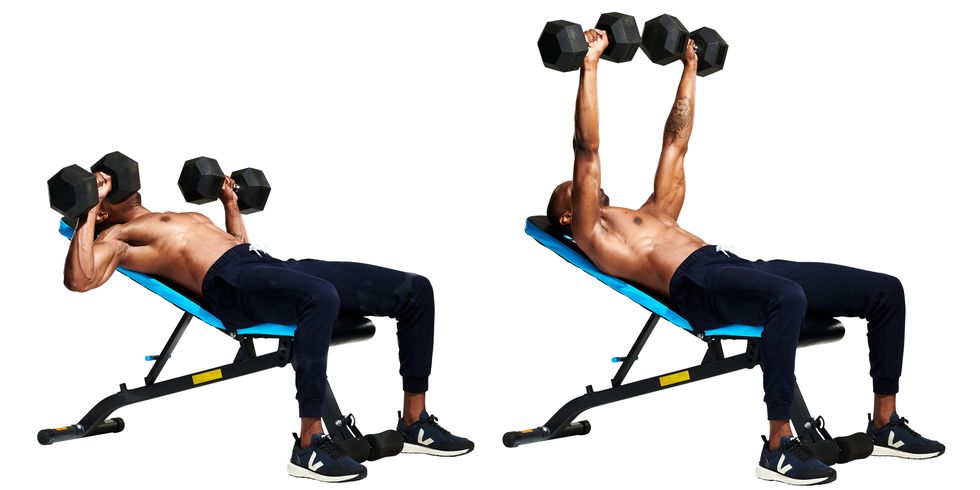
The eccentric phase is the lowering part of the dumbbell chest press. Moving slowly here helps muscles handle more tension. This slow pace causes tiny muscle tears that build strength. Controlling the descent also improves joint stability and reduces injury risk. A steady tempo in this phase trains your muscles to work harder and recover better.
Explosive Concentric Movement
The concentric phase is pushing the dumbbells up. Moving quickly here activates fast-twitch muscle fibers. These fibers help build power and size in the chest muscles. A fast push increases muscle recruitment and burns more calories. This explosive action also boosts your overall strength and athletic performance.
Balancing Sets And Rest Periods
Balancing sets and rest periods is key for an effective dumbbell chest press. The right number of sets and rest times helps build strength and muscle. It also prevents overtraining and injury. Knowing how to balance these can improve your workout results.
Optimal Set Numbers
Choosing the right number of sets is important. For beginners, 3 to 4 sets per exercise work well. This allows muscles to grow without too much strain. Advanced lifters might do 4 to 6 sets to challenge their muscles more. Keep sets consistent for steady progress.
Rest Time Effects On Growth
Rest time between sets affects muscle growth and recovery. Short rests, around 30 to 60 seconds, increase muscle endurance and size. Longer rests, 90 seconds to 2 minutes, help build strength. Adjust rest based on your workout goal. Proper rest helps maintain good form and energy.
Credit: www.menshealth.com
Progressive Overload Strategies
Progressive overload is the key to building strength and muscle with the dumbbell chest press. It means gradually making your muscles work harder over time. This helps muscles grow and adapt. Without progressive overload, your progress will stall. You must challenge your muscles by increasing the weight or changing reps. Small, steady increases lead to better results and less injury risk.
Increasing Weight Safely
Adding weight is the most common way to apply progressive overload. Increase dumbbell weight in small steps. This lets your muscles adjust without strain. Use weights that allow you to complete your set with good form. Avoid lifting too heavy too soon. If form breaks, drop the weight. Keep your movements slow and controlled. This reduces injury risk and improves muscle activation.
Adjusting Reps For Growth
Changing the number of reps also helps with progressive overload. Start with a rep range that suits your goal. For muscle growth, aim for 8 to 12 reps per set. Increase reps gradually when the weight feels easy. Once you reach the top of your rep range, increase the weight and lower reps again. This cycling keeps muscles challenged and growing. Track your reps and weights to stay on target.
Common Mistakes To Avoid
Doing the dumbbell chest press right is key to building strength safely. Many people make common mistakes that slow progress or cause injury. Avoiding these errors helps you get better results and stay healthy.
Overtraining Risks
Doing too many reps can lead to overtraining. Your muscles need time to rest and grow. Overworking them causes fatigue and soreness. This can reduce your strength over time. Overtraining also raises the chance of injury. Balance your workout with rest days and listen to your body.
Poor Form Consequences
Using bad form can harm your shoulders and chest. Dropping your elbows too low puts stress on joints. Lifting weights that are too heavy makes form worse. Poor form slows muscle growth and can cause pain. Focus on controlled movements and proper posture. Quality reps beat quantity every time.
Supplementing With Other Chest Exercises
Supplementing your dumbbell chest press with other chest exercises helps build a stronger chest. Different exercises target muscles in unique ways. This variety improves muscle growth and prevents workout boredom. Mixing exercises also reduces the risk of injury and balances muscle development.
Incorporating Bodyweight Movements
Bodyweight exercises like push-ups are simple and effective. They engage the chest, shoulders, and triceps. Push-ups improve muscle endurance and control. Variations like incline or decline push-ups shift focus to different chest areas. These movements require no equipment and can be done anywhere.
Using Machines And Cables
Chest machines and cable exercises offer controlled resistance. Machines help maintain proper form and reduce injury risk. Cable flyes allow smooth, constant tension on the chest muscles. These tools add variety and target muscles differently than free weights. Using machines and cables complements dumbbell presses well.

Credit: www.muscleandstrength.com
Frequently Asked Questions
How Many Reps For Dumbbell Chest Press Beginners?
Beginners should start with 8-12 reps per set. This range builds muscle endurance and strength safely. Focus on proper form before increasing weight or reps.
What Is The Ideal Rep Range For Muscle Growth?
For hypertrophy, aim for 6-12 reps per set. This range maximizes muscle fiber engagement and growth. Choose a weight that challenges you within this rep range.
How Many Reps For Strength Using Dumbbell Chest Press?
To build strength, perform 4-6 reps per set. Use heavier weights with longer rest periods. This low-rep, high-weight approach increases muscle power effectively.
Should Reps Vary For Dumbbell Chest Press Workouts?
Yes, varying reps prevents plateaus and promotes balanced growth. Alternate between low reps for strength and higher reps for endurance. This strategy enhances overall chest development.
Conclusion
Choosing the right number of reps helps build chest strength well. Lighter weights with more reps improve muscle endurance. Heavier weights with fewer reps increase muscle size and power. Listen to your body and adjust reps to fit your goals.
Rest between sets to recover properly. Consistency matters most in seeing progress. Keep your form correct to avoid injury. Try different rep ranges to find what works best. Stay patient and enjoy your workout journey. Your chest will get stronger with time and effort.