Are you wondering how many reps you should do for your dumbbell press to get the best results? Whether your goal is building muscle, gaining strength, or toning your chest, the number of repetitions you choose can make a big difference.
Getting this right can help you avoid frustration and reach your fitness goals faster. You’ll discover the ideal rep ranges for your dumbbell press, so you can train smarter and see real progress. Keep reading to find out what works best for you!
Credit: barbend.com
Choosing The Right Rep Range
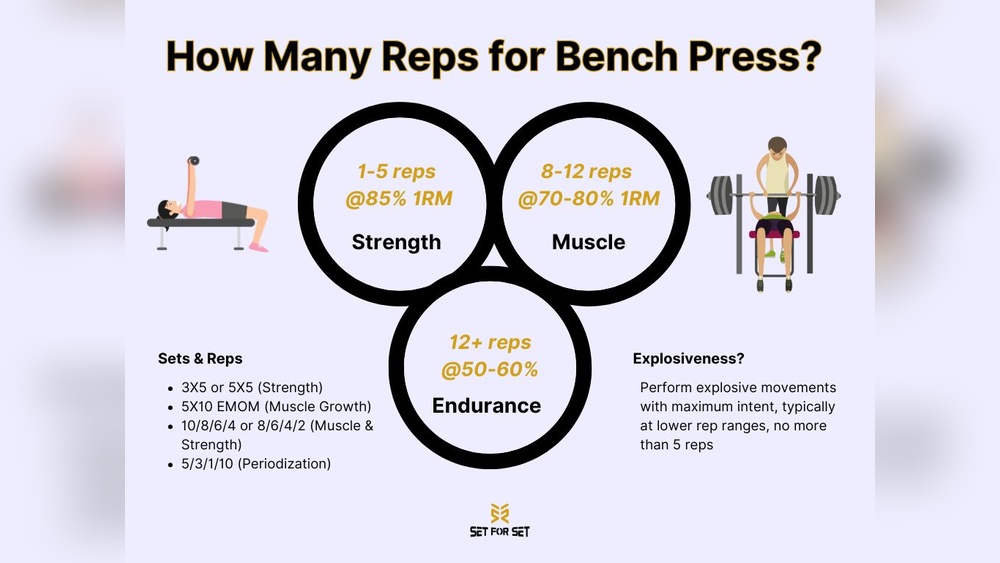
Choosing the right rep range for the dumbbell press changes the workout results. Different rep counts target different muscle goals. Picking the right number of reps helps you build strength, muscle size, or endurance. Understanding these ranges makes your training more effective and focused.
Low Reps For Strength
Low reps mean lifting heavy weights for fewer repetitions. Usually, this is between 1 and 6 reps per set. This range helps your muscles get stronger quickly. It trains your nervous system to handle heavy loads. Rest time between sets should be longer to recover fully.
Moderate Reps For Hypertrophy
Moderate reps fall between 8 and 12 reps per set. This range is best for muscle growth, also called hypertrophy. It creates enough muscle tension and fatigue to encourage size gains. Weights should be challenging but allow completing the set with good form. Shorter rest periods keep the muscles under stress.
High Reps For Endurance
High reps involve doing 15 or more repetitions in a set. This improves muscle endurance and stamina. The weights used are lighter to allow more reps. This range helps muscles work longer without getting tired. Rest periods are shorter to keep the heart rate up.

Credit: www.researchgate.net
Factors Influencing Rep Selection
Choosing the right number of reps for the dumbbell press depends on several key factors. These factors help tailor your workout to fit your personal needs. Understanding them improves your training results and keeps you safe.
Each person’s situation is different. Your experience, goals, and how your body feels all play a role in deciding reps. Let’s explore these important factors.
Training Experience
Beginners should start with fewer reps and lighter weights. This helps build strength without risking injury. More experienced lifters can handle higher reps or heavier weights. Their muscles and joints are stronger and better adapted.
Experience also affects how quickly you learn proper form. Good form reduces injury risk and improves muscle growth. Beginners focus more on form, while advanced lifters push limits with reps and weight.
Goals And Objectives
Your training goals change how many reps to do. For muscle size, moderate reps between 8 and 12 work best. For strength, lower reps with heavier weight are ideal. Around 4 to 6 reps focus on building power.
Endurance training uses higher reps, typically 15 or more. This improves muscle stamina. Clear goals help choose the right rep range for your dumbbell press.
Recovery And Fatigue
How well you recover affects your rep selection. If you feel tired or sore, lower reps or lighter weights help prevent injury. Good rest between sessions allows for harder workouts and more reps.
Fatigue can reduce your form and strength. Listen to your body and adjust reps accordingly. Recovery speed varies from person to person.
Optimal Rep Schemes For Dumbbell Press
Choosing the right number of reps for the dumbbell press affects your workout results. Different goals need different rep ranges. Knowing these rep schemes helps you train smart and reach your fitness goals faster.
Strength Focused Protocols
For building strength, use heavy weights with fewer reps. Aim for 3 to 6 reps per set. Rest for 2 to 3 minutes between sets. This allows your muscles to recover fully. Use challenging weights that make these reps tough.
Muscle Growth Protocols
To grow muscle size, use moderate weights with 8 to 12 reps. Keep rest time between 30 to 60 seconds. This keeps muscles under tension longer. It encourages muscle fibers to grow bigger and stronger.
Endurance Focused Protocols
For muscle endurance, use lighter weights and higher reps. Perform 15 to 20 reps or more per set. Rest for only 30 seconds or less. This trains muscles to work longer without getting tired.
Progressive Overload Techniques
Progressive overload is key to building strength and muscle with the dumbbell press. It means gradually making the exercise harder over time. This helps your muscles grow and avoid plateaus. Here are some simple ways to apply progressive overload.
Increasing Weight
Add more weight to your dumbbells little by little. Start with a weight you can lift comfortably for your target reps. Once it feels easy, increase the weight. This challenges your muscles and forces them to adapt. Keep your form strict to avoid injury.
Adjusting Reps And Sets
Change the number of reps or sets you do. If you can do 10 reps easily, try doing 12 or 15. Or add an extra set to your routine. More reps and sets increase the workload on your muscles. This helps them get stronger over time.
Enhancing Time Under Tension
Slow down your movements during the dumbbell press. Take 3 to 4 seconds to lower the weights. Hold briefly at the bottom, then press up slowly. This increases the time your muscles work. It creates more stress for growth without adding weight.
Common Mistakes To Avoid
Avoiding common mistakes during the dumbbell press helps you get better results. Many people push too hard or forget key steps. These errors can slow progress or cause injuries. Focus on safe, effective training by knowing what to avoid.
Overtraining With Excessive Reps
Doing too many reps can tire your muscles too much. This leads to poor muscle growth and fatigue. Your body needs time to recover. Stick to a rep range that suits your strength goals. Quality beats quantity every time.
Neglecting Form
Bad form limits your gains and increases injury risk. Keep your back straight and control the dumbbells. Avoid jerky movements and using momentum. Proper form helps target the right muscles and keeps joints safe.
Ignoring Rest Periods
Skipping rest breaks harms muscle recovery and performance. Rest allows your muscles to rebuild stronger. Take short breaks between sets and longer ones between workouts. Rest is part of training, not a break from it.
Credit: www.strongerbyscience.com
Incorporating Dumbbell Press In Workouts
The dumbbell press is a versatile exercise that fits well in many workout plans. It helps build chest, shoulder, and arm strength. Including it correctly can improve muscle growth and endurance. Planning how often and how much you do is key to progress.
Choosing the right exercises to pair with the dumbbell press can boost your overall results. Changing your routine over time keeps your muscles challenged. This section explains how to add the dumbbell press effectively to your workouts.
Frequency And Volume
Train the dumbbell press two to three times per week for good results. Keep the total sets between 9 and 15 per week. Each session should have 3 to 5 sets. Rest days between sessions help muscles recover and grow.
Start with lighter weights and focus on form. Increase weight gradually to avoid injury. Consistent training helps improve strength and muscle size.
Combining With Other Exercises
Pair dumbbell presses with exercises that target the back and legs. Push exercises like overhead presses balance well with pull exercises like rows. Adding squats or lunges creates a full-body workout.
This mix improves muscle balance and overall fitness. It also helps avoid overtraining specific muscle groups. Vary your exercises to keep workouts interesting and effective.
Periodization Strategies
Change your training plan every 4 to 6 weeks to avoid plateaus. Start with higher reps and lighter weights for endurance. Then switch to lower reps and heavier weights for strength.
Use weeks with lighter loads for recovery. This helps muscles repair and grow stronger. Planning these phases improves long-term progress and reduces injury risk.
Frequently Asked Questions
How Many Reps For Muscle Growth In Dumbbell Press?
For muscle growth, aim for 8-12 reps per set. This range effectively stimulates hypertrophy with moderate to heavy weights. Perform 3-4 sets with proper form and rest 60-90 seconds between sets to maximize gains.
What Rep Range Builds Strength In Dumbbell Press?
To build strength, perform 4-6 reps per set with heavier weights. This low rep range targets maximal force production. Complete 3-5 sets and rest 2-3 minutes between sets for optimal strength improvements.
How Many Reps Improve Endurance In Dumbbell Press?
For muscular endurance, do 15-20 reps per set with lighter weights. This higher rep range enhances stamina and muscle fatigue resistance. Perform 2-3 sets with 30-60 seconds rest to boost endurance effectively.
Should Rep Count Vary With Dumbbell Press Goals?
Yes, rep count should match your fitness goals. Lower reps (4-6) build strength, moderate reps (8-12) promote growth, and higher reps (15-20) increase endurance. Adjust sets and rest accordingly for best results.
Conclusion
Choosing the right number of reps helps build strength and muscle. Lower reps with heavier weights grow strength. Higher reps with lighter weights improve endurance. Aim for sets that match your fitness goal. Rest well between sets to recover properly.
Track your progress to see what works best. Stay consistent and patient for good results. Dumbbell presses become easier with regular practice. Keep your form correct to avoid injuries. Enjoy the process and celebrate small gains. Your body will thank you over time.