Are you confused about which boxing glove size is right for you? Choosing the perfect glove size can make a huge difference in your comfort, performance, and safety during training or matches.
Whether you’re just starting out or looking to upgrade your gear, understanding the different sizes available is key. Keep reading, and you’ll discover exactly what sizes boxing gloves come in and how to pick the best fit for your hands.
This simple knowledge could change the way you train forever.
Boxing Glove Sizes Explained
Boxing gloves come in different sizes to fit all types of hands and uses. Choosing the right size helps protect your hands and your opponent. It also makes training and fighting safer and more comfortable.
Understanding glove sizes can seem confusing at first. This guide breaks down the main points to help you pick the right gloves.
Weight Measurements
Boxing gloves are measured by weight in ounces (oz). This weight includes the padding and the glove’s material. Common weights range from 8 oz to 20 oz. Heavier gloves have more padding and protect better. Lighter gloves allow faster hand movement but less protection.
Size Vs Weight
Size and weight in boxing gloves are not the same. Size usually means the glove’s fit around your hand. Weight refers to how heavy the glove is. A larger glove often weighs more because it has more padding. But some gloves may fit larger or smaller even if they weigh the same.
Common Size Categories
Boxing gloves come in three main categories: kids, training, and competition. Kids gloves are small and light, usually 6 to 8 oz. Training gloves are for general use and weigh 12 to 16 oz. Competition gloves vary by rules but are often 8 to 10 oz. Choose the category that matches your age, skill, and activity.
Choosing Gloves By Purpose
Choosing the right boxing gloves depends on their purpose. Different gloves suit different activities. Picking the correct type helps protect your hands and improves performance.
Training Gloves
Training gloves are made for daily workouts and bag work. They offer good padding to protect your knuckles. These gloves usually weigh between 12 to 16 ounces. Heavier gloves help build strength and endurance.
Sparring Gloves
Sparring gloves focus on safety for both fighters. They have extra padding to reduce impact. Sparring gloves often weigh 14 to 18 ounces. This weight protects your partner during practice.
Competition Gloves
Competition gloves are lighter and more compact. They provide less padding to allow faster punches. These gloves usually weigh 8 to 10 ounces. Rules may require specific glove sizes for matches.
Glove Sizes For Different Fighters
Boxing gloves come in various sizes to fit different fighters. Choosing the right glove size is important for comfort and protection. Gloves are designed to suit the needs of youth, women, and men. Each group has specific size options based on hand size and weight. Understanding these sizes helps fighters perform better and stay safe.
Youth And Kids
Youth gloves are smaller and lighter. They usually range from 6 to 10 ounces. These gloves fit smaller hands and provide enough padding. Kids’ gloves focus on safety and ease of use. They help young fighters learn boxing without risk of injury.
Women’s Gloves
Women’s gloves are designed for smaller hands than men’s. The common sizes range from 8 to 12 ounces. These gloves offer good wrist support and comfort. Women’s gloves come in various colors and styles. They balance protection and flexibility for different training types.
Men’s Gloves
Men’s gloves are the largest and heaviest. They typically range from 12 to 16 ounces. Heavier gloves provide more padding for sparring and heavy training. Men’s gloves are built to protect the hands and wrists during intense workouts. Choosing the right size depends on weight and purpose.
Impact Of Hand Size And Weight
Choosing the right boxing gloves depends a lot on your hand size and body weight. These two factors affect comfort, protection, and performance during training or fights. Gloves that fit well help prevent injuries and improve your technique.
Measuring Your Hand
Start by measuring your hand to find the best glove size. Use a tape measure around your knuckles with your fingers together. Do not include your thumb. Note the measurement in inches or centimeters. This number helps you pick gloves that fit snugly.
Matching Gloves To Hand Size
Gloves come in different sizes like small, medium, and large. Match your hand measurement to these sizes. Smaller hands need smaller gloves to avoid slipping. Larger hands require bigger gloves for comfort. Proper fit keeps your hands safe during punches.
How Body Weight Influences Glove Choice
Your body weight also guides your glove choice. Heavier boxers use gloves with more padding for extra protection. Lighter boxers can use lighter gloves for faster movement. Weight helps decide the glove’s ounce size, affecting speed and power.
Material And Padding Differences
Boxing gloves differ not only in size but also in materials and padding. These factors affect comfort, protection, and durability. Choosing the right glove depends on understanding these differences.
Leather Vs Synthetic
Leather gloves are known for their durability and comfort. They mold to your hands over time. Synthetic gloves are lighter and cheaper. They dry faster after use but wear out sooner. Both types suit different budgets and needs.
Types Of Padding
Foam padding is common in boxing gloves. It absorbs shock and protects hands and wrists. Gel padding offers extra cushioning and better impact absorption. Some gloves combine foam and gel for balanced protection. The right padding reduces injury risk.
Durability Considerations
Leather gloves last longer with proper care. They resist tears and maintain shape. Synthetic gloves can crack or break down faster. Padding quality also affects glove life. High-density foam keeps its form longer. Choosing durable gloves saves money over time.

Credit: www.proboxingstore.com
Tips For Trying On Gloves
Trying on boxing gloves is very important before buying. Gloves come in many sizes and styles. The right gloves protect your hands and help you train better. Here are some tips to help you find gloves that fit well and feel good.
Fit And Comfort
Choose gloves that feel snug but not tight. Your fingers should move easily inside. Check for extra space around the knuckles. Gloves that are too big cause slipping. Too small gloves hurt your hands. Wear hand wraps when trying on gloves. This gives a true fit and extra comfort.
Wrist Support
Good wrist support stops injuries. Look for gloves with strong straps or velcro. Wrap the strap tightly but not too tight. Your wrist should feel steady and secure. Test by moving your wrist around. If the glove shifts or feels loose, try another size or style.
Glove Break-in
New gloves feel stiff at first. They need time to soften and fit better. Punch a bag or shadowbox to break them in. Gloves that break in well last longer. Avoid gloves that stay hard or uncomfortable. A good break-in makes training safer and more fun.
Popular Brands And Their Sizing
Boxing gloves come in many sizes. Different brands offer varied sizing options. Choosing the right size improves comfort and protection. Knowing brand sizing helps find the perfect fit.
Popular boxing glove brands include Everlast, Winning, and Title. Each brand has unique sizing guides. Understanding these differences helps boxers select gloves easily.
Brand Comparisons
Everlast gloves often use sizes from 8 oz to 16 oz. They focus on beginners and amateurs. Winning gloves are high-end and mostly come in 10 oz and 12 oz. They provide extra padding and fit snugly. Title boxing gloves offer a wide range from 10 oz to 18 oz. Title suits both beginners and professionals.
Sizing Variations
Everlast sizes run true to weight but feel roomier. Winning gloves fit tighter and feel smaller than labeled. Title gloves have a firmer fit and slightly larger size options. Weight in ounces shows glove padding and size. Smaller gloves have less padding, larger gloves more.
Recommended Models
Everlast Pro Style is best for beginners and light training. Winning Training Gloves suit those who want comfort and durability. Title Gel World Bag Gloves offer good protection for heavy bag work. Each model fits differently, so check sizing charts carefully.

Credit: www.shoshitamam.com
Maintaining Your Boxing Gloves
Maintaining your boxing gloves is important for their performance and durability. Proper care keeps them clean and smelling fresh. It also prevents damage and bacteria buildup. Taking a few simple steps can make your gloves last longer and stay comfortable.
Cleaning Tips
Wipe your gloves with a clean cloth after each use. Use a mild soap and water mix to clean the outside. Avoid soaking the gloves in water. Let them air dry completely before storing. Use a glove deodorizer or sprinkle baking soda inside to reduce odor. Never put gloves in a washing machine or dryer.
Storage Advice
Store gloves in a cool, dry place away from direct sunlight. Avoid leaving them in your gym bag for days. Use a breathable bag or mesh pouch to allow air flow. Keep gloves open after use to help them dry faster. Avoid placing heavy items on top of your gloves.
Extending Glove Life
Use hand wraps to reduce sweat inside gloves. Regularly check for tears or loose stitching. Repair minor damage early to avoid bigger problems. Rotate between two pairs if you train often. Proper care and rest keep gloves in good shape longer.
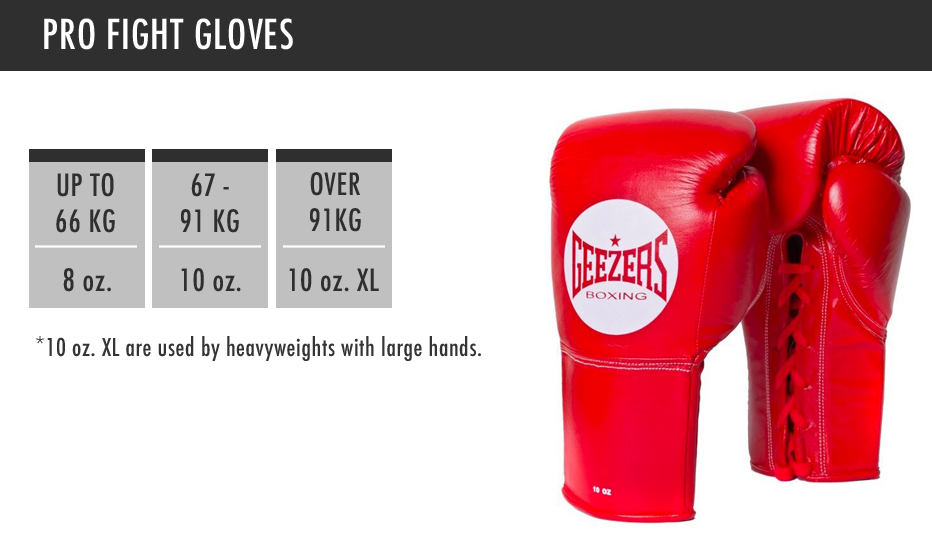
Credit: www.geezersboxing.co.uk
Frequently Asked Questions
What Are The Standard Boxing Glove Sizes?
Boxing gloves commonly come in 8oz, 10oz, 12oz, 14oz, and 16oz sizes. The size depends on the glove’s weight and padding, which affects protection and performance.
How To Choose The Right Boxing Glove Size?
Choose boxing gloves based on your weight, hand size, and training type. Heavier gloves provide more protection, while lighter ones offer speed and agility.
Do Different Boxing Gloves Suit Different Training Types?
Yes, smaller gloves (8oz-10oz) are ideal for competition. Larger gloves (14oz-16oz) are preferred for sparring and training to reduce injury risk.
Can Kids Use Adult Boxing Glove Sizes?
No, kids need smaller gloves, usually 4oz to 8oz. Adult gloves are too large and heavy for children’s hands.
Conclusion
Boxing gloves come in many sizes to fit different needs. Choosing the right size helps protect your hands and improves your training. Smaller gloves suit lighter punches, while bigger gloves offer more padding. Kids and adults need different sizes too.
Always check the glove weight and fit before buying. Knowing glove sizes makes boxing safer and more fun. Keep these points in mind for better practice and comfort. Your hands deserve the best fit. Simple and clear – that’s the key.