Are you ready to build stronger, more defined forearms that not only look great but also boost your grip and overall strength? The secret lies in targeting your forearms with the right dumbbell workouts.
Whether you’re struggling with weak grip during lifts or want to add that extra edge to your arm training, these exercises are designed just for you. Keep reading, and you’ll discover simple yet powerful moves that fit easily into your routine—and deliver real results fast.
Your forearms will thank you.
Forearm Anatomy Basics
The forearm is a complex part of the body. It contains many muscles, bones, and tendons. These parts work together to allow hand and wrist movements. Understanding forearm anatomy helps improve your workouts. It also reduces the risk of injury.
Forearm muscles control wrist and finger movements. They also help grip objects tightly. Knowing these muscles guides you in choosing effective dumbbell exercises. This knowledge helps build strength and endurance in your forearms.
Muscles Involved
The forearm has two main muscle groups: flexors and extensors. Flexors are on the inside of the forearm. They bend the wrist and fingers. Extensors are on the outside. They straighten the wrist and fingers. Both groups work together for smooth hand movements.
Key muscles include the flexor carpi radialis, flexor carpi ulnaris, and palmaris longus. The extensor carpi radialis and extensor carpi ulnaris are also important. These muscles help with gripping and lifting weights.
Role In Grip And Strength
Forearm muscles play a big role in grip strength. Strong forearms help hold dumbbells firmly. Good grip strength makes lifting safer and more effective. It also improves performance in sports and daily tasks.
Weak forearms can limit your workout progress. They may cause early fatigue or slipping weights. Training these muscles increases endurance. It also supports better control during exercises. Strong forearms help you lift heavier and longer.

Credit: www.youtube.com
Benefits Of Dumbbell Forearm Workouts
Dumbbell forearm workouts offer many benefits beyond just bigger muscles. Strong forearms improve daily tasks and sports performance. These exercises target small muscles that often get ignored. Training with dumbbells allows precise control and varied movements. This helps build strength and endurance in the forearms.
Forearm strength supports your hands and wrists during many activities. It improves grip and wrist control. This leads to better results in lifting and other workouts. Regular forearm training also lowers the risk of injuries. It keeps your wrists stable and healthy. These benefits make dumbbell forearm workouts a smart choice.
Improved Grip Strength
Strong forearms increase your grip power. This helps hold objects tightly without slipping. A firm grip is essential for lifting weights safely. It also helps in sports like rock climbing and tennis. Dumbbell exercises challenge your grip by forcing your hands to hold weight. Over time, this builds a stronger, more durable grip.
Enhanced Wrist Stability
Forearm workouts strengthen muscles around the wrist joint. This adds support and control during movements. Stable wrists reduce shaking and improve precision. This is important for exercises like curls and presses. Dumbbells allow natural wrist movement, promoting balanced strength. Strong wrists lower the chance of sprains and strains.
Injury Prevention
Weak forearms and wrists are prone to injuries. Training these areas creates tougher, more resilient muscles. This protects tendons and ligaments from stress. Dumbbell exercises improve muscle balance and coordination. Balanced muscles reduce overload on joints. This leads to fewer wrist and forearm injuries during workouts and daily activities.
Top Dumbbell Exercises For Forearms
Strong forearms improve grip and support many daily activities. Using dumbbells targets these muscles effectively. These exercises are simple and need only basic equipment. You can do them at home or in the gym. They help build strength and endurance in your forearms.
Focus on controlled movements and steady pace. This prevents injury and improves muscle growth. Start with light weights and increase gradually. Consistency is key for good results.
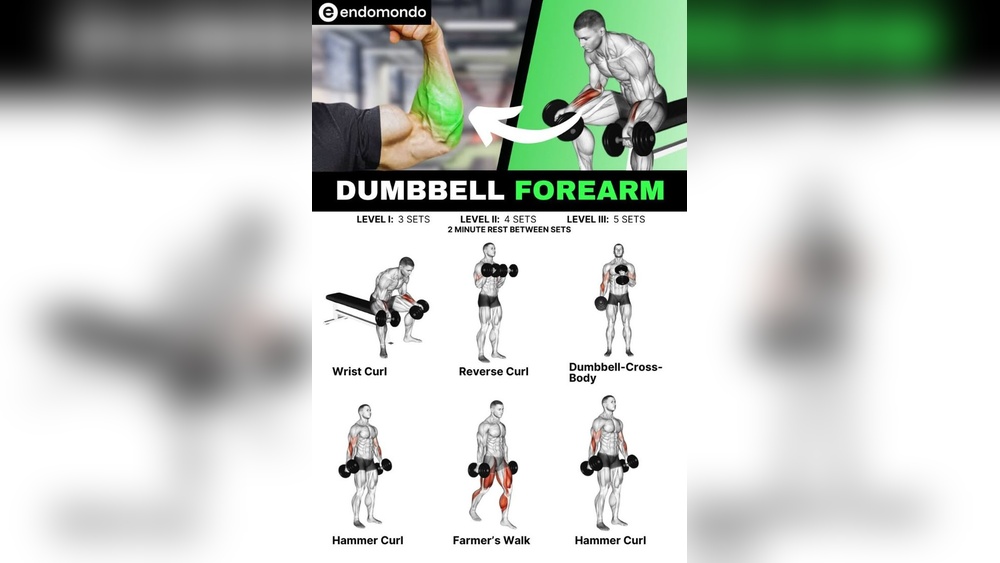
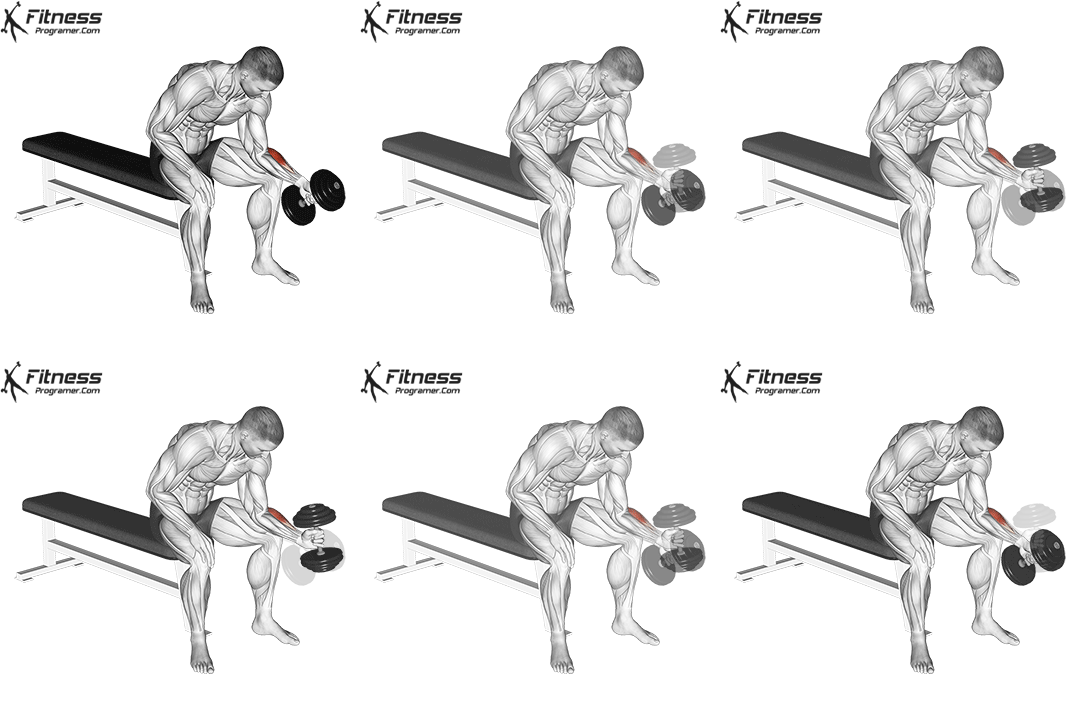
Wrist Curls
Wrist curls target the front of your forearms. Sit on a bench and hold dumbbells with palms up. Slowly curl your wrists upward, then lower them back down. Keep your arms still during the exercise. Perform 3 sets of 12-15 reps for best results.
Reverse Wrist Curls
Reverse wrist curls work the back of your forearms. Hold dumbbells with palms facing down. Curl your wrists upward, then lower them slowly. This builds balance and strength in your wrist muscles. Complete 3 sets of 12-15 repetitions.
Hammer Curls
Hammer curls engage both the forearms and biceps. Hold dumbbells with palms facing your body. Curl the weights up while keeping your wrists neutral. Lower the dumbbells slowly. Aim for 3 sets of 10-12 reps for muscle tone.
Zottman Curls
Zottman curls combine regular and reverse curls. Start with palms up and curl the dumbbells. Rotate your wrists at the top, then lower with palms down. This works all parts of the forearm. Do 3 sets of 8-10 reps for best effect.
Grip Strength Techniques
Grip strength is key for strong forearms and better performance in many sports. It helps with lifting, climbing, and daily tasks. Using dumbbells can build this strength effectively. Focus on exercises that make your hands hold tight and stay steady. These techniques target the muscles that control your grip. Consistent practice will improve your grip endurance and power.
Static Holds
Static holds involve holding a dumbbell without moving it. Grab a dumbbell and hold it at your side. Keep your arm straight and grip firm. Hold as long as you can. This exercise builds endurance in your forearms and fingers. Try to increase hold time with each session. It’s simple but very effective for grip strength.
Farmer’s Walks
Farmer’s walks require you to carry dumbbells in each hand. Walk a set distance or time while holding the weights. Keep your back straight and shoulders down. This exercise works your grip and forearms together. It also improves balance and core strength. Choose heavy dumbbells to challenge your grip. Walk slowly and focus on a tight hold.
Towel Dumbbell Holds
Wrap a towel around a dumbbell handle. Hold the dumbbell by gripping the towel ends. This makes your hands work harder to keep hold. It increases grip strength and finger endurance. Try holding the dumbbell for as long as possible. Change towel thickness to vary difficulty. This technique simulates real-life grip challenges.
Workout Routines For Forearm Growth
Strong forearms improve grip, wrist strength, and overall arm appearance. Using dumbbells targets forearm muscles effectively. Different workout plans suit different skill levels. Choose the right plan for steady growth and strength.
Beginner Plan
Start with light dumbbells. Perform wrist curls with palms up. Do 3 sets of 12 reps. Follow with reverse wrist curls, palms down. Complete 3 sets of 12 reps. Finish with farmer’s walks for 30 seconds. Rest 60 seconds between sets. Repeat 3 times per week.
Intermediate Plan
Use moderate weight dumbbells. Begin with wrist curls, 4 sets of 15 reps. Add reverse wrist curls, 4 sets of 15 reps. Include hammer curls for 3 sets of 12 reps. Try wrist rotations with dumbbells, 3 sets of 10 reps each side. Perform farmer’s walks for 45 seconds. Rest 45 seconds between sets. Train 3 to 4 times weekly.
Advanced Plan
Choose heavier dumbbells. Start with slow wrist curls, 5 sets of 20 reps. Add reverse wrist curls, 5 sets of 20 reps. Include wrist rotations, 4 sets of 15 reps each side. Do hammer curls with heavier weights, 4 sets of 15 reps. Perform farmer’s walks for 1 minute. Rest 30 seconds between sets. Train forearms 4 to 5 times per week.
Common Mistakes To Avoid
Forearm workouts with dumbbells can build strength and improve grip. Many make common mistakes that slow progress or cause injury. Avoiding these errors helps you train safely and effectively. Focus on proper technique and listen to your body.
Overtraining
Training forearms every day can lead to overuse injuries. Muscles need time to recover and grow stronger. Overtraining causes fatigue and reduces workout quality. Rest days help prevent pain and improve results.
Poor Form
Using incorrect form reduces workout benefits. Swinging weights or using momentum takes tension off muscles. Keep movements slow and controlled. Proper form targets forearm muscles better and lowers injury risk.
Ignoring Rest And Recovery
Skipping rest slows muscle growth and causes soreness. Recovery is part of training, not a break from it. Stretching and light activity support healing. Adequate sleep also helps muscles repair and grow.
Tips To Maximize Results
Maximizing your dumbbell forearm workouts takes more than just lifting weights. Small changes in how you train and care for your body can boost your results. Focus on smart training, warming up, and good nutrition. These tips help your muscles grow stronger and reduce injury risk.
Consistency and patience also play a big role. Follow these steps to get the most from every workout session.
Progressive Overload
Progressive overload means slowly increasing the weight or reps. This challenges your muscles to grow and get stronger. Start with a comfortable weight. Add small increases over time, like lifting heavier dumbbells or doing more reps. This avoids plateaus and keeps your forearms improving.
Proper Warm-up
Warming up prepares your muscles and joints for exercise. It reduces the chance of injury. Spend 5 to 10 minutes warming up before your forearm workout. Use light dumbbells or do wrist circles and stretches. Warm muscles work better and recover faster.
Balanced Nutrition
Your muscles need fuel to grow and repair. Eat a balanced diet with enough protein, carbs, and healthy fats. Protein helps build muscle. Carbs give energy for workouts. Healthy fats support overall health. Drink water to stay hydrated. Good nutrition supports your training efforts.
Credit: centromedicoloira.com

Credit: www.liftingitalia.com
Frequently Asked Questions
What Are The Best Dumbbell Exercises For Forearm Strength?
The best dumbbell exercises for forearm strength include wrist curls, reverse wrist curls, and hammer curls. These target key forearm muscles effectively. They enhance grip strength and improve overall arm endurance with consistent training.
How Often Should I Do Dumbbell Forearm Workouts?
Perform dumbbell forearm workouts 2-3 times per week. Allow at least one day of rest between sessions for muscle recovery. Consistency and gradual progression ensure optimal strength gains without injury.
Can Dumbbell Forearm Workouts Improve Grip Strength?
Yes, dumbbell forearm workouts significantly improve grip strength. Exercises like wrist curls and farmer’s walks target forearm muscles. Stronger forearms support better performance in sports and daily activities requiring grip.
Are Dumbbell Forearm Exercises Suitable For Beginners?
Dumbbell forearm exercises are suitable for beginners. Start with light weights and focus on proper form. Gradually increase weight and reps to build strength safely and effectively.
Conclusion
Strong forearms improve grip and overall arm strength. Dumbbell workouts target muscles effectively and simply. Consistency matters most for steady progress and results. Try different exercises to keep your routine fresh. Rest well between sessions to help muscles grow. Stay patient; gains come with time and effort.
Enjoy the process and feel your strength grow.