Are you ready to take your arm workouts to the next level? Building strong, defined biceps doesn’t require fancy gym equipment or complicated routines.
With just a pair of dumbbells and the right techniques, you can sculpt impressive biceps right at home. You’ll discover simple, effective exercises that target your biceps and help you see real results faster than you think. Keep reading, and get ready to transform your arms and boost your confidence!
Benefits Of Dumbbell Bicep Workouts
Dumbbell bicep workouts offer many benefits for building muscle and strength. They help target muscles on both arms independently. This means each arm works hard without relying on the other. Dumbbells also allow a full range of motion, which activates more muscle fibers.
These workouts improve muscle balance and coordination. They can be done almost anywhere, making them very convenient. Dumbbells come in many weights, so you can increase difficulty step by step. This variety helps keep your workouts fresh and challenging.
Improves Muscle Symmetry
Dumbbells force each arm to lift weight alone. This reduces muscle imbalances and uneven strength. Balanced muscles prevent injuries and improve overall appearance. Symmetry also helps in other sports and daily activities.
Enhances Range Of Motion
Dumbbells allow natural arm movement in all directions. This full range activates more bicep muscle fibers. It leads to better muscle growth and flexibility. Machines or barbells limit this motion, reducing effectiveness.
Increases Muscle Activation
Using dumbbells requires more effort to stabilize the weight. This activates smaller muscles around the biceps. These muscles support joint health and strength. More activation means faster muscle growth and better shape.
Offers Workout Variety
Dumbbells let you perform many exercises, such as curls, hammer curls, and concentration curls. You can change grips and angles easily. Variety prevents boredom and promotes steady progress. It also targets different parts of the biceps.
Convenient And Accessible
Dumbbells are easy to store and carry. They fit well in small spaces like home gyms. You do quick workouts without waiting for machines. This convenience helps keep workout habits consistent and effective.
Credit: www.liftingitalia.com
Essential Dumbbell Exercises
Building strong biceps requires focused exercises using dumbbells. Dumbbells help target different parts of the bicep muscles. This makes your arms look bigger and stronger. Use these essential dumbbell exercises to get the best results. Each exercise hits the muscles from a different angle. This variety helps in balanced muscle growth and strength.
Start with a weight you can handle easily. Increase the weight slowly as your strength improves. Perform each move with control. This avoids injury and improves muscle activation.
Dumbbell Bicep Curls
Dumbbell bicep curls are the classic exercise for biceps. Hold a dumbbell in each hand with your palms facing forward. Slowly curl the weights up to your shoulders. Keep your elbows close to your body. Lower the dumbbells back down with control. This move works the main bicep muscle directly.
Hammer Curls
Hammer curls target the bicep and forearm muscles. Hold the dumbbells with your palms facing your body. Curl the weights up without rotating your wrists. Keep the movement steady. Hammer curls improve grip strength and add thickness to your arms.
Concentration Curls
Concentration curls focus on the peak of your biceps. Sit on a bench and rest your elbow on your thigh. Curl one dumbbell toward your chest slowly. Keep your upper arm still during the movement. This isolates the bicep and helps build definition.
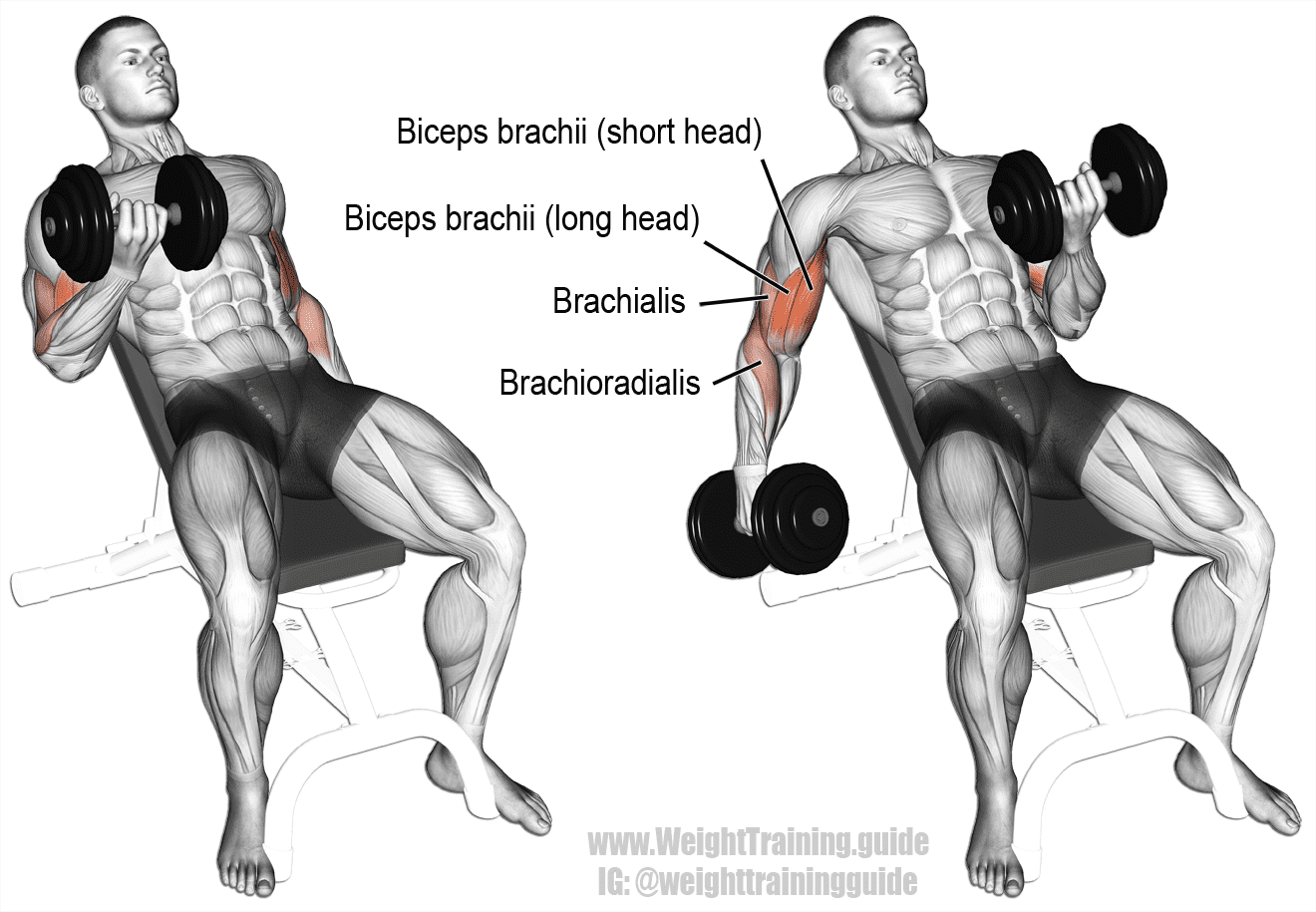
Incline Dumbbell Curls
Incline dumbbell curls stretch the biceps more than regular curls. Sit on an incline bench holding dumbbells. Let your arms hang down fully extended. Curl the dumbbells up while keeping your back against the bench. This position works the long head of the biceps deeply.
Proper Form And Technique
Using the right form and technique is key to building strong biceps with dumbbells. Good form helps you avoid injuries and target the muscles properly. It also makes your workouts more effective and efficient. Focus on small details like grip, elbow position, and movement speed. These can change your results a lot.
Grip Variations
How you hold the dumbbells affects which part of the biceps you work. A supinated grip means your palms face up. This is the most common grip for curls. It targets the main bicep muscle well. A neutral grip has your palms facing each other. This grip works the brachialis muscle under the biceps. Changing grips adds variety and balance to your training.
Elbow Positioning
Keep your elbows close to your body during curls. Do not let them move forward or flare out. This keeps tension on the biceps instead of the shoulders. Fixing your elbows also helps you lift more weight safely. Avoid swinging your arms. Keep elbows steady and control the movement.
Controlled Movements
Lift and lower the dumbbells slowly. Fast movements reduce muscle tension and increase injury risk. Use a steady pace to feel the biceps working. Pause briefly at the top of each curl. Lower the weights fully but control the descent. Controlled motion builds strength and muscle size better.
Structuring Your Workout Routine
Building strong biceps with dumbbells requires a well-planned workout routine. A good structure helps you train efficiently and avoid injury. It keeps your progress steady and your muscles growing. Focus on how often you train, the amount of work you do, and how you recover. These factors shape your routine for the best results.
Frequency And Volume
Train your biceps two to three times per week. This allows muscles to grow without overworking them. Each session should include three to four sets of exercises. Aim for eight to twelve repetitions per set to build strength and size. Keep total weekly volume balanced to prevent burnout.
Progressive Overload
Increase the weight or reps gradually over time. This challenges your muscles to adapt and grow. Add small increments, such as 1-2 pounds, to your dumbbells. Or increase reps by one or two each workout. Consistent progress leads to better muscle gains.
Rest And Recovery
Allow your biceps at least 48 hours to recover between workouts. Rest helps muscles repair and grow stronger. Avoid training the same muscle group every day. Sleep well and eat enough protein to support recovery. Proper rest reduces injury risk and improves results.
Common Mistakes To Avoid
Building strong biceps with dumbbells takes more than just lifting weights. Many people make common mistakes that slow progress or cause injury. Avoiding these errors helps you get better results faster and safer.
Using Momentum
Swinging the dumbbells uses momentum, not muscle strength. This reduces the workout’s effectiveness. Lift weights slowly and control every movement. Focus on using your biceps to do the work. Avoid jerking or swinging your body.
Neglecting Full Range Of Motion
Stopping short in a curl limits muscle growth. Lower the dumbbells fully and lift them completely. This works the entire bicep muscle. Partial reps waste effort and slow gains. Stretch and contract your muscles fully in each rep.
Overtraining
Too much exercise can hurt your muscles. Biceps need rest to grow stronger. Train them two to three times per week. Overtraining causes soreness and reduces strength. Give your muscles time to recover between workouts.
Nutrition For Bicep Growth
Nutrition plays a key role in building bigger biceps. Eating the right foods helps muscles repair and grow after dumbbell workouts. Focus on what you eat to support your training efforts.
Proper nutrition provides the energy and materials your body needs. Without it, your biceps won’t grow as fast or strong. Let’s explore the main nutrition tips for better bicep growth.
Protein Intake
Protein is essential for muscle growth. It helps fix tiny tears in muscle fibers caused by exercise. Aim for lean sources like chicken, fish, eggs, and beans. Eating protein with every meal supports steady muscle repair.
Try to consume 1.2 to 2.0 grams of protein per kilogram of body weight daily. Spread protein intake evenly throughout the day for best results. Simple snacks like yogurt or nuts can boost your protein easily.
Hydration
Water is crucial for muscle health and growth. It helps transport nutrients to your muscles and removes waste. Drink water before, during, and after your workouts. Staying hydrated improves muscle function and recovery.
Aim for at least eight glasses of water daily. You may need more if you sweat a lot during exercise. Avoid sugary drinks that can dehydrate you and slow progress.
Supplements
Supplements can support your nutrition but are not required. Whey protein powder helps you meet daily protein needs. Creatine may improve strength and muscle size when combined with training.
Vitamin D and omega-3 fatty acids support overall muscle health. Always choose high-quality supplements. Consult a healthcare provider before starting any new supplement.
Tracking Progress And Staying Motivated
Tracking progress and staying motivated are key to building bigger biceps with dumbbells. Without tracking, it’s easy to lose focus or feel stuck. Keeping an eye on your improvements helps you stay excited and push harder. Small wins add up over time and keep your workout routine fresh.
Measuring Strength Gains
Track the weight you lift and the number of reps you complete. Write down your sets and how your muscles feel after each workout. This shows your strength growth clearly. Increase weights gradually to challenge your muscles. Strength gains prove your hard work is paying off.
Visual Tracking
Take photos of your arms every two weeks. Compare these pictures to see muscle changes. Visual proof is very motivating. It reminds you why you keep training. Also, use a mirror during workouts to check your form and muscle flex.
Setting Goals
Set small, clear goals like adding 2 pounds or doing 5 more reps. Goals give you direction and focus. Celebrate each goal you reach to stay motivated. Changing goals keeps workouts interesting and stops boredom. Write your goals down and review them often.
Credit: learn.athleanx.com

Credit: www.youtube.com
Frequently Asked Questions
How Often Should I Train Biceps With Dumbbells?
Train your biceps 2-3 times per week with dumbbells. Allow 48 hours of rest between sessions. This frequency helps muscle growth and prevents overtraining.
What Are The Best Dumbbell Exercises For Biceps?
Effective dumbbell exercises include curls, hammer curls, and concentration curls. These target different bicep areas for balanced muscle growth and strength.
How Many Sets And Reps Build Biceps Effectively?
Perform 3-4 sets of 8-12 reps for optimal bicep growth. Use a challenging weight to stimulate muscles without compromising form.
Can Dumbbells Alone Build Big Biceps?
Yes, dumbbells can build big biceps when used correctly. Focus on progressive overload and proper technique for muscle gains.
Conclusion
Building strong biceps with dumbbells takes time and effort. Stick to regular workouts and use proper form. Choose the right weight to avoid injury and get results. Keep your routine varied to work muscles differently. Rest days help your muscles grow and recover.
Stay patient and consistent to see progress. Small steps lead to bigger arms and better strength. Keep your focus, and enjoy the process. Your biceps will thank you!