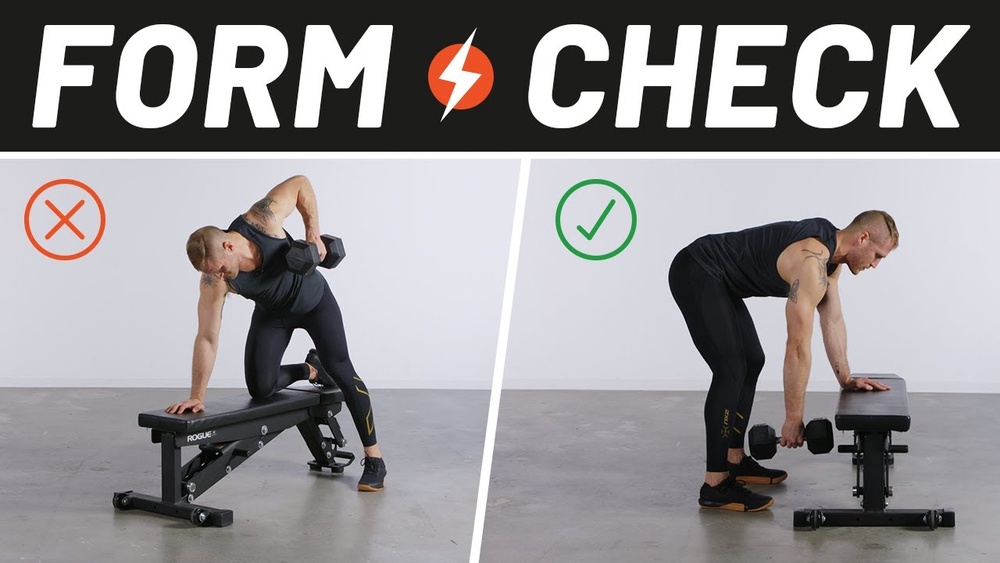
If you want to build a stronger, more defined back, the dumbbell row is one of the best exercises you can do. But are you sure you’re doing it the right way?
A simple mistake in form can mean you’re not getting the full benefits—or worse, risking injury. In this guide, you’ll learn exactly how to do a dumbbell row with perfect technique so you can target your upper back, lats, and arms effectively.
Stick with me, and by the end, you’ll have the confidence to add this powerful move to your routine and see real results. Ready to master your dumbbell row? Let’s dive in.
Benefits Of Dumbbell Rows
Dumbbell rows offer many benefits for your body and fitness. This exercise helps build strong muscles and improve your overall health. It is simple and effective for all fitness levels.
Using dumbbells allows better control and balance. It also helps fix muscle imbalances between your arms. You get a great workout that improves your back and posture.
Key Muscles Targeted
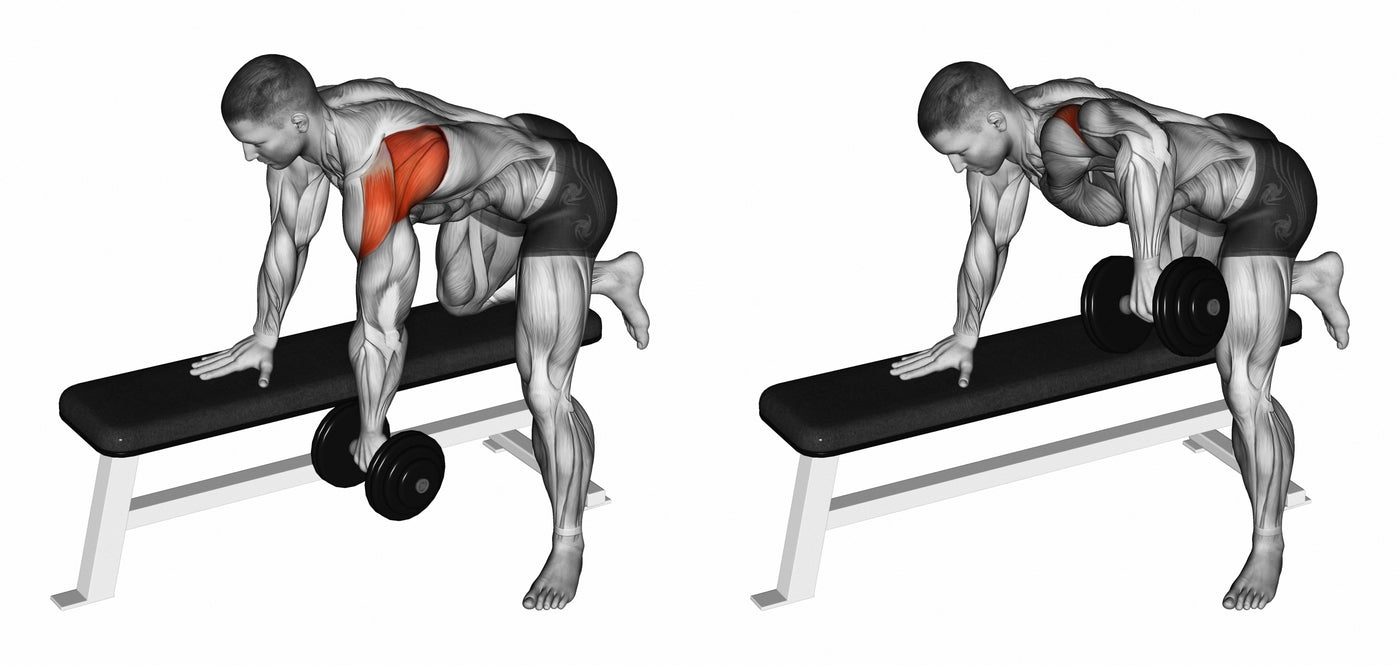
Dumbbell rows mainly work the muscles in your upper back. The latissimus dorsi, rhomboids, and trapezius muscles get stronger. Your biceps and shoulders also help during the movement.
These muscles support many daily activities. Strengthening them reduces the risk of injury. It also makes lifting and pulling tasks easier.
Impact On Posture And Strength
This exercise helps correct poor posture by strengthening the upper back. It pulls your shoulders back and straightens your spine. Good posture reduces neck and back pain.
Dumbbell rows increase your pulling strength. This helps in sports and everyday tasks. You will feel more balanced and stable in your movements.

Credit: www.youtube.com
Choosing The Right Dumbbells
Choosing the right dumbbells is key to performing the dumbbell row effectively. The correct weight and type help you build strength and avoid injury. Selecting dumbbells that suit your fitness level and workout goals makes each session productive and safe.
Weight Selection Tips
Start with light weights to learn proper form. Choose a weight that challenges your muscles but does not cause strain. You should complete 8 to 12 reps with good control. If you struggle to lift, reduce the weight. If you finish easily, increase it gradually. Focus on steady progress rather than heavy lifting.
Types Of Dumbbells
There are several types of dumbbells to pick from. Fixed-weight dumbbells are simple and easy to use. Adjustable dumbbells allow you to change weights quickly. Neoprene dumbbells have a soft coating, ideal for beginners. Metal dumbbells are durable and suited for heavy lifting. Choose a type that fits your space and workout style.
Setting Up For The Row
Setting up correctly for the dumbbell row is crucial for a safe and effective workout. Proper setup helps target the right muscles and prevents injuries. This section covers key points to prepare your body and grip before starting the row.
Body Positioning
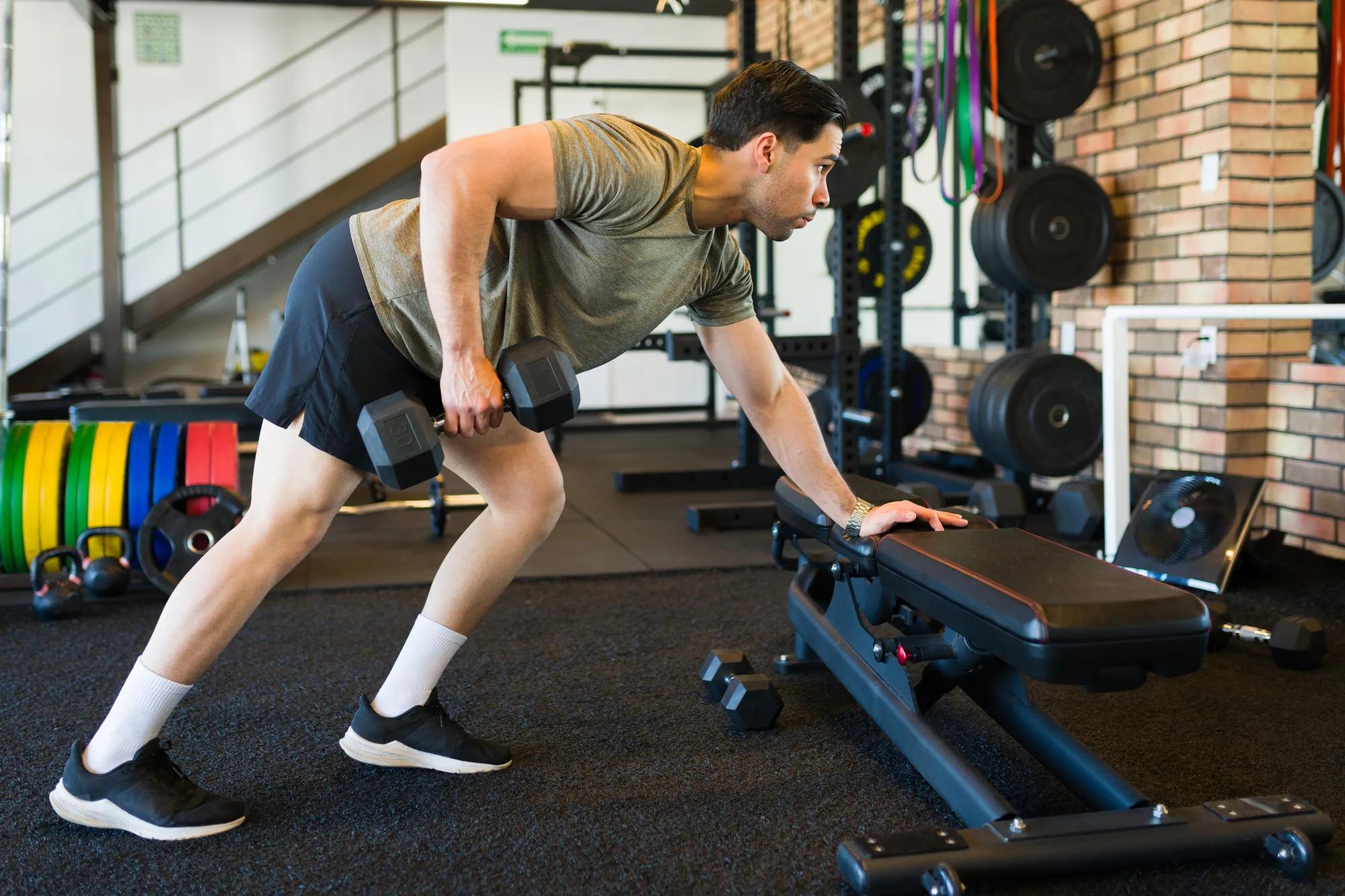
Stand with feet shoulder-width apart. Hold a dumbbell in one hand. Slightly bend your knees for balance. Hinge at the hips to lean forward. Keep your back straight and chest up. Your torso should be almost parallel to the floor. Place your free hand on a bench for support. Engage your core to maintain stability. Avoid rounding your back to protect your spine. This position ensures your back muscles work properly during the row.
Grip Options
Choose a grip that feels comfortable and secure. Use a neutral grip by holding the dumbbell with your palm facing your body. This grip reduces stress on the wrist. Another option is the overhand grip, with your palm facing down. It targets different back muscles slightly. Keep a firm grip to control the dumbbell throughout the movement. Avoid squeezing too tight to prevent forearm fatigue. Try both grips to see which works best for you.
Credit: health.clevelandclinic.org
Performing The Dumbbell Row
Performing the dumbbell row correctly targets your back muscles and improves strength. This exercise helps build muscle in your upper and middle back. It also engages your shoulders and arms for a full upper body workout. Proper technique reduces injury risk and maximizes results. Follow clear steps and cues to perform the dumbbell row with good form.
Step-by-step Movement
Start by holding a dumbbell in one hand. Place your opposite knee and hand on a bench for support. Keep your back flat and parallel to the floor. Pull the dumbbell upward toward your hip. Keep your elbow close to your body as you row. Pause briefly at the top and squeeze your shoulder blades. Slowly lower the dumbbell back to the starting position. Repeat for the desired number of reps. Switch sides and repeat the process.
Common Cues For Form
Keep your spine neutral and avoid rounding your back. Engage your core to maintain stability. Lead the movement with your elbow, not your hand. Pull the dumbbell toward your hip, not your chest. Squeeze your shoulder blades together at the top. Avoid using momentum or jerking the weight. Keep your neck aligned with your spine. Control the movement during both lifting and lowering phases.
Maintaining Proper Form
Maintaining proper form during the dumbbell row is essential for safety and effectiveness. Good form helps target the right muscles and prevents injury. Focus on controlling your movements and keeping your body stable throughout the exercise.
Back And Hip Alignment
Keep your back straight and avoid rounding it. Hinge at your hips, not your waist. Your torso should be almost parallel to the floor. Engage your core to support your spine. Maintain a neutral neck position by looking slightly ahead. Your hips should stay level, not twisting side to side. This alignment helps protect your lower back and improve power during the row.
Elbow And Shoulder Positioning
Start with your shoulders relaxed and pulled back. Row the dumbbell by driving your elbow close to your body. Pull towards your hip, not your shoulder. Keep your elbow tight to avoid straining your shoulder. Squeeze your shoulder blades together at the top of the movement. Lower the weight slowly, maintaining control. Proper elbow and shoulder placement engages your lats and prevents shoulder injuries.
Avoiding Common Mistakes
Avoiding common mistakes is crucial to get the best results from the dumbbell row. Poor form can lead to injuries and less muscle activation. Focus on controlled movements and proper posture. This section highlights key errors to watch for and how to fix them.
Excessive Torso Movement
Keep your torso stable during the row. Avoid twisting or swinging your body. Excessive movement reduces the work on your back muscles. Engage your core to maintain a firm position. Small, steady motions improve effectiveness and safety.
Incorrect Arm Path
Pull the dumbbell close to your side, aiming for the hip area. Do not lift the weight toward your shoulder or out to the side. The correct path targets the right muscles. Focus on a smooth, controlled pull with your elbow moving backward.
Using Momentum
Do not rely on momentum to lift the dumbbell. Swinging the weight reduces muscle engagement and increases injury risk. Lift and lower the weight slowly. Controlled reps build strength and improve muscle tone. Pause briefly at the top for a better squeeze.
Variations To Increase Intensity
Increasing the intensity of your dumbbell rows challenges your muscles more. This helps build strength and muscle faster. Variations target muscles differently and keep workouts interesting. Try these simple but effective variations to push your limits.
Single-arm Row
Perform the row with one arm at a time. Support your body with the opposite hand on a bench. This isolates each side, improving muscle balance. It also forces your core to work harder for stability.
Renegade Row
Start in a high plank position with a dumbbell in each hand. Row one dumbbell up while balancing on the other arm and feet. This move engages your back, arms, and core intensely. It also improves overall body control and balance.
Chest-supported Row
Lie face down on an incline bench with dumbbells in hand. Row the weights up while keeping your chest on the bench. This variation reduces lower back strain and isolates the upper back muscles well. It is great for beginners and those with back issues.
Incorporating Dumbbell Rows Into Workouts
Incorporating dumbbell rows into your workouts helps build a strong back and improves posture. This exercise targets multiple muscles, making it a valuable addition to any routine. It fits well in both focused back sessions and full-body workouts.
Back-focused Routines
Dumbbell rows are ideal for back-focused routines. They engage the lats, rhomboids, and traps effectively. Use them alongside pull-ups and lat pulldowns for balanced development. Perform 3 to 4 sets of 8 to 12 reps for muscle growth. Focus on controlled movement and squeezing shoulder blades at the top. Rest for 60 to 90 seconds between sets for optimal recovery.
Full-body Workouts
Include dumbbell rows in full-body workouts to enhance overall strength. Pair them with squats, push-ups, and deadlifts for balanced training. This combination boosts calorie burn and muscle coordination. Perform 2 to 3 sets of 10 to 15 reps to maintain endurance. Maintain proper form to avoid injury and maximize benefits. Dumbbell rows add variety and improve upper body pulling strength in these sessions.
Tracking Progress And Gains
Tracking progress and gains is essential when doing dumbbell rows. It helps you see how your strength and form improve over time. Monitoring your workouts keeps you motivated and focused on your goals. Small changes in reps, sets, or weight show clear signs of advancement. This section explains how to track your progress effectively.
Reps And Sets Recommendations
Start with 8 to 12 reps per set. Complete 3 to 4 sets for each workout. Choose a weight that challenges you but lets you keep good form. Increase reps or sets gradually as you get stronger. If you can do more than 12 reps easily, raise the weight slightly. Consistency is key for steady progress.
Signs Of Improvement
You will notice your back muscles feel stronger after a few sessions. Your grip and arm endurance should improve too. Better control of the dumbbell shows good form development. Less muscle soreness means your body adapts well. Increased weight lifted without losing form is a clear gain. Tracking these signs helps measure your success.
Credit: kinxlearning.com
Safety Tips And Injury Prevention
Performing dumbbell rows safely reduces injury risks and improves results. Careful preparation and attention to your body help protect muscles and joints. Follow key safety tips to keep your workout effective and injury-free.
Warm-up Strategies
Start with light cardio to increase your heart rate. This warms muscles and improves blood flow. Do dynamic stretches focusing on the shoulders, back, and arms. Gentle arm circles and torso twists prepare your body for lifting. Warming up reduces muscle stiffness and lowers injury chances.
Listening To Your Body
Pay close attention to any discomfort or sharp pain. Stop immediately if you feel unusual strain. Use weights that feel manageable and do not cause excessive fatigue. Rest if your muscles feel overly tired or sore. Adjust your form or weight to avoid stress on joints and spine.
Frequently Asked Questions
How To Correctly Do Dumbbell Rows?
Hinge hips, bend knees slightly, and keep your back straight. Row dumbbells towards your hips. Squeeze shoulder blades at the top. Lower weights slowly. Maintain core tightness throughout.
How Do I Know If I’m Doing Dumbbell Rows Correctly?
Keep your back straight and body nearly horizontal. Row the dumbbell toward your hips, squeezing shoulder blades together. Avoid using only your arms.
What Are The Mistakes For Dumbbell Row?
Common dumbbell row mistakes include rounding the back, lifting with the arms only, using too upright posture, and shrugging shoulders. Keep your back straight, hinge at hips, and row towards your hips to engage the correct muscles effectively.
What Does A Dumbbell Row Work?
A dumbbell row targets the upper back muscles like lats, traps, rhomboids, and rear deltoids. It also works biceps, forearms, and core for stability.
Conclusion
Practicing the dumbbell row helps build a strong back and improve posture. Keep your back straight and hinge at the hips. Pull the dumbbell toward your hips, not your shoulders. Focus on squeezing your shoulder blades together at the top.
Use controlled movements to avoid injury and get better results. Start with lighter weights and increase gradually. Consistency is key for progress. Try adding dumbbell rows to your workout routine for a balanced upper body. Remember, good form beats heavy weights every time.
Stay patient and enjoy the process.


