Are dumbbells better than machines? If you’ve ever stood in the gym wondering which tool will give you the best results, you’re not alone.
Choosing between dumbbells and machines can feel confusing, especially when both promise muscle growth and strength gains. But here’s the truth: your choice could make a big difference in how quickly you see progress and how enjoyable your workouts are.
You’ll discover the real benefits and drawbacks of each option. By the end, you’ll know exactly which one suits your goals, lifestyle, and body best. Ready to unlock your full potential? Let’s dive in.

Credit: whatsgood.vitaminshoppe.com
Dumbbells Vs Machines
Choosing between dumbbells and machines depends on your fitness goals and workout style. Both tools offer unique benefits that can enhance strength training. Understanding their differences helps you select the right equipment for your routine. Below, we compare dumbbells and machines across three key areas to help you decide.
Range Of Motion
Dumbbells allow a natural and full range of motion. They let your joints move freely in multiple directions. This flexibility helps target muscles more effectively. Machines often restrict movement to fixed paths. This limitation may reduce joint stress but can limit muscle engagement. Dumbbells encourage varied angles, which can improve mobility.
Muscle Activation
Dumbbells engage more muscle fibers by requiring control and coordination. They activate stabilizing muscles alongside the main muscle groups. Machines isolate specific muscles, focusing effort on targeted areas. This isolation can be useful for rehabilitation or beginners. Dumbbells promote balanced muscle development through compound movements.
Stability And Balance
Dumbbell exercises improve stability and balance by demanding body control. You must stabilize the weight during each movement. This strengthens core muscles and improves coordination. Machines provide external support, reducing the need for balance. They offer a safer option for those new to strength training. Using dumbbells challenges your body more overall.
Benefits Of Dumbbells
Dumbbells offer many benefits for strength training and muscle building. They help you work different muscles and improve overall fitness. Using dumbbells can make your workouts more effective and interesting.
They allow you to move freely and adjust exercises to your needs. Dumbbells also help develop balance and coordination, which machines often do not.
Versatility In Exercises
Dumbbells let you perform a wide range of exercises. You can target almost every muscle group with one simple tool. From chest presses to lunges and curls, dumbbells cover many movements.
You can also change angles and grips easily. This variety helps avoid workout boredom and promotes balanced muscle growth.
Improved Coordination
Using dumbbells requires more muscle control than machines. Each arm works independently, so your body must stabilize itself during movements. This improves your coordination and balance.
Better coordination reduces injury risk and helps with daily activities. Dumbbell training activates small stabilizer muscles often ignored by machines.
Progressive Overload Options
Dumbbells allow simple and gradual increases in weight. You can raise the load as your strength improves. This process is called progressive overload, key for muscle growth.
You can also increase reps or slow down movements to challenge muscles. Dumbbells provide flexible ways to keep progressing safely and effectively.
Advantages Of Machines
Machines offer several benefits that make them popular in gyms. They provide a structured workout environment. This helps users focus on specific muscles and movements. Machines guide the motion path, reducing the chance of injury. This is helpful for those new to strength training. They often allow quick adjustments, saving time during workouts.
Safety For Beginners
Machines control the movement, reducing the risk of injury. Users do not need to balance weights. This makes lifting safer for beginners. Machines support the body, preventing poor form. This helps build confidence in new exercisers. Safety features often include stops to avoid overextension.
Targeted Muscle Isolation
Machines focus on one muscle or muscle group at a time. This isolation helps in strengthening specific areas. It is useful for rehabilitation or fixing muscle imbalances. Users can train weak muscles without using others. This precise targeting can speed up muscle growth. Machines provide consistent resistance throughout the movement.
Ease Of Use
Machines are simple to use with clear instructions. Users can easily adjust weights with a pin or lever. This saves time and effort compared to free weights. The fixed motion path removes guesswork from exercises. Users can quickly switch machines for different workouts. This convenience encourages regular training and progress.
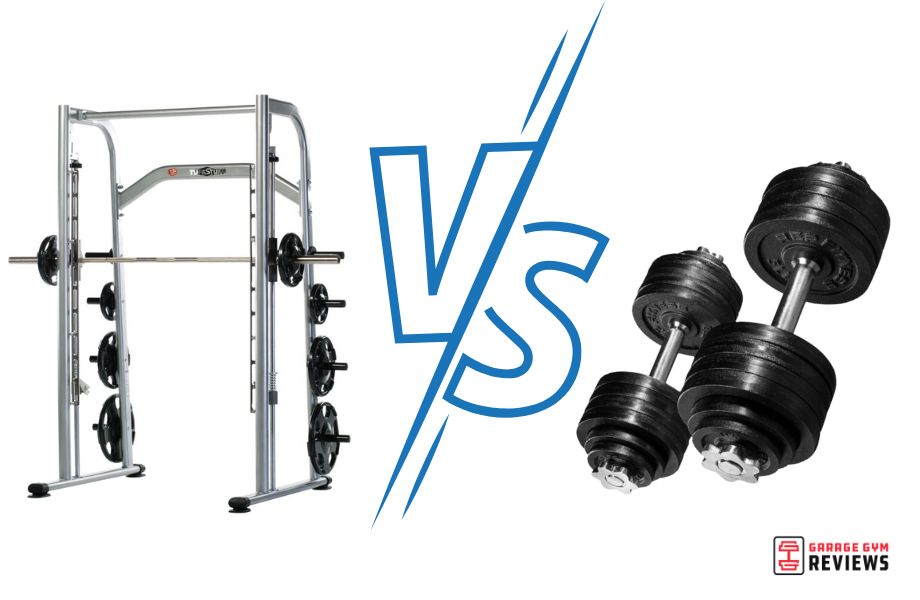
Credit: www.garagegymreviews.com
Muscle Growth Potential
Muscle growth potential depends on how well an exercise stresses the muscles. Dumbbells and machines each offer unique advantages. Understanding these differences helps you choose the best tool for your goals. Muscle growth happens when muscles face increasing challenges and recover stronger.
Compound Movements With Dumbbells
Dumbbells allow natural, multi-joint movements. Exercises like dumbbell presses, rows, and squats work several muscles at once. This triggers more muscle fibers and hormone release. Using dumbbells also improves balance and coordination. These factors create a strong stimulus for muscle growth. Dumbbells let you move freely, which activates stabilizing muscles. This leads to more overall muscle development.
Isolation With Machines
Machines focus on isolating specific muscles. They guide your movement path to target a single muscle group. This is helpful for beginners or injury recovery. Machines reduce the need for balance and coordination. You can safely lift heavier weights without risk of poor form. Isolation helps strengthen weaker muscles and fix imbalances. Combining machines with free weights can improve overall muscle growth.
Progression Strategies
Progressive overload is key to muscle growth. With dumbbells, increase weight, reps, or slow down movements. Change angles or add pauses to increase difficulty. Machines let you add weight easily and keep form strict. Track your progress and push yourself steadily. Both tools work well with good progression. Consistency and gradual challenge create lasting muscle gains.
Injury Risk And Prevention
Injury risk and prevention are crucial when choosing between dumbbells and machines. Both tools can cause injuries without proper care. Understanding common injuries and safety features helps reduce risks. Knowing how to maintain proper form is key to safe workouts.
Common Dumbbell Injuries
Dumbbells require more control and balance. This can lead to wrist strains if weights are too heavy. Shoulder injuries happen from poor lifting angles. Dropping dumbbells risks foot and toe injuries. Overuse injuries like tendonitis may occur from repetitive motion. Beginners often hurt themselves by lifting beyond their ability.
Machine-assisted Safety
Machines guide your movement along fixed paths. This support reduces the chance of losing balance. They protect joints by limiting unnatural angles. Machines often have adjustable weights for safer progression. Safety stops and pins prevent weights from falling. These features make machines safer for beginners or rehab users.
Proper Form Tips
Always start with lighter weights to learn correct form. Keep your wrists straight and avoid bending them. Control your movements; avoid jerking or swinging. Maintain a neutral spine to protect your back. Breathe steadily during exercises, exhaling on effort. Warm up before lifting and stretch after workouts. Seek guidance if unsure about technique.

Credit: www.healthline.com
Workout Examples
Exploring workout examples helps understand how dumbbells and machines shape your fitness routine. Each tool offers unique benefits and challenges. Choosing the right exercises depends on your goals, experience, and preferences. Below are examples of effective workouts using dumbbells, machines, and a combination of both.
Effective Dumbbell Routines
Dumbbells allow a wide range of movements for all muscle groups. Start with goblet squats to target legs and core. Add dumbbell lunges to improve balance and strength. For the upper body, try dumbbell bench presses to build chest and arms. Overhead presses work shoulders and triceps well. Rows develop back muscles and improve posture. Isolation exercises like bicep curls and tricep kickbacks focus on smaller muscles. Adjust weights and reps to increase intensity over time.
Machine-based Workouts
Machines guide your movements for safety and support. Leg press machines strengthen thighs and glutes with controlled motion. Chest press machines isolate the chest muscles effectively. Lat pulldown machines target the back and arms with minimal risk. Cable machines offer versatility for multiple exercises like tricep pushdowns and bicep curls. Machines suit beginners learning proper form or those recovering from injury. They allow steady resistance and help track progress easily.
Combining Both For Results
Using dumbbells and machines together balances strength and control. Start with dumbbell exercises to activate stabilizer muscles and improve coordination. Follow with machines to focus on muscle isolation and increase load safely. This mix enhances muscle growth and reduces injury risk. For example, perform dumbbell lunges, then use the leg press machine. Combine dumbbell bench press with chest press machine sets. Vary your routine to keep muscles challenged and prevent plateaus.
Cost And Accessibility
Cost and accessibility play a major role when choosing between dumbbells and machines. Both options have their price points and availability factors. Understanding these helps you pick the best fit for your fitness goals and budget.
Home Gym Setup
Dumbbells are compact and easy to store at home. They require minimal space and no electricity. Buying a set of dumbbells is often cheaper than a single machine. You can start small and add more weights over time. Machines take up more room and can be costly to buy for home use. They also need proper installation and sometimes maintenance.
Gym Membership Considerations
Gyms usually offer a variety of machines and dumbbells. Machines can be easier for beginners to use with guided movements. Dumbbells offer more exercise variety but may require more skill. Membership fees vary and can add up over time. Some gyms have limited dumbbells or crowded free weight areas. Machines are often more available and less busy.
Long-term Investment
Dumbbells last for many years with little care. They hold their value and can be resold easily. Machines may need repairs and replacement parts over time. They can become outdated or broken. Investing in dumbbells gives flexibility for many workouts. Machines might limit your exercise options and require ongoing costs.
User Experience And Preferences
User experience and personal preferences play a big role in choosing between dumbbells and machines. Comfort, ease of use, and confidence affect workout quality. Some users enjoy the freedom of movement dumbbells offer. Others prefer the guided path machines provide. Understanding different viewpoints helps you make a better choice.
Beginner Perspectives
Beginners often find machines less intimidating. Machines guide their movements and reduce injury risk. They can focus on learning proper form. Dumbbells may feel tricky at first. Beginners might struggle with balance and coordination. Machines also allow easy weight adjustments, which beginners appreciate. Confidence grows quickly with machines in early training.
Advanced Lifters’ Insights
Experienced lifters value dumbbells for their versatility. They enjoy the challenge of stabilizing weights. Dumbbells activate more muscles and improve balance. Advanced users often prefer dumbbells to avoid fixed movement paths. They can target muscles from different angles. Machines can feel restrictive to them. Many advanced lifters use both tools to vary workouts.
Community Opinions
Gym communities show mixed opinions. Some members favor dumbbells for their natural feel. Others rely on machines for safety and simplicity. Group classes often use machines for uniformity. Personal trainers recommend dumbbells for functional strength. Online forums reveal passionate debates. Users highlight the importance of goals and body type. Most agree using both can bring the best results.
Frequently Asked Questions
Can I Build Muscle With Dumbbells Only?
Yes, you can build muscle using only dumbbells by progressively increasing weight, reps, or exercise difficulty. Combine workouts with proper nutrition and rest for best results. Focus on compound and isolation exercises to target all muscle groups effectively.
Can You Build Muscle With Machines Only?
Yes, machines can build muscle effectively by targeting specific muscles and allowing controlled resistance training. Consistent use and progressive overload maximize growth.
What Is The 3-3-3 Rule In Gym?
The 3-3-3 rule in the gym means doing 3 sets of 3 different exercises, each with 3 repetitions. It helps structure workouts efficiently.
What Are The Disadvantages Of Using Dumbbells?
Dumbbells may cause muscle imbalances if not used evenly. They require more coordination and can risk injury without proper form. Limited maximum weight can restrict strength gains. Space for storage may be an issue. They lack guided movement, increasing injury risk for beginners.
Conclusion
Dumbbells and machines each have unique benefits for strength training. Dumbbells offer more freedom and engage stabilizer muscles. Machines provide guided movement and can be safer for beginners. Choosing depends on your goals, experience, and workout style. Mixing both can create a balanced routine.
Focus on consistent effort and proper form. This approach helps build strength and muscle effectively. Keep challenging your body to see progress. Your fitness journey will improve with smart choices and patience.


