If you want to build a stronger, more defined back, bent over dumbbell rows are a must-try exercise. But what exactly do bent over dumbbell rows work?
Understanding which muscles this move targets can help you maximize your workout and avoid common mistakes. Whether you’re aiming to improve your posture, boost your pulling strength, or sculpt your upper body, knowing how bent over dumbbell rows engage your muscles will empower you to train smarter.
Keep reading to discover the key muscle groups involved and how this simple yet powerful exercise can transform your fitness routine.
Targeted Muscles
The bent over dumbbell row is a powerful exercise that targets several key muscles in your upper body. It focuses mainly on the muscles of the back, but also engages the arms and shoulders. This move helps build strength, improve posture, and enhance overall fitness. Understanding which muscles it works can help you get better results and avoid injury.
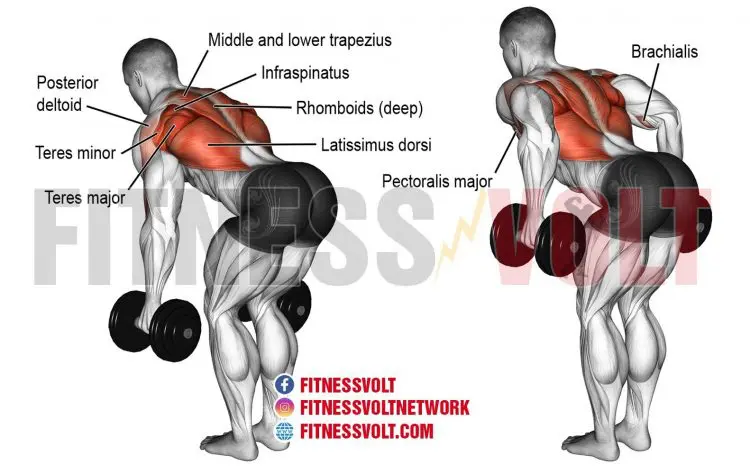
Latissimus Dorsi
The latissimus dorsi, or lats, are the largest muscles in the back. They run from the middle of your back to under your arms. Bent over dumbbell rows activate the lats strongly, helping widen and strengthen your back.
Trapezius
The trapezius muscles cover the upper back and neck area. They support shoulder movements and hold your posture. Dumbbell rows engage the traps to stabilize the shoulder blades as you lift the weights.
Rhomboids
The rhomboids lie between the shoulder blades. These muscles pull the shoulder blades together. Bent over rows work the rhomboids to improve scapular control and reduce slouching.
Posterior Deltoids
The posterior deltoids form the rear part of your shoulder muscles. They help move your arms backward. This exercise targets these muscles to enhance shoulder strength and stability.
Biceps Brachii
The biceps are the front muscles of your upper arm. They bend the elbow and rotate the forearm. Bent over dumbbell rows involve the biceps to assist in lifting the dumbbells.
Spinal Erectors
The spinal erectors run along your spine. They keep your back straight and stable. During the exercise, these muscles work hard to maintain your bent over posture safely.
Supporting Muscles
Other muscles like the forearms, core, and shoulders assist during the movement. The forearms grip the weights tightly. The core stabilizes your body to prevent wobbling. Together, they support the main muscles involved.
Form And Technique
Bent over dumbbell rows target several key muscle groups, but proper form and technique maximize their effectiveness. Maintaining correct posture protects your back and helps you lift more weight safely. This section explains how to position your body, execute the rowing motion, avoid common errors, and control your breathing.
Starting Position
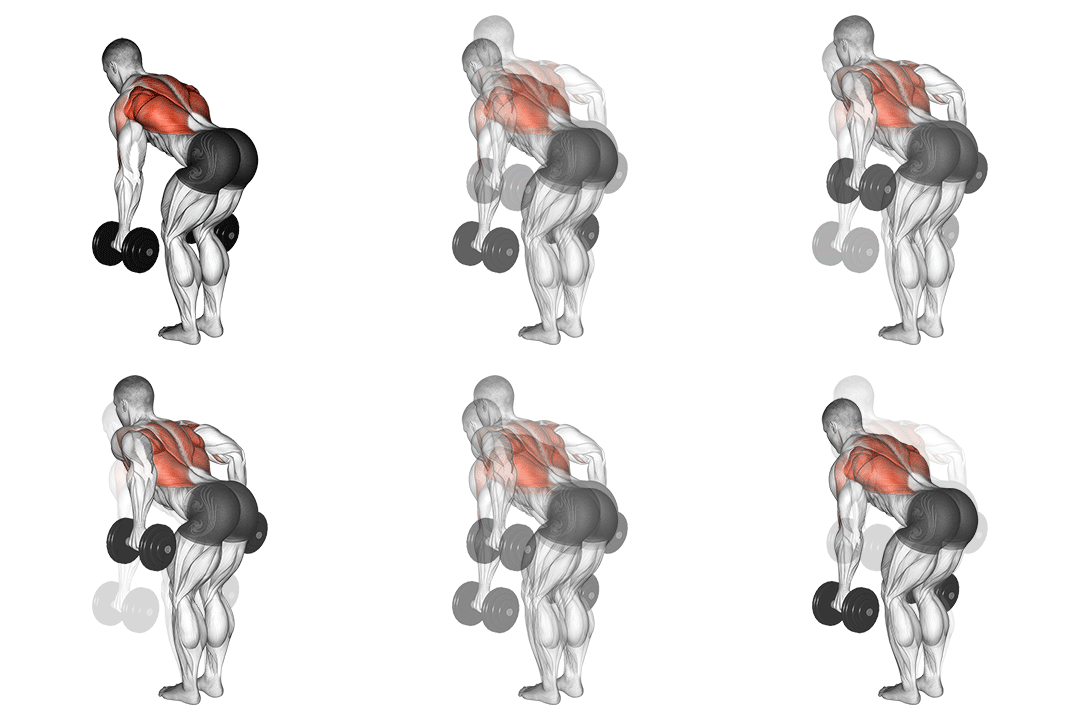
Stand with feet shoulder-width apart. Hold a dumbbell in each hand with palms facing your body. Slightly bend your knees and hinge forward at the hips until your torso is nearly parallel to the floor. Keep your back flat and core tight. Let your arms hang straight down from your shoulders.
Rowing Motion
Pull the dumbbells toward your waist by bending your elbows. Focus on squeezing your shoulder blades together. Keep your elbows close to your body as you lift. Pause briefly at the top of the movement. Lower the dumbbells slowly back to the starting position with control.
Common Mistakes
Avoid rounding your back or hunching your shoulders. Don’t use momentum to lift the weights. Keep your neck neutral and avoid looking up or down too much. Avoid flaring your elbows outward. Do not let your hips twist or your torso sway during the row.
Breathing Tips
Inhale deeply before starting the row. Exhale as you pull the dumbbells up. Inhale again while lowering the weights. Maintain a steady breathing rhythm to keep your core engaged and energy steady throughout the exercise.
Benefits Of Bent Over Dumbbell Rows
Bent over dumbbell rows offer many benefits for your body. This exercise targets multiple muscles, making it effective for strength and fitness. It helps build a strong back and improve your overall movement. Here are some key benefits of doing bent over dumbbell rows regularly.
Back Strength
Bent over dumbbell rows focus on the muscles in your upper and middle back. They target the latissimus dorsi, rhomboids, and trapezius. Strengthening these muscles improves your ability to lift and carry objects. A stronger back also reduces the risk of injury during daily activities.
Posture Improvement
This exercise helps correct poor posture by strengthening the muscles that pull your shoulders back. Many people develop rounded shoulders from sitting too much. Bent over rows reverse this effect and help you stand taller. Better posture reduces back and neck pain.
Enhanced Stability
Bent over dumbbell rows engage your core and lower back for balance. Holding the bent position requires control and coordination. This improves your overall stability and body control. Enhanced stability benefits other exercises and everyday tasks.
Support For Other Lifts
Building a strong back with dumbbell rows improves performance in other lifts. Exercises like deadlifts, pull-ups, and bench presses get better support from a stronger back. This can help you lift heavier weights safely and with better form.
Credit: fitnessvolt.com
Variations To Try
Exploring different variations of bent over dumbbell rows can keep your workouts fresh and effective. Each variation targets your muscles slightly differently, helping you build strength evenly. Trying new forms also reduces workout boredom and challenges your body in new ways. Here are some common variations worth trying.
Single-arm Rows
Single-arm rows focus on one side of the back at a time. Support your body with one hand on a bench while rowing the dumbbell with the other. This helps fix muscle imbalances and improves core stability. The movement targets the latissimus dorsi, rhomboids, and biceps.
Two-arm Rows
Two-arm rows use both dumbbells simultaneously. Bend at the hips and pull both weights towards your waist. This variation engages your back muscles evenly and challenges your lower back for better stability. It also improves coordination and overall back strength.
Incline Bench Rows
Incline bench rows provide extra support for your chest and reduce stress on your lower back. Lie face down on an incline bench and row the dumbbells upward. This position allows you to focus more on your upper back and shoulder muscles, making it a safer choice for beginners.
Renegade Rows
Renegade rows combine a plank with a row, adding a core workout. Hold dumbbells on the floor and alternate rowing each weight while keeping your body steady. This variation works your back, arms, and core muscles simultaneously. It improves balance and builds full-body strength.
Common Issues And Fixes
Bent over dumbbell rows are a powerful exercise to target your back muscles. Many beginners face common issues that reduce effectiveness or cause discomfort. Understanding these problems helps improve form and results.
This section covers frequent problems and simple fixes. Fixes ensure you work the right muscles safely. Correcting mistakes also prevents pain and injury during workouts.
Feeling It In Arms Instead Of Back
Many feel the exercise mostly in their arms, not the back. This happens when you rely too much on your biceps to pull the weight. Focus on squeezing your shoulder blades together at the top of the movement. Keep your elbows close to your body. Use lighter weights to control the motion better. This shift activates your back muscles, especially the lats and rhomboids.
Lower Back Discomfort
Lower back pain is a common complaint during this exercise. It often results from poor posture or lack of core support. Keep your back flat and chest up throughout the movement. Engage your core muscles to stabilize your spine. Avoid rounding or arching your lower back. If pain persists, reduce the weight or try a supported version using a bench.
Balancing Muscle Activation
Balanced muscle work is key for progress and injury prevention. Uneven strength can cause one side to dominate the movement. Perform the rows slowly and with control. Start with one arm at a time to focus on each side equally. Use a mirror or video yourself to check form. Balanced activation ensures your back muscles develop evenly and efficiently.
Credit: mecanica.uaz.edu.mx
Integrating Rows Into Workouts
Integrating bent over dumbbell rows into your workouts boosts back strength effectively. This exercise targets several muscles, improving posture and overall fitness. Planning your sessions carefully ensures you gain maximum benefits without injury.
Frequency And Volume
Perform bent over dumbbell rows two to three times weekly. Aim for three to four sets per session. Each set should include eight to twelve repetitions. This balance helps build strength without overtraining. Rest at least 48 hours before repeating the exercise.
Pairing With Other Exercises
Combine rows with pushing exercises like push-ups or bench presses. This creates a balanced workout for your upper body. Adding deadlifts or squats works your lower body too. Varying exercises prevents muscle imbalances and keeps workouts interesting.
Warm-up And Cool-down
Start with light cardio to increase blood flow. Include dynamic stretches targeting your back and shoulders. After rows, stretch the muscles gently to reduce soreness. Cooling down helps your body recover and prepares you for the next workout.

Credit: www.municollegeupleta.in
Frequently Asked Questions
What Are The Benefits Of Dumbbell Bent Over Rows?
Dumbbell bent over rows strengthen the back, shoulders, and arms. They improve posture, increase upper body strength, and support other lifts like deadlifts and pull-ups.
What Muscles Do Bent Over Rows Work?
Bent over rows target the latissimus dorsi, rhomboids, trapezius, spinal erectors, biceps, forearms, and core stabilizers.
What Muscles Do Dumbbell Rows Work Out?
Dumbbell rows target the latissimus dorsi, trapezius, rhomboids, rear deltoids, biceps, and spinal erectors.
Are Bent Over Rows For Lats Or Upper Back?
Bent over rows primarily target the lats (latissimus dorsi) while also engaging the upper back muscles like traps and rhomboids.
Conclusion
Bent over dumbbell rows target many upper back muscles. They strengthen lats, rhomboids, and rear shoulders. This exercise also works your biceps and forearms. Your lower back and core stay active for balance. Regular practice improves posture and boosts overall strength.
It supports other lifts like pull-ups and deadlifts. Perfect for building a strong, healthy back. Try adding bent over rows to your workout routine. You’ll notice better muscle tone and stability soon. Simple, effective, and suitable for all fitness levels.