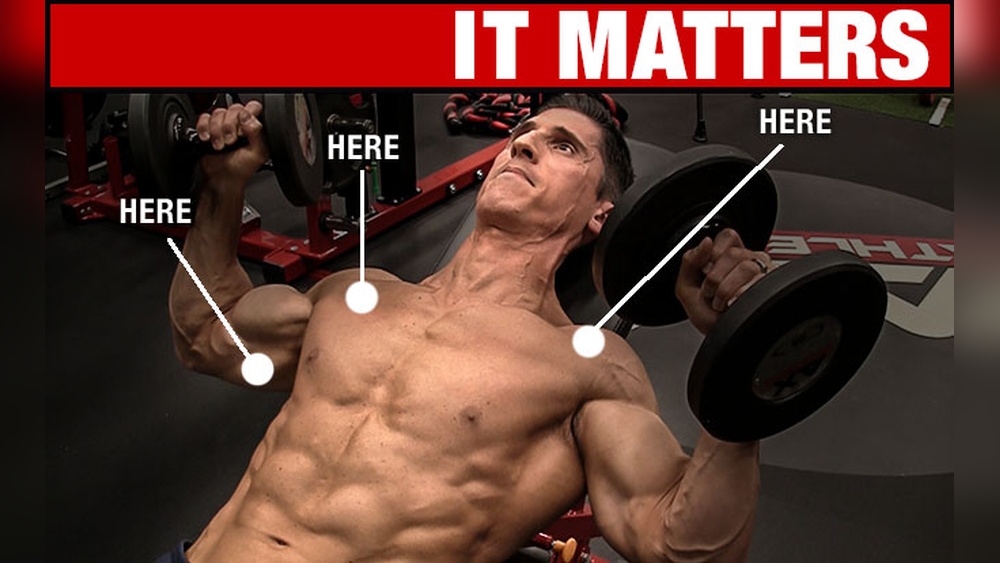
If you’re looking to build a stronger, more defined chest, understanding what the flat dumbbell press targets is key to getting the most from your workout. This exercise doesn’t just focus on one muscle—it activates several important upper body muscles that work together to improve your strength and stability.
Whether you want to sculpt your chest, boost your pressing power, or enhance your overall upper body performance, knowing exactly which muscles you’re working helps you train smarter, not just harder. Keep reading to discover how the flat dumbbell press can transform your workouts and why it deserves a spot in your routine.
Credit: weighttraining.guide
Muscles Targeted By Flat Dumbbell Press
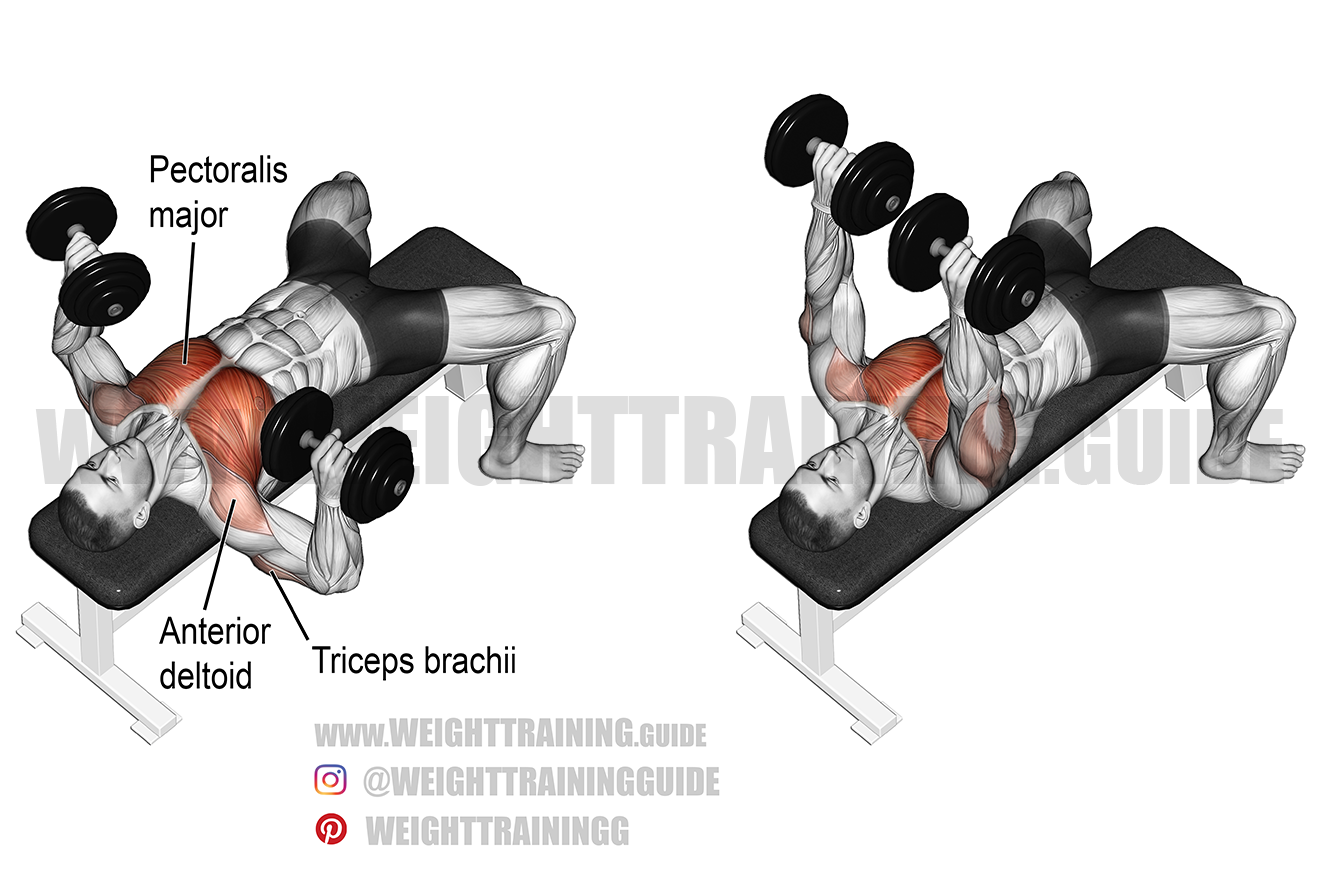
The flat dumbbell press targets several key upper body muscles. It mainly works the chest but also activates muscles in the arms and shoulders. This exercise helps build strength and size in the upper body. It also improves muscle coordination and balance due to the use of dumbbells. Understanding which muscles are involved can help you perform the exercise more effectively.
Pectoralis Major Focus
The pectoralis major is the largest chest muscle. The flat dumbbell press mainly targets its middle fibers. These fibers help push the dumbbells away from your chest. This action builds strength and size in the chest. It also improves the shape and definition of the chest muscles.
Role Of Triceps Brachii
The triceps brachii are the muscles at the back of the upper arms. They help extend your elbows during the press. This extension is essential for pushing the dumbbells upward. Strong triceps improve your pressing power and endurance. They support the chest muscles in completing the movement smoothly.
Involvement Of Anterior Deltoids
The anterior deltoids are the front part of your shoulder muscles. They assist in lifting the dumbbells during the press. These muscles help stabilize your shoulder joint. Their involvement reduces injury risk and improves control. Training these muscles adds strength and shape to your shoulders.
Secondary And Stabilizing Muscles
The flat dumbbell press activates more than just the chest and arms. Secondary and stabilizing muscles play key roles in keeping the movement smooth and controlled. These muscles help protect the joints and maintain balance. Their engagement makes the exercise effective and safe. Understanding these muscles helps improve form and performance.
Core Activation
The core muscles engage to stabilize your torso during the press. They prevent excessive arching of the lower back. A strong core supports better control of the dumbbells. This engagement also improves overall balance and posture. Tightening your core keeps the body steady throughout the movement.
Latissimus Dorsi Support
The latissimus dorsi, or lats, help stabilize the shoulder joints. These large back muscles resist unwanted shoulder movement. They assist in controlling the dumbbells at the top of the press. Strong lats reduce shoulder strain and improve lifting efficiency. Their support is vital for safe pressing motions.
Rhomboid Engagement
Rhomboids, found in the upper back, contribute to shoulder stability. They pull the shoulder blades together, creating a solid base. This action helps maintain proper shoulder alignment. Engaged rhomboids prevent rounding of the shoulders during pressing. They improve posture and reduce the risk of injury.
Benefits Of Flat Dumbbell Press
The flat dumbbell press offers many benefits for your upper body workout. It targets key muscles while improving strength and stability. This exercise helps build a balanced, powerful chest and upper body.
Using dumbbells allows a greater range of motion than a barbell. This improves muscle activation and joint health. It also engages stabilizer muscles more effectively, which supports better overall fitness.
Chest Mass Development
The flat dumbbell press focuses on the middle chest muscles. It works the pectoralis major deeply to increase muscle size. The dumbbells help stretch the chest muscles more than a barbell. This stretch triggers muscle growth and better definition.
Consistent use of this exercise promotes fuller and stronger chest muscles. It also balances muscle growth on both sides, reducing strength imbalances.
Upper Body Strength Gain
This exercise boosts upper body strength by targeting the chest, shoulders, and triceps. Lifting dumbbells requires more control, which enhances muscle coordination. The core and stabilizer muscles also work harder to keep balance.
Strength gains from the flat dumbbell press improve performance in other lifts. It helps build a solid foundation for pushing exercises and daily activities.
Improved Pressing Power
The flat dumbbell press increases pressing power by strengthening the pushing muscles. Strong triceps and shoulders contribute to more forceful presses. This power translates well to sports and functional movements.
Using dumbbells also trains stabilizer muscles, improving joint stability. This reduces the risk of injury during heavy lifting or sudden movements.
Technique And Form Tips
Perfect technique and solid form matter in the flat dumbbell press. Good habits protect your joints and boost muscle gains. Small adjustments help you lift safely and effectively. Focus on the grip, controlled motion, breathing, and stability for best results.
Proper Dumbbell Grip And Position
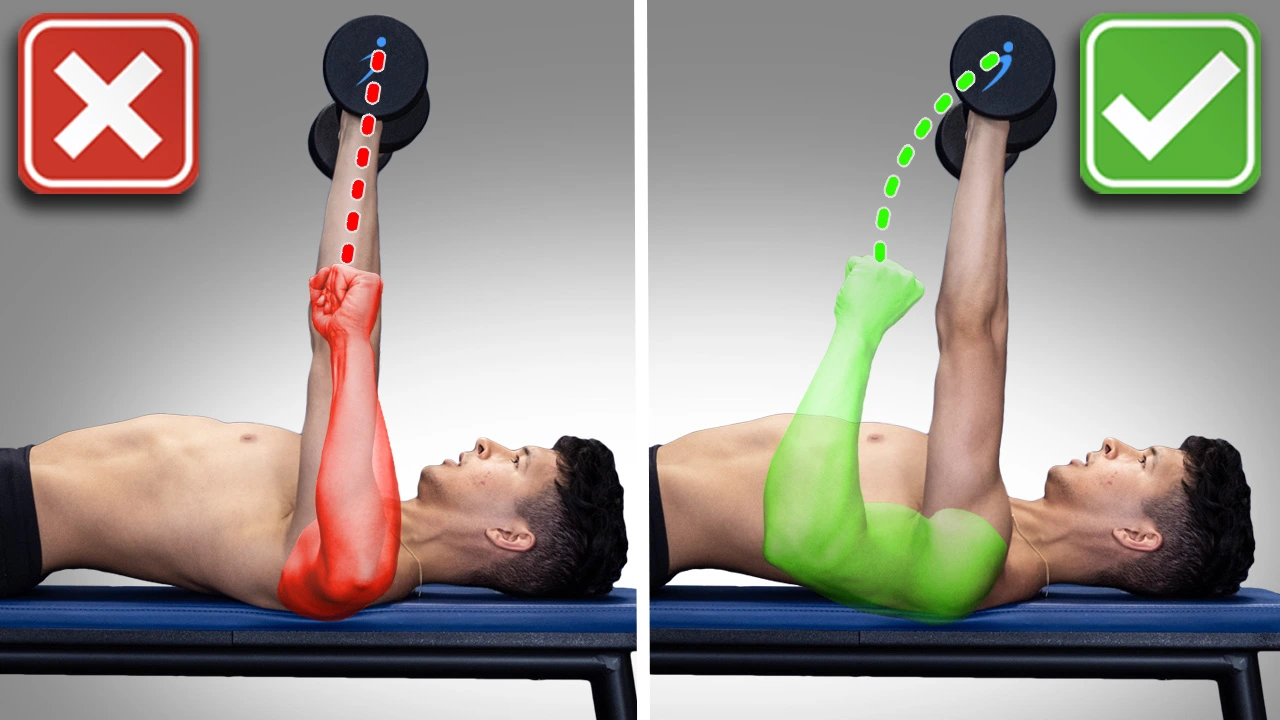
Hold the dumbbells firmly but not too tight. Keep your wrists straight and aligned with your forearms. Position the dumbbells above your chest, palms facing forward or slightly inward. Keep your elbows at a 45-degree angle to reduce shoulder strain. Feet flat on the floor, back pressed against the bench.
Controlled Movement Execution
Lower the dumbbells slowly until they reach chest level. Avoid bouncing the weights on your chest. Push the dumbbells upward in a steady, controlled motion. Pause briefly at the top for full contraction. Control the speed to engage muscles fully and avoid injury.
Breathing And Stability
Inhale deeply as you lower the dumbbells. Exhale forcefully while pushing the weights up. Keep your core tight to stabilize your spine and maintain balance. Maintain a neutral head position, looking straight up. Stable breathing and core engagement improve power and safety.
Flat Vs Incline Dumbbell Press
The flat dumbbell press and incline dumbbell press are popular chest exercises. Both build upper body strength but target muscles differently. Choosing the right one depends on your goals. Understanding their differences can improve your workout results.
Muscle Activation Differences
The flat dumbbell press mainly activates the middle chest. It targets the sternocostal part of the pectoralis major. The triceps and front shoulders also assist during the lift.
The incline dumbbell press shifts focus to the upper chest. It activates the clavicular head of the pectoralis major more. The shoulders get more involved than in the flat press.
Both presses use stabilizer muscles like the core and upper back. These help keep balance and control the dumbbells.
Impact On Chest Shape
The flat dumbbell press builds thickness in the center of the chest. It creates a fuller, more rounded look across the mid-chest area.
The incline dumbbell press lifts and sculpts the upper chest. It adds definition near the collarbone. This helps create a more balanced chest shape.
Using both variations can develop a well-rounded and strong chest.
When To Choose Each Variation
Choose the flat dumbbell press to add size and strength to the middle chest. It is ideal for overall chest development.
Pick the incline dumbbell press to improve upper chest strength and shape. It is useful for targeting hard-to-hit areas.
Alternating both exercises in your routine prevents muscle imbalances. It supports better muscle growth and symmetry.

Credit: www.ativafit.com
Integrating Flat Dumbbell Press In Workouts
Integrating the flat dumbbell press into your workout routine enhances chest strength effectively. This exercise targets the pectoral muscles while also engaging the triceps and front shoulders. Using dumbbells allows a greater range of motion and activates stabilizer muscles more than barbells. Including this move can improve muscle balance and joint stability. Proper planning ensures it complements your overall training goals.
Pairing With Complementary Exercises
Combine the flat dumbbell press with exercises that target different chest areas. Incline dumbbell presses focus on the upper chest. Decline presses work the lower chest. Add push-ups to engage the core and shoulders. Incorporate rows or pull-ups to balance chest work with back strength. This balance reduces injury risk and improves posture. Aim for a full upper body workout with diverse movements.
Training Frequency And Volume
Train the flat dumbbell press two to three times per week. Allow at least 48 hours of rest between sessions. Perform three to four sets of eight to twelve repetitions. This range builds strength and muscle size effectively. Avoid training the same muscle group daily to prevent overuse injuries. Listen to your body and adjust volume based on recovery and progress.
Progression Strategies
Increase weight gradually to challenge muscles safely. Add small increments when you can complete all reps with good form. Use tempo changes by slowing down the lowering phase. Incorporate pauses at the bottom to boost muscle tension. Vary grip width to target muscles differently. Tracking progress helps maintain steady gains and prevents plateaus.
Credit: builtwithscience.com
Frequently Asked Questions
What Does A Flat Dumbbell Press Target?
The flat dumbbell press targets the pectoralis major (middle chest), triceps, and anterior deltoids. It also engages core and stabilizer muscles for balance.
What Muscles Do The Flat Press Work?
The flat press mainly targets the pectoralis major (chest), triceps brachii (arms), and anterior deltoids (shoulders). It also engages core and upper back muscles for stability.
Is A Flat Bench Press Worth It?
A flat bench press effectively builds chest, triceps, and shoulder strength. It improves upper body power and muscle mass.
Is A 70 Lbs Dumbbell Press Good?
A 70 lbs dumbbell press effectively builds chest, triceps, and shoulder strength for intermediate lifters. It promotes muscle growth and stability.
Conclusion
The flat dumbbell press mainly targets the chest muscles, especially the middle part. It also works the triceps and front shoulders well. Your core and upper back muscles help keep balance during the exercise. This makes it a good move for building upper body strength.
Using dumbbells allows for a wider range of motion than a barbell. Keep your form correct to avoid injury and get the best results. Regular practice will improve muscle tone and stability. Simple, effective, and great for overall chest development.


